
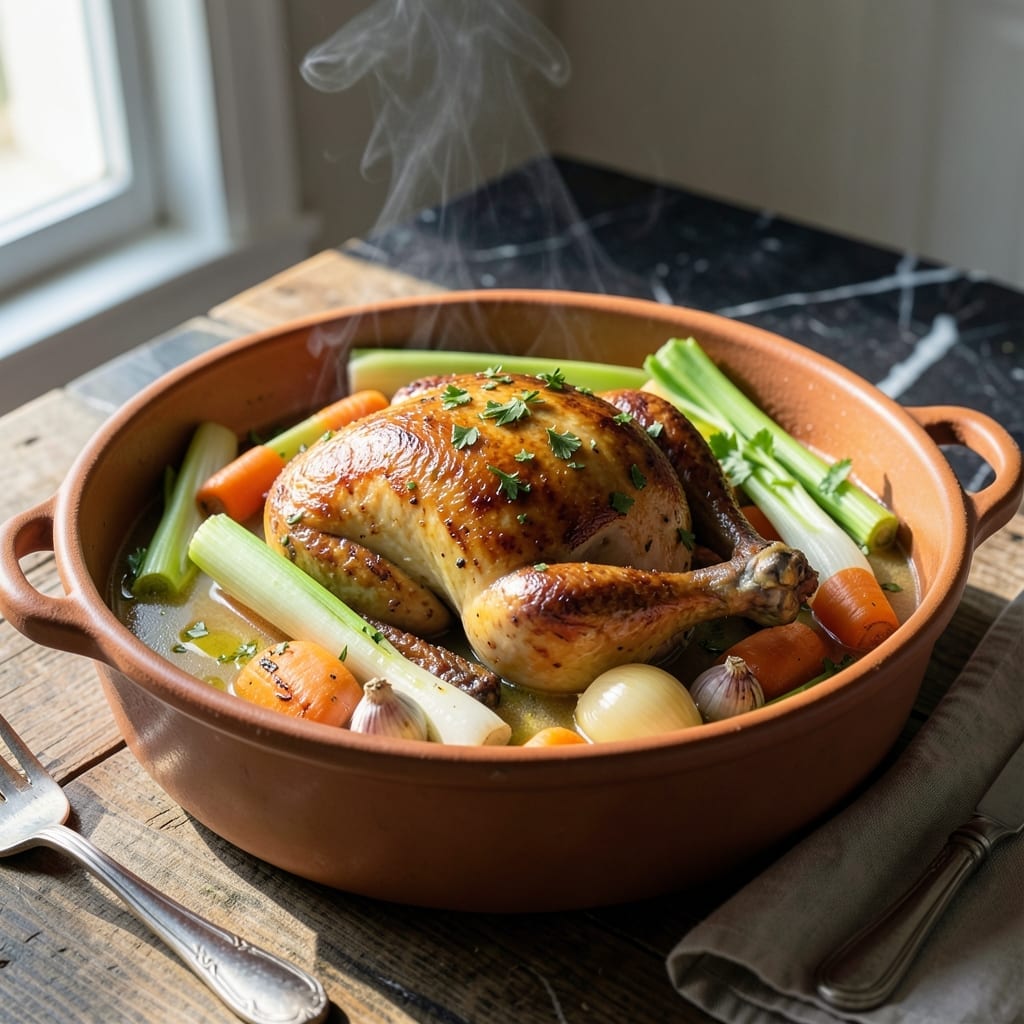
This French classic brings rustic elegance to your table with minimal effort. A whole chicken simmers gently with vegetables and herbs, creating a comforting broth that’s rich with flavor.
The beauty of this dish lies in its simplicity. The chicken cooks low and slow, infusing the liquid with depth while keeping the meat tender and juicy. Aromatic vegetables and fresh herbs complete the traditional preparation.
What emerges is a hearty, soul-warming meal that’s perfect for any occasion. The broth is light yet deeply flavorful, while the chicken falls off the bone with ease.
Serve it family-style for a meal that feels both special and effortless. This is French farmhouse cooking at its finest.
Ingredients for Poule Au Pot Recipe Rick Stein
Whole chicken and humble vegetables create this comforting French farmhouse classic in one pot.
| Ingredient | Amount | Notes |
|---|---|---|
| Whole Chicken 🍗 | 1 whole | About 3-4 lb, fresh or thawed |
| Carrots 🥕 | 4 whole | Peeled, cut into chunks |
| Yellow Onions 🧅 | 2 whole | Peeled, quartered |
| Leeks 🧅 | 2 whole | White parts only, cleaned |
| Celery Stalks 🌿 | 3 whole | Cut into large pieces |
| Garlic Cloves 🧄 | 6 cloves | Peeled, smashed |
| Fresh Thyme Sprigs 🌿 | 4 whole | Plus extra for garnish |
| Fresh Parsley Sprigs 🌿 | 4 whole | Stems included |
| Bay Leaves 🍃 | 2 whole | Dried or fresh |
| Black Peppercorns 🌶️ | 1 tsp | Whole, not ground |
| Kosher Salt 🧂 | 1 tbsp | Adjust to taste |
| Water 💧 | 8 cups | Or enough to cover |
| Dijon Mustard 🟡 | 2 tbsp | For serving |
| Crusty Bread 🍞 | 1 pieces | Sliced, for serving |
The chicken is the centerpiece. Find a free-range bird around 3-4 lb for the best flavor and texture—Whole Foods or your local butcher will have quality options. The vegetables should be fresh but don’t need to be perfect; this is rustic cooking after all. Look for vibrant green leeks and firm carrots. The herbs? Fresh thyme and parsley add layers of aroma that dried just can’t match.
No leeks? Extra onion and celery will work in a pinch. Out of thyme? Rosemary or savory at half the amount can substitute. The Dijon mustard isn’t traditional but Rick Stein’s touch—skip it if you prefer purity. For the bread, any artisan loaf from a bakery beats grocery store sandwich bread. Don’t overthink the water amount; just cover everything by an inch.
This tastes even better the next day—2-3 days in the fridge is ideal. Freeze the broth for 3 months if you won’t use it all. The chicken meat can be shredded for sandwiches or salads (great with that Dijon mustard). Always store the bread separately to keep it from getting soggy.
Why You’ll Love This Recipe
- I’ll be real: this stretches easily for Sunday dinner or leftovers all week.
- One Pot Wonder: I toss the chicken and veggies in, add water, and let it simmer—hardly any cleanup.
- Rich Broth Magic: The leeks and celery infuse the stock with a depth that’s ridicously good.
- Feeds a Crowd: I’ll be real: this stretches easily for Sunday dinner or leftovers all week.
Step-by-Step Instructions for Poule Au Pot
This traditional method delivers tender chicken and vegetables infused with rich, aromatic broth.
Step 1: Prepare the Chicken and Aromatics
Rinse the whole chicken inside and out under cold water, then pat it completely dry with paper towels. This removes any bone fragments and ensures the skin will brown properly. Season the cavity generously with 1 tbsp kosher salt and 1 tsp black peppercorns.
Tuck the wings behind the back and tie the legs together with kitchen twine. This compact shape helps the chicken cook evenly and makes it easier to remove from the pot later.
Step 2: Layer Vegetables and Herbs in the Pot
Place the 4 whole carrots, 2 whole yellow onions, 2 whole leeks, and 3 whole celery stalks in the bottom of a large stockpot. These will create a natural rack for the chicken while infusing the broth with flavor.
Add the 6 cloves garlic cloves, 4 whole fresh thyme sprigs, 4 whole fresh parsley sprigs, and 2 whole bay leaves to the vegetables. The combination of these aromatics will build the classic depth of flavor this dish is known for.
Step 3: Add Chicken and Water Then Simmer
Place the prepared chicken breast-side up on top of the vegetables. Pour in the 8 cups water, ensuring it covers the chicken completely. If needed, add a bit more water to fully submerge the bird.
Bring to a boil over high heat, then immediately reduce to a gentle simmer. Partially cover the pot and maintain this simmer for 1 hour 15 minutes to 1 hour 30 minutes, until the chicken is fully cooked and tender.
Step 4: Rest and Serve with Traditional Accompaniments
Carefully remove the chicken from the pot and let it rest on a cutting board for 10 minutes before carving. This allows the juices to redistribute throughout the meat, ensuring every bite is moist and flavorful.
Serve the carved chicken with the cooked vegetables, a spoonful of the aromatic broth, and the 2 tbsp Dijon mustard on the side. Accompany with slices of crusty bread to soak up the delicious liquid. The bread transforms this from a simple dish into a hearty meal.
Pro Tips For Making Poule Au Pot Recipe Rick Stein
- Simmer, Don’t Boil: Keep the liquid at a gentle simmer, not a rolling boil, or the chicken will toughen and the vegetables will turn mushy—I learned this the hard way after one stringy, sad dinner.
- Tie the Chicken: Truss the whole chicken tightly with kitchen twine before adding it to the pot; it cooks more evenly and looks a lot neater when you pull it out.
- Skim the Foam: As the stock heats, skim off the gray foam that rises to the top in the first 10 minutes—this keeps the broth clear and clean-tasting.
- Use Leek Greens: Don’t toss the dark green tops of the leeks—rinse them well, tie them in a bundle, and add them to the pot for extra flavor, then discard before serving.
Troubleshooting Perfect Results
Bland Tasting Broth
If your broth lacks depth, you likely undersalted or used insufficient aromatics. Start with 1 tbsp kosher salt in the cavity and add 1 tsp more to the water. Ensure you’re using the full 6 garlic cloves and 4 thyme sprigs—fresh herbs make a noticeable difference. 💡
Dry Chicken
Overcooking or boiling too vigorously causes dry meat. Maintain a gentle simmer, not a rolling boil, and check doneness at 1 hour 15 minutes. The chicken is done when it reaches 165°F at the thickest part of the thigh. Let it rest 10 minutes before carving to retain juices.
Vegetables Too Soft
Cut vegetables into larger chunks (2-3 inch pieces) so they hold their shape. Add them to the pot first so they cook under the chicken, not submerged in boiling water. If they’re still mushy, reduce simmer time to 1 hour and check for doneness.
Broth Too Greasy
Skimming is key. Use a fine-mesh skimmer to remove fat during simmering, especially in the first 30 minutes. For an extra-clear broth, chill it completely—fat solidifies on top for easy removal. Avoid breaking the chicken skin when handling.
Weak Herb Flavor
Fresh herbs lose potency quickly. Add 2 extra thyme sprigs and 2 parsley sprigs if using day-old herbs. Tie them in cheesecloth for easy removal. For dried herbs, use 1 tsp each but add them 30 minutes before serving to prevent bitterness.
Cloudy Broth
A hard boil emulsifies fat and proteins, creating cloudiness. Always maintain a gentle simmer. If it’s already cloudy, strain through a coffee filter or cheesecloth-lined sieve. Avoid stirring once the chicken is in the pot.
Nutrition Facts
Frequently Asked Questions
What size pot should I use?
Use a 5-6 quart stockpot or Dutch oven. The chicken and vegetables should fit comfortably with room for 8 cups water to cover everything by about 1 inch. A pot that’s too small will crowd the ingredients and affect cooking.
Can I make this ahead of time?
The flavors deepen if made 1-2 days in advance. Store the chicken and broth separately in the fridge, then reheat gently before serving. The meat stays moist and the broth becomes even more aromatic.
What if my chicken isn’t fully submerged?
Add more water to cover the top of the bird by 1 inch. If you run out of space in your pot, flip the chicken halfway through the 1 hour 15 minutes cooking time to ensure even cooking.
Is the Dijon mustard necessary?
It’s traditional in Rick Stein’s version for a tangy contrast. Skip it if you prefer, but the 2 tbsp adds a lovely sharpness that complements the rich broth beautifully.

- Pudding Recipe With Egg Yolks: Silky Smooth Custard in Minutes - November 3, 2026
- Pudding Pops Recipe Cook and Serve: Silky Frozen Treats Without the Machine - November 3, 2026
- Protein Ice Cream Recipe Blender Xanthan Gum: Ultra Creamy Texture Without the Guilt - November 3, 2026