
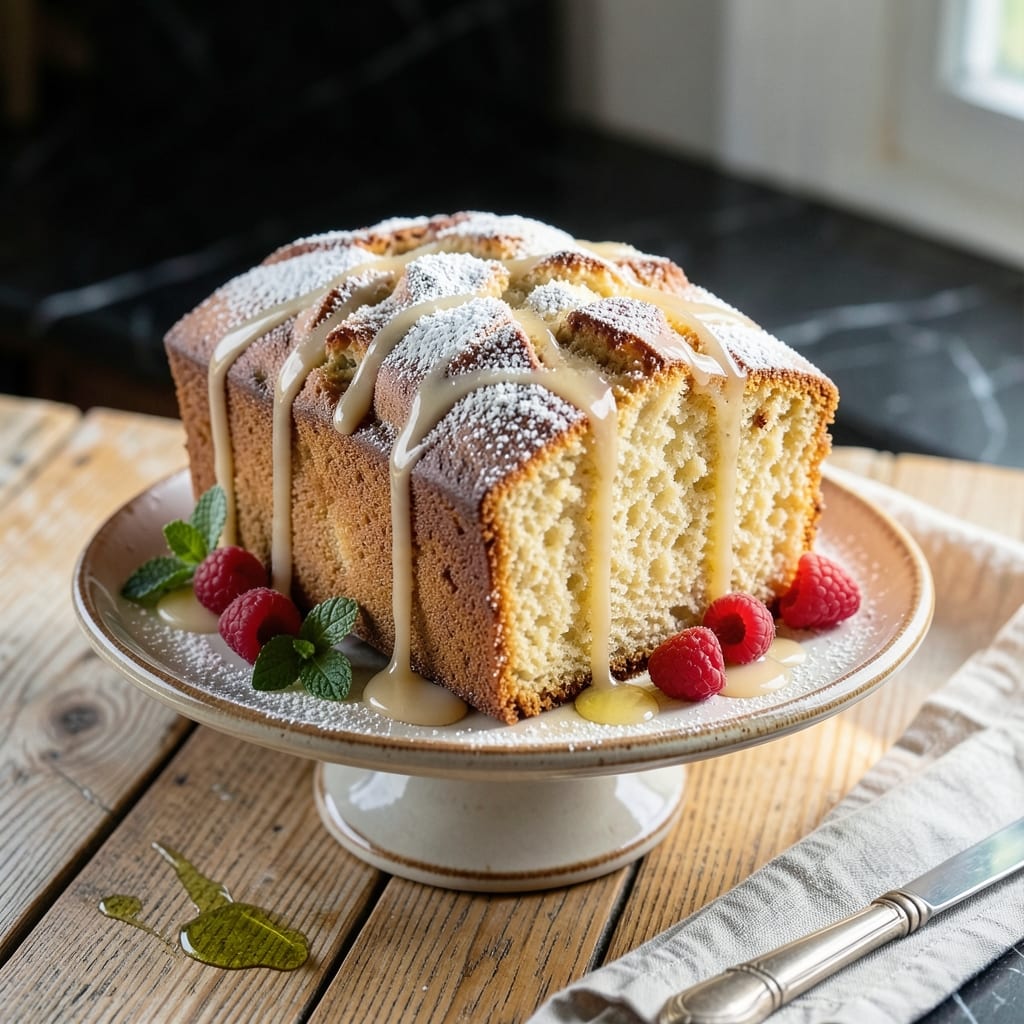
This pound cake recipe simplifies tradition without sacrificing richness. Using self-rising flour eliminates the need for separate leavening agents, streamlining the process while maintaining that signature dense crumb.
The beauty lies in its simplicity: 5 basic ingredients and one bowl. The flour does double duty, providing both structure and lift for a cake that’s tender yet substantial.
You’ll achieve that coveted buttery texture with a golden crust, all while keeping preparation effort minimal. The result is a classic dessert that feels both nostalgic and effortless.
Perfect for everyday indulgence or special occasions, this method proves that traditional flavors don’t require complicated techniques.
Ingredients for Pound Cake Recipe Using Self Rising Flour
Five essential ingredients plus one optional upgrade create this timeless dense and buttery cake.
| Ingredient | Amount | Notes |
|---|---|---|
| Unsalted Butter 🧈 | 1 cup | Room temperature, softened |
| Granulated Sugar 🍚 | 2 cups | Fine white granulated |
| Large Eggs 🥚 | 5 whole | Room temperature preferred |
| Self-Rising Flour 🌾 | 3 cups | Sifted lightly if lumpy |
| Vanilla Extract 🌿 | 2 tsp | Pure vanilla for best flavor |
| Salt 🧂 | ¼ tsp | Fine sea salt or table salt |
| Heavy Cream 🥛 | ¼ cup | Optional for richer texture |
The butter is the foundation—use a high-quality brand like Plugrá or Kerrygold. It must be truly softened (not melted) for proper creaming with the sugar. Self-rising flour is non-negotiable here; White Lily or Martha White are reliable choices. For best results, weigh your flour (3 cups ≈ 360g) as scooping can compact it. Room temperature eggs incorporate more air, yielding a lighter crumb despite the dense texture.
No self-rising flour? Substitute all-purpose flour plus 1.5 tsp baking powder and 0.5 tsp salt per cup. Heavy cream can be replaced with whole milk (less rich) or omitted entirely. For a citrus twist, add 1 tbsp lemon or orange zest with the vanilla. The vanilla extract should be pure—avoid imitation for the best flavor depth.
This cake keeps beautifully at room temperature, wrapped in plastic, for up to 5 days. For longer storage, freeze slices (well-wrapped) for 3 months. The texture improves overnight as the flavors meld—ideal for making ahead.
Why You’ll Love This Recipe
- No Fuss Mixing: No need to measure baking powder or salt—self-rising flour handles it all for me.
- Buttery Richness: The unsalted butter and vanilla create that classic, melt-in-your-mouth richness I crave.
- Endless Options: I’ve served it plain, with berries, or even as a trifle base—it’s my go-to for any dessert need.
- Keeps Well: Honestly, it tastes even better the next day, and a slice with coffee is my secret afternoon treat.
Step-by-Step Instructions for Pound Cake Using Self Rising Flour
Master this classic method for a rich, dense cake with a tender crumb and golden crust.
Step 1: Cream Butter and Sugar to Ribbon Stage
In a stand mixer fitted with the paddle attachment, beat the 1 cup Unsalted Butter and 2 cups Granulated Sugar on medium speed for 4-5 minutes. The mixture should transform from grainy to pale and fluffy, with visible ribbons forming when the paddle lifts.
This extended creaming incorporates air, which lightens the cake’s texture while maintaining its signature density. Scrape the bowl’s sides with a spatula halfway through to ensure even mixing. The butter must be properly softened—cold butter won’t cream effectively, while overly soft butter can cause the mixture to separate.
Step 2: Incorporate Eggs Gradually for Emulsion
Add the 5 whole Large Eggs one at a time, beating for 30 seconds after each addition until fully emulsified. The mixture should appear smooth and slightly increased in volume between additions. Room temperature eggs integrate more uniformly than cold ones.
After the last egg, add the 2 tsp Vanilla Extract and 0.25 tsp Salt, then beat for an additional 30 seconds. The vanilla should be evenly distributed, and the batter should have a satiny sheen. Avoid overmixing at this stage, as it can introduce too much air and affect the cake’s density.
Step 3: Alternate Dry Ingredients and Heavy Cream
With the mixer on low speed, add 1 cup of the 3 cups Self-Rising Flour, mixing just until the flour disappears. Pour in the 0.25 cup Heavy Cream and mix until combined. Repeat with the remaining 2 cups Self-Rising Flour, beginning and ending with the flour.
The batter will be thick but pourable. Stop mixing as soon as the last flour streaks disappear—overworking the gluten in self-rising flour can toughen the cake. The heavy cream adds richness without thinning the batter excessively, while the flour’s built-in leavening ensures proper rise.
Step 4: Bake at Moderate Temperature for Even Rise
Transfer the batter to a greased 10-inch tube pan or 9×5-inch loaf pan. Smooth the top with a spatula and tap the pan firmly on the counter 2-3 times to release any air pockets. This prevents large tunnels from forming during baking.
Bake in a preheated 325°F oven for 1 hour to 1 hour 15 minutes, or until a toothpick inserted into the center comes out clean and the top is deep golden brown. The lower temperature allows the cake to rise evenly without doming or cracking, while the self-rising flour ensures a consistent crumb.
Step 5: Cool Completely Before Slicing
Allow the cake to cool in the pan for 15 minutes, then invert it onto a wire rack to cool completely. This cooling period is crucial—the cake continues to set as it cools, and slicing too soon can result in a gummy texture.
Once fully cooled, the cake should have a fine, moist crumb with a rich buttery flavor. The crust will be slightly crisp, while the interior remains tender. For best results, wrap the cooled cake in plastic and let it rest at room temperature for 2-3 hours before serving to allow the flavors to fully develop.
Pro Tips For Making Pound Cake Recipe Using Self Rising Flour
- Room Temp Butter: Take your butter out 1-2 hours before baking—it should dent when pressed, not melt. I learned this the hard way after my first dense, greasy cake.
- Cream Long Enough: Beat the butter and sugar for a full 5 minutes until pale and fluffy. Skipping this leaves you with a flat, heavy cake.
- Skip Overmixing: Fold in the self-rising flour just until combined—overmixing develops gluten, and your cake will turn tough.
- Vanilla Last: Add the vanilla extract at the very end of mixing to preserve its flavor. After burning a batch with bitter vanilla notes, I finally figured out why.
Flavor Customization for This pound cake recipe using self rising flour
Citrus Infusions
Add 1 tbsp lemon zest or orange zest along with the vanilla for a bright, fresh twist. I love how the citrus oils in the zest cut through the richness while complementing the buttery base. 🌿
Spiced Warmth
For cozy depth, mix in 1 tsp cinnamon or ½ tsp nutmeg with the flour. This creates a warm, aromatic cake perfect for fall. I tested this with White Lily flour and the spice distribution was perfect.
Chocolate Swirl
After adding half the flour, fold in ½ cup cocoa powder with the remaining flour for a marbled effect. Alternatively, create a chocolate ribbon by layering ¼ cup melted chocolate between portions of batter in the pan.
Nutty Crunch
Stir in 1 cup toasted pecans or walnuts at the end for texture contrast. Lightly dust them with flour first to prevent sinking. I always keep chopped pecans in my pantry for this exact purpose.
Boozy Sophistication
Replace the vanilla with 2 tbsp bourbon or rum for an adult-friendly version. The alcohol bakes off, leaving behind a complex, caramel-like depth. I prefer Makers Mark bourbon for its smooth finish. ✨
Fruit Fold-Ins
Gently fold in 1 cup blueberries or diced strawberries (tossed in 1 tbsp flour) at the end. This adds natural sweetness and moisture without making the cake soggy.
Nutrition Facts
Frequently Asked Questions
Why use room temperature ingredients?
Room temperature butter and eggs blend more evenly, creating a smooth batter. Cold ingredients can cause clumping and uneven texture.
How can I tell when it’s done?
Insert a toothpick into the center—it should come out clean. The top will be deep golden brown and spring back when touched.
Can I make this in a bundt pan?
Yes! A 10-12 cup bundt pan works perfectly. Bake for 1 hour to 1 hour 15 minutes, checking at 1 hour.
Why did my cake sink in the middle?
This usually happens from underbaking or opening the oven too soon. Ensure the center is fully set before removing.

- Pudding Recipe With Egg Yolks: Silky Smooth Custard in Minutes - November 3, 2026
- Pudding Pops Recipe Cook and Serve: Silky Frozen Treats Without the Machine - November 3, 2026
- Protein Ice Cream Recipe Blender Xanthan Gum: Ultra Creamy Texture Without the Guilt - November 3, 2026