
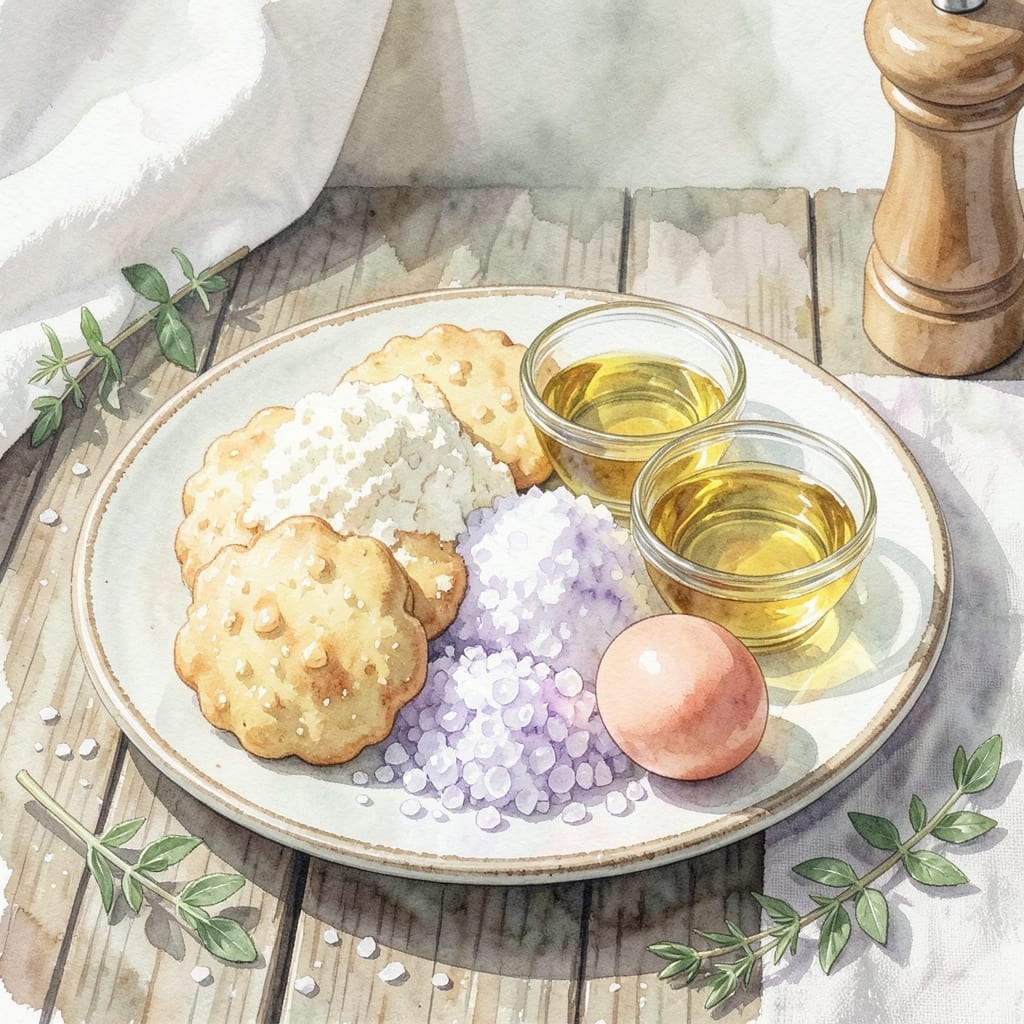
This recipe proves you don’t need butter or vanilla to make perfect sugar cookies. Oil creates a tender, slightly chewy texture that’s just as satisfying.
Simple ingredients and precise mixing ensure consistent results every time. The cookies bake evenly with golden edges and soft centers, delivering classic sweetness in every bite.
Ingredients for Sugar Cookie Recipe Without Butter and Vanilla Extract
Oil replaces butter here, creating tender cookies with golden edges and soft centers.
| Ingredient | Amount | Notes |
|---|---|---|
| All-Purpose Flour 🌾 | 2 ½ cups | Spoon and level, not scooped |
| Granulated Sugar 🍚 | 1 cup | Fine white sugar preferred |
| Vegetable Oil 🫒 | ½ cup | Neutral flavor, like canola |
| Large Eggs 🥚 | 2 whole | Room temperature for even mixing |
| Baking Powder 🧂 | 1 tsp | Aluminum-free for best rise |
| Salt 🧂 | ½ tsp | Fine sea salt preferred |
| Almond Extract 🌰 | ½ tsp | Pure extract, not imitation |
| Lemon Zest 🍋 | 1 tsp | Freshly grated for brightness |
| Powdered Sugar 🍚 | ½ cup | For dusting finished cookies |
The oil is critical—vegetable or canola oil provides the right texture without altering flavor. All-purpose flour is standard, but weigh it for precision (1 cup = 120g). For the best rise, use aluminum-free baking powder, which prevents metallic aftertastes. Room temperature eggs emulsify better with the oil, ensuring even texture throughout the batch.
No almond extract? Lemon or orange extract works at the same ratio. For a richer flavor, add 1 additional egg yolk. The lemon zest can be swapped for 1/2 tsp citrus oil if you prefer intensity. Powdered sugar is optional but adds a professional finish—skip it for a rustic look.
Store baked cookies in an airtight container at room temperature for up to 5 days. The dough can be refrigerated for 2 days or frozen for 1 month. Freeze dough in balls for easy baking straight from the freezer.
Why You’ll Love This Recipe
- No-Fuss Mixing: I just dump the flour, sugar, oil, eggs, and baking powder in one bowl—no creaming butter, no waiting for it to soften.
- Crisp Edges, Soft Centers: The oil gives them this melt-in-your-mouth texture that honestly rivals my old butter-based recipe.
- Last-Minute Hero: I’ve pulled these together for school bake sales, unexpected guests, even a midnight craving (yes, even on a Tuesday night).
- Pantry Staples Only: Between us, I always have these ingredients on hand, so I’m never more than 20 minutes away from fresh cookies.
Step-by-Step Instructions for Sugar Cookies with Oil and Almond Flavor
This method ensures tender, perfectly textured cookies with a delicate almond note and bright citrus finish.
Step 1: Combine Dry Ingredients for Structure
In a medium bowl, whisk together the 2.5 cups All-Purpose Flour, 1 tsp Baking Powder, and 0.5 tsp Salt. This aerates the flour and distributes the leavening agent evenly, preventing dense spots in your cookies.
The baking powder provides lift without butter’s steam, so proper distribution is critical. I always sift these ingredients first when making delicate cookies, but whisking works just as well for this recipe.
Step 2: Cream Sugar and Oil for Tenderness
In a large bowl, combine the 1 cup Granulated Sugar and 0.5 cup Vegetable Oil. Beat on medium speed for 2-3 minutes until the mixture lightens slightly in color and becomes slightly fluffy.
This creaming process incorporates air into the fat (oil in this case), which replaces the air that butter would normally hold. You won’t get the same volume as with butter, but the texture will be tender and moist.
Add the 2 whole Large Eggs one at a time, beating well after each addition. Then mix in the 0.5 tsp Almond Extract and 1 tsp Lemon Zest until fully incorporated.
Step 3: Form and Chill the Dough
Gradually add the dry ingredients to the wet mixture, beating on low speed just until combined. The dough will be slightly sticky but should hold together when pressed. Overmixing develops gluten, which makes cookies tough.
Divide the dough into two portions, flatten into discs, and wrap in plastic. Refrigerate for at least 1 hour (or up to 24 hours). Chilling firms the dough, making it easier to roll and cut while preventing excessive spreading during baking.
Step 4: Roll, Cut, and Bake to Golden Perfection
Preheat oven to 350°F. On a lightly floured surface, roll out one dough disc to ¼-inch thickness. Cut into desired shapes using cookie cutters. Place shapes 1 inch apart on parchment-lined baking sheets.
Bake for 8-10 minutes or until the edges are just beginning to turn golden brown. The centers may still look slightly underdone, but they’ll firm up as they cool. Rotate pans halfway through for even baking.
This timing ensures the cookies stay tender. Oil-based doughs brown differently than butter-based ones, so watch for that subtle color change rather than relying solely on time.
Step 5: Cool and Finish with Powdered Sugar
Allow cookies to cool on the baking sheet for 5 minutes before transferring to a wire rack to cool completely. This brief rest prevents breaking while still warm.
Once completely cooled, dust generously with 0.5 cup Powdered Sugar. The fine sugar adheres to the slightly tacky surface of the cooled cookies, creating a professional bakery finish.
The almond extract provides depth while the lemon zest adds a bright contrast. These flavors develop further as the cookies rest, so I recommend waiting at least 30 minutes before serving for optimal taste.
Pro Tips For Making Sugar Cookie Recipe Without Butter And Vanilla Extract
- Chill the Dough: After mixing, refrigerate the dough for at least 30 minutes—I learned this the hard way when my first batch spread into a single giant cookie.
- Measure Flour Right: Spoon flour into your measuring cup and level it off; scooping directly from the bag packs it down and makes cookies dense.
- Skip Overmixing: Once the flour disappears, stop mixing. Overworking the dough develops gluten, and you’ll end up with tough cookies instead of tender ones.
- Use Room-Temp Eggs: Crack eggs into a bowl of warm water for 5 minutes if they’re cold—room-temp eggs blend smoother into the oil and sugar, which actually changes the outcome.
Wine and Beer Pairings for This Recipe
Sweet Wine Companions
A glass of Moscato d’Asti from Italy pairs beautifully—the light fizz and peach-apricot notes complement the almond flavor. The low alcohol content (around 5-6% ABV) won’t overpower the delicate cookie. 🍷
Dessert Wines
For a richer experience, try Sauternes from Bordeaux. Its honeyed sweetness and apricot aromas mirror the sugar cookie’s flavor profile. Serve chilled at 45-50°F for the best balance of acidity and sweetness.
Coffee Pairings
An espresso or cold brew cuts through the sweetness perfectly. The bitterness of a dark roast contrasts with the cookie’s tenderness. I love dipping the edges into my morning coffee for a quick treat.
Craft Beer Options
A Belgian Tripel with its fruity esters and spice notes creates an interesting contrast. Lindemans Framboise, a raspberry lambic, offers a tart counterpoint to the sweet cookies. Both should be served at 45-50°F. 🍺
Non-Alcoholic Choices
Sparkling apple cider provides the same effervescence as wine without alcohol. A chilled vanilla chai latte enhances the almond notes, while lemonade brings out the citrus zest in the cookies.
Tea Pairings
Earl Grey tea’s bergamot notes harmonize with the lemon zest. Chamomile tea offers a soothing, floral complement to the almond flavor. Both work wonderfully as an afternoon pick-me-up with these cookies.
Nutrition Facts
Frequently Asked Questions
Why use oil instead of butter?
Oil creates a softer, more tender texture and prevents spreading. It also keeps cookies moist longer than butter-based versions.
What can replace vanilla extract?
Almond extract adds depth, while lemon or orange zest brightens the flavor. Use ½ tsp of either for best results.
How do I prevent cookies from spreading too much?
Chill the dough for at least 1 hour before baking. This firms the oil, helping maintain shape in the oven.
Can I use a different fat instead of vegetable oil?
Coconut oil works, but use refined for a neutral taste. Melted margarine is another option, though it may slightly alter texture.

- BBQ Sausage Recipe Oven: Smoky Depth Without the Grill - September 28, 2026
- BBQ Chicken Bowl Recipe Rice: Smoky Sweetness Over Fluffy Grains - September 28, 2026
- Beef Cutlet Recipe Ideas: Crispy Breaded Patties With Bold Seasonings - September 28, 2026