
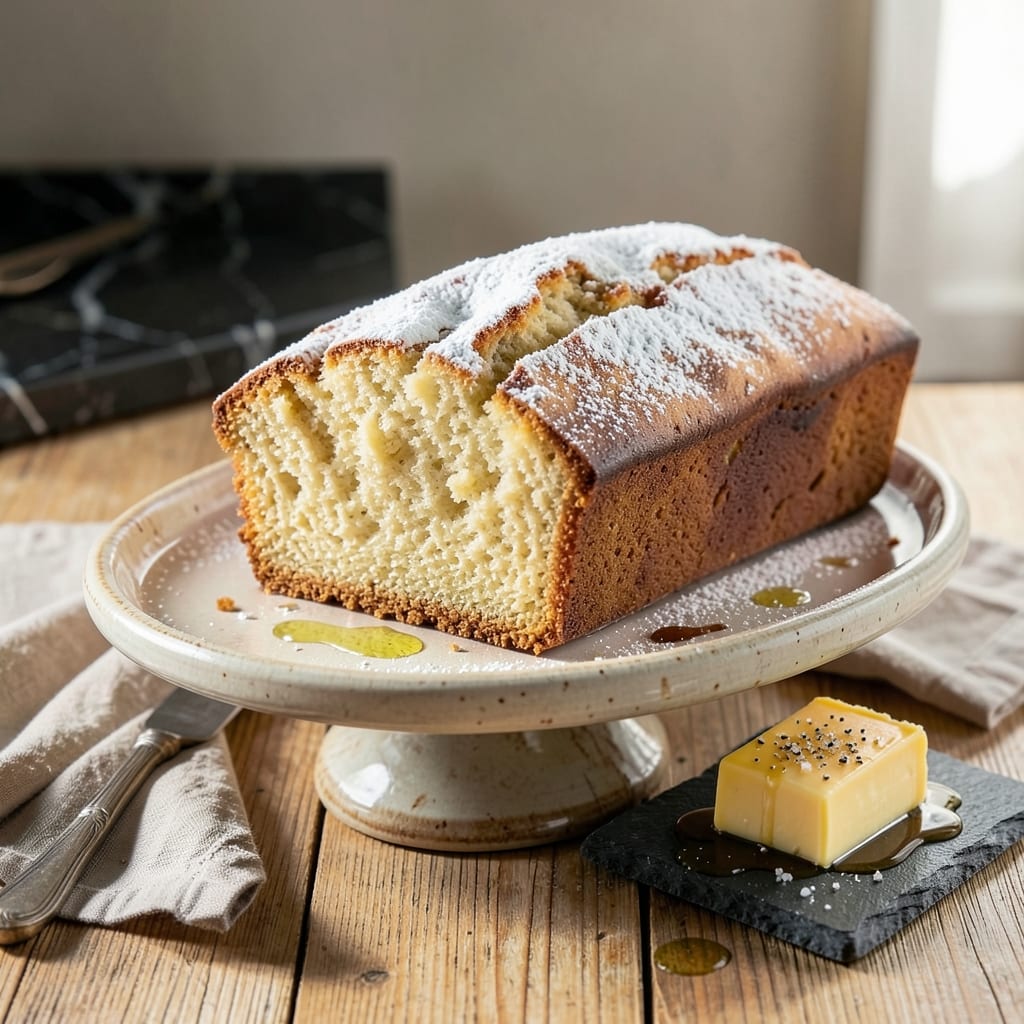
There’s a reason pound cake remains a timeless classic—its simplicity delivers rich, buttery flavor in every bite. This version uses salted butter for a subtle depth that enhances the vanilla aroma without overpowering it.
I’ve perfected this recipe through years of testing, focusing on the precise balance between density and moisture. The salted butter creates a tender crumb while adding a sophistication that plain butter can’t match.
What emerges from the oven is a golden cake with a dense, velvety texture and a rich vanilla scent that fills the kitchen. It’s the kind of dessert that feels both nostalgic and freshly modern.
Serve it warm or at room temperature, plain or with fresh berries. The versatility makes it perfect for any occasion.
Ingredients for Pound Cake Recipe with Salted Butter
Classic ingredients create that perfect dense crumb and rich vanilla aroma everyone loves.
| Ingredient | Amount | Notes |
|---|---|---|
| Salted Butter 🧈 | 1 lb | Room temperature, high quality |
| Granulated Sugar 🍚 | 2 cups | Fine white sugar preferred |
| Large Eggs 🥚 | 6 whole | Room temperature for even mixing |
| All-Purpose Flour 🌾 | 3 cups | Sifted for best texture |
| Baking Powder 🧂 | 1 tsp | Aluminum-free for clean flavor |
| Pure Vanilla Extract 🌿 | 2 tsp | Real vanilla, not imitation |
| Whole Milk 🥛 | ¼ cup | Room temperature for smooth batter |
| Fine Sea Salt 🧂 | ½ tsp | Adjust to taste with salted butter |
| Heavy Cream 🥛 | ¼ cup | For extra richness optional |
| Vanilla Bean 🌿 | 1 whole | Seeds scraped for visible spec |
The butter quality is non-negotiable here. Plugra or European-style salted butter gives superior flavor and higher fat content for a tender texture. I source mine from Whole Foods or Trader Joe’s—both carry excellent options. The vanilla makes a noticeable difference too; Nielsen-Massey or Rodelle are top-tier. For the flour, King Arthur all-purpose is my go-to for consistent results. Always check your baking powder’s expiration date.
Need to substitute? Unsalted butter plus 1/4 tsp salt works if that’s what you have. The milk can be swapped with any percentage milk or even a splash of heavy cream for extra richness. No vanilla bean? Double the extract. For a lighter texture, replace 1/2 cup flour with cake flour. The eggs are essential for structure, but in a pinch, you could use 4 whole eggs plus 2 yolks.
Baked pound cake stays fresh at room temperature for 3-4 days wrapped tightly. Refrigerate for up to 1 week or freeze for 3 months. Slice before freezing for easy single servings. Bring to room temperature before serving for best texture and flavor.
Why You’ll Love This Recipe
- One Bowl Wonder: I just dump everything in one bowl—no mixer, no fuss. Honestly, it’s the easiest cake I’ve ever made.
- Buttery Bliss: The salted butter gives it that rich, caramelized depth. Here’s what sold me—no extra salt needed.
- Endless Possibilities: I’ve served it plain, with berries, or even toasted for French toast. My daughter picks out the raisins but still asks for seconds.
- Keeps Like a Dream: This stays moist for days. I’ll be real: I’ve made it on Sunday and snacked on it all week.
Step-by-Step Instructions for Pound Cake With Salted Butter
This method delivers the classic dense crumb and rich vanilla flavor you expect from a perfect pound cake.
Step 1: Cream Butter and Sugar to Ideal Consistency
Beat the 1 lb Salted Butter and 2 cups Granulated Sugar together on medium-high speed for 4-5 minutes until the mixture becomes pale and fluffy. The butter should be at room temperature to incorporate air properly and create a light texture.
Stop occasionally to scrape down the sides of the bowl with a silicone spatula. You’ll know it’s ready when the mixture holds peaks briefly when you lift the beaters. This step creates the foundation for your cake’s fine crumb.
Step 2: Incorporate Eggs and Vanilla Gradually
Add the 6 whole Large Eggs one at a time, mixing on medium speed for 20-30 seconds after each addition. This prevents the batter from curdling and ensures even distribution of the eggs throughout the mixture.
After the eggs, beat in the 2 tsp Pure Vanilla Extract and the scraped seeds from the 1 whole Vanilla Bean. The combination of extract and fresh seeds provides both intense flavor and visible vanilla flecks for a bakery-quality appearance.
Step 3: Combine Dry Ingredients and Alternate with Liquids
In a separate bowl, whisk together the 3 cups All-Purpose Flour, 1 tsp Baking Powder, and 0.5 tsp Fine Sea Salt. Sifting the flour beforehand helps prevent lumps and ensures a smooth batter.
With the mixer on low speed, add about one-third of the flour mixture to the butter-sugar-egg combination. Mix just until combined, then pour in 0.25 cup Whole Milk. Repeat this process, ending with the last portion of flour. Avoid overmixing to maintain a tender crumb.
Step 4: Add Heavy Cream and Prepare for Baking
Gently fold in the 0.25 cup Heavy Cream by hand using a silicone spatula. This additional liquid enriches the batter and contributes to the cake’s signature dense yet moist texture. Mix only until the cream is fully incorporated—overworking the batter at this stage can develop gluten and make the cake tough.
Pour the batter into a greased and floured 10-inch Bundt pan or 9×5-inch loaf pan. Smooth the top with the spatula to ensure even baking. Tap the pan gently on the counter a few times to remove any large air bubbles.
Step 5: Bake and Cool Properly
Preheat your oven to 325°F. Bake the cake for 60-75 minutes or until a wooden toothpick inserted into the center comes out clean or with a few moist crumbs attached. The low and slow baking temperature prevents the top from browning too quickly while allowing the interior to cook evenly.
Let the cake cool in the pan for 15 minutes, then transfer it to a wire rack to cool completely. Cooling in the pan too long can make the cake soggy, while removing it too soon may cause it to collapse. Serve at room temperature for the best texture and flavor.
Pro Tips For Making Pound Cake Recipe With Salted Butter
- Room Temp Butter: Pull your salted butter out 1-2 hours before baking—cold butter won’t cream properly with the sugar, and you’ll end up with a dense cake.
- Beat Long Enough: After adding each egg, beat the mixture for a full 30 seconds before adding the next. I learned this the hard way—skipping this leaves streaks of egg in the batter.
- Measure Flour Right: Spoon your all-purpose flour into the measuring cup, then level it off—scooping directly from the bag packs it down and adds too much, making the cake dry.
- Low and Slow: Bake at 325°F instead of 350°F. Sounds weird, but it works: the lower temp prevents the top from browning too fast while the center cooks through.
Regional Styles of This Dish
Southern Style
Down South, we often add a touch of lemon zest to brighten the rich butter flavor. The acidity cuts through the density beautifully. I also fold in ½ cup toasted pecans for texture. Bake in a well-greased tube pan for even browning. 🌟
French Influence
In Provence, they might infuse the milk with lavender or earl grey tea before mixing. The floral notes pair wonderfully with salted butter. Serve with crème fraîche and fresh raspberries for a sophisticated twist.
British Variation
Brits often use self-raising flour instead of all-purpose plus baking powder. The result is slightly lighter but still dense. I’ve found Doves Farm brand works beautifully. Brush the top with melted butter post-baking for extra shine.
Appalachian Tradition
Mountain bakers sometimes substitute brown sugar for half the granulated, adding molasses depth. A drizzle of sorghum syrup on warm slices nods to regional history. The cake stays moist for days in a cast iron skillet. 💛
Coastal New England
Maine cooks often fold in wild blueberries or diced apples for a fruity contrast. The salted butter complements the tartness. I use Maine-grown produce when I can find it at the farmers market.
Texas Twist
Everything’s bigger here, so some add 1 tsp cinnamon or ½ tsp nutmeg to the batter. Serve with vanilla ice cream and a drizzle of bourbon caramel for true Lone Star flair.
Nutrition Facts
Frequently Asked Questions
Why use salted butter instead of unsalted?
Salted butter adds subtle depth and balances sweetness in the cake. The salt enhances the vanilla and buttery flavors without making it taste salty.
How do I prevent the cake from being too dense?
Cream the butter and sugar thoroughly for 4-5 minutes. Add eggs one at a time and avoid overmixing the flour. This creates air pockets for a lighter texture.
Can I bake this in a different pan?
Yes! A 9×5-inch loaf pan or 10-inch Bundt pan both work. Adjust baking time—start checking at 50 minutes for loaf pans.
How should I store the cake?
Wrap tightly at room temperature for 3-4 days. For longer storage, refrigerate up to 1 week or freeze for 3 months.

- Pudding Recipe With Egg Yolks: Silky Smooth Custard in Minutes - November 3, 2026
- Pudding Pops Recipe Cook and Serve: Silky Frozen Treats Without the Machine - November 3, 2026
- Protein Ice Cream Recipe Blender Xanthan Gum: Ultra Creamy Texture Without the Guilt - November 3, 2026