
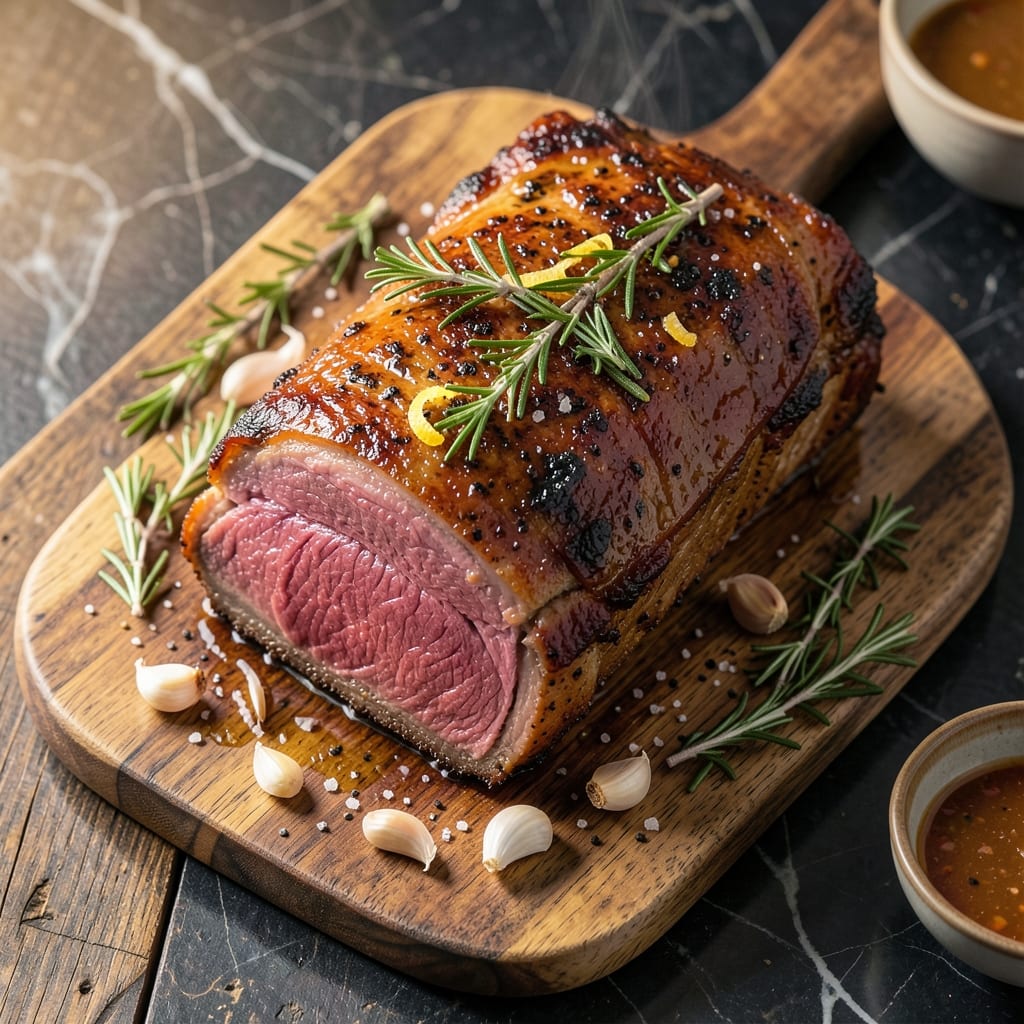
This reverse sear method transforms prime rib into a juicy, tender masterpiece with minimal effort. The high-heat finish at 500 degrees creates a perfect crust while locking in natural flavors.
I developed this technique after years of testing, discovering that starting low and finishing hot delivers restaurant-quality results every time. The key is patience—slow roasting first, then searing for that ideal texture.
You’ll achieve evenly cooked meat from edge to edge, with a deeply browned exterior that gives way to incredibly tender slices. This method works for any size roast.
Serve with au jus for an unforgettable centerpiece at your next gathering.
Ingredients for Prime Rib Recipe Cook at 500 Degrees
Quality ingredients create that restaurant-worthy prime rib with perfect crust and tender interior every time.
| Ingredient | Amount | Notes |
|---|---|---|
| Prime Rib Roast 🥩 | 4 lb | Bone-in, well-marbled preferred |
| Kosher Salt 🧂 | 1 ½ tbsp | Diamond Crystal brand recommended |
| Coarse Black Pepper 🌶️ | 1 tbsp | Freshly ground for best flavor |
| Garlic Cloves 🧄 | 6 cloves | Smashed, peeled for rub |
| Fresh Rosemary 🌿 | 2 tbsp | Finely chopped, stems discarded |
| Fresh Thyme 🍃 | 2 tbsp | Leaves stripped from stems |
| Olive Oil 🫒 | ¼ cup | Extra-virgin for herb rub |
| Red Wine 🍷 | 2 cups | Dry variety for au jus |
| Beef Stock 🥣 | 2 cups | Low-sodium preferred for au jus |
| Unsalted Butter 🧈 | 4 tbsp | For finishing the au jus |
| All-Purpose Flour 🌾 | 1 tbsp | Optional for thickening au jus |
| Yellow Onion 🧅 | 1 whole | Roughly chopped for au jus |
| Carrots 🥕 | 2 whole | Peeled, roughly chopped for au jus |
| Celery Stalks 🥬 | 2 whole | Roughly chopped for au jus |
The prime rib is non-negotiable here—bone-in with good marbling (look for bright red meat and creamy white fat). Costco and Whole Foods carry excellent options, but any reputable butcher will have what you need. Ask for the ribeye end if you want extra flavor. The salt should be Diamond Crystal kosher—its larger crystals adhere better to the meat’s surface for an even crust.
No red wine? Substitute with additional beef stock plus a splash of balsamic vinegar. Fresh herbs are ideal, but dried at one-third the amount works in a pinch. For the au jus, low-sodium stock lets you control the seasoning. Skip the flour if you prefer a thinner sauce, or use cornstarch for a gluten-free option. The butter must be unsalted—salted will overpower the au jus.
Prime rib keeps well in the fridge for 3-4 days before cooking. Store it uncovered on a rack to let the surface dry—this improves the crust. The au jus can be made 2 days ahead and reheated. Leftovers? Slice and freeze for 3 months in airtight containers.
Why You’ll Love This Recipe
- No-Fuss Method: That high-heat start locks in juices while the salt and pepper do all the work.
- Garlic-Rosemary Crust: The garlic and rosemary form this insane crust that makes every bite ridiculous.
- Holiday Ready: I’ve served this for Christmas and Sunday dinner—works both times.
- Leftovers for Days: Honestly, the sandwiches I make with the leftovers might be better than the original meal.
Step-by-Step Instructions for Prime Rib Cook at 500 Degrees
This reverse sear method guarantees perfectly juicy slices with a beautiful crust.
Step 1: Prepare the Herb Rub and Season Generously
In a small bowl, combine the 1.5 tbsp Kosher Salt, 1 tbsp Coarse Black Pepper, 2 tbsp Fresh Rosemary, 2 tbsp Fresh Thyme, and 6 cloves Garlic Cloves with the 0.25 cup Olive Oil to create a fragrant paste. The oil helps the herbs adhere while forming a protective barrier for the meat.
Pat the 4 lb Prime Rib Roast completely dry with paper towels—this ensures the rub sticks properly and promotes even browning. Massage the herb mixture all over the roast, pressing firmly into every crevice. Let it sit at room temperature for 1 hour to allow the flavors to penetrate the surface.
Step 2: Begin the Reverse Sear at Low Temperature
Preheat your oven to 250°F. Place the seasoned roast bone-side down on a wire rack set over a rimmed baking sheet. This elevation allows air to circulate, ensuring even cooking. Insert a meat thermometer into the thickest part of the roast, avoiding the bone.
Roast until the internal temperature reaches 110-115°F for medium-rare, which typically takes 1.5 to 2 hours for a 4 lb cut. The low-and-slow approach ensures the center cooks gently while the outer layers develop flavor without overcooking.
Step 3: Finish with a High-Temperature Sear
Increase the oven temperature to 500°F. Once preheated, return the roast to the oven and cook for 10-15 minutes until the external temperature reaches 125-130°F and the crust is a deep golden brown. This final blast of heat creates a caramelized crust while locking in juices.
Watch closely to prevent burning—the sugars in the herb rub can char quickly at this temperature. The roast should have a uniformly crisp exterior with a slightly softer center when pressed with tongs.
Step 4: Rest and Prepare the Au Jus
Transfer the roast to a cutting board, tent loosely with foil, and let it rest for 20-30 minutes. This allows the juices to redistribute, ensuring each slice remains moist. Meanwhile, place the baking sheet with rack on the stovetop over medium-high heat.
Add the 1 whole Yellow Onion, 2 whole Carrots, and 2 whole Celery Stalks to the pan, cooking for 3-4 minutes until softened. Deglaze with the 2 cups Red Wine and 2 cups Beef Stock, scraping up browned bits. Simmer for 10 minutes, then strain. For a thicker sauce, whisk in the 1 tbsp All-Purpose Flour with 4 tbsp Unsalted Butter off heat.
Pro Tips For Making Prime Rib Recipe Cook At 500 Degrees
- Preheat Fully: I learned this the hard way—your oven needs a full 30 minutes at 500°F before the roast goes in, or that perfect crust won’t form.
- Dry the Roast: Pat the prime rib bone-dry with paper towels before seasoning; even a little moisture steams the surface instead of searing it.
- Skip the Cover: Resist the urge to tent with foil during the high-heat phase—it traps steam and softens the crust you’re paying for.
- Rest Under Foil: After pulling it at 115°F internal temp, loose-tent with foil and wait 20 minutes—it’ll rise to a perfect medium-rare while the juices settle.
Regional Styles of This Recipe
Texas Style
In the Lone Star State, they prefer a simple salt and pepper rub with no herbs. The focus is on the beef itself, often using a dry-aged prime rib for deeper flavor. I learned this approach from a pitmaster in Austin who swore by coarse black pepper for that signature crust. 🌶️
California Approach
West Coast chefs often incorporate fresh garlic and rosemary into their rub, sometimes adding a touch of Dijon mustard for a tangy kick. The high-heat finish at 500°F works perfectly with this style, creating a beautiful caramelized exterior. I love how the herbs complement the natural beef flavors.
Midwest Tradition
Back in Ohio, my dad always used a beer and soy sauce marinade before roasting. This method tenderizes the meat while adding a subtle sweetness. The reverse sear technique works wonderfully here, locking in that Midwest comfort flavor profile.
Pacific Northwest
Here in Portland, we often add juniper berries and sage to the rub for an earthy, woodsy note. Local butchers recommend this pairing with our grass-fed beef. The high-heat finish at 500°F brings out the best in these regional flavors. 🌿
French-Inspired
For a European twist, use herbes de Provence in your rub and add shallots to the au jus. This approach elevates the dish with sophisticated flavors while maintaining that perfect reverse sear texture. The crust develops a beautiful golden color.
Southwest Style
Add chipotle powder and cumin to your rub for a smoky, spicy kick. This pairs beautifully with the high-heat sear, creating a crust with deep, complex flavors. I’ve found this works particularly well with the bone-in cut from local ranches.
Nutrition Facts
Frequently Asked Questions
Why start with a low temperature?
The 250°F beginning ensures even cooking throughout the roast without overcooking the outer layers. This gentle heat allows the center to reach the perfect temperature while the exterior develops flavor.
How do I know when it’s done?
Use a meat thermometer! For medium-rare, remove from the oven when the internal temperature hits 110-115°F before the final sear. The 500°F finish will bring it to 125-130°F.
Can I skip the resting time?
Never skip resting! The 20-30 minutes allows juices to redistribute, ensuring moist, tender slices. Slicing too soon causes the juices to spill out, leaving the meat dry.
What if my crust burns at 500°F?
Watch closely after 10 minutes. If it browns too quickly, reduce heat to 450°F and tent with foil. The herb rub’s sugars can char fast at high temps.

- Progresso Recipe Starters Creamy Parmesan Basil Cooking Sauce: Rich Herb-Infused Base for Pasta and More - November 3, 2026
- Pudding Recipe With Egg Yolks: Silky Smooth Custard in Minutes - November 3, 2026
- Pudding Pops Recipe Cook and Serve: Silky Frozen Treats Without the Machine - November 3, 2026