
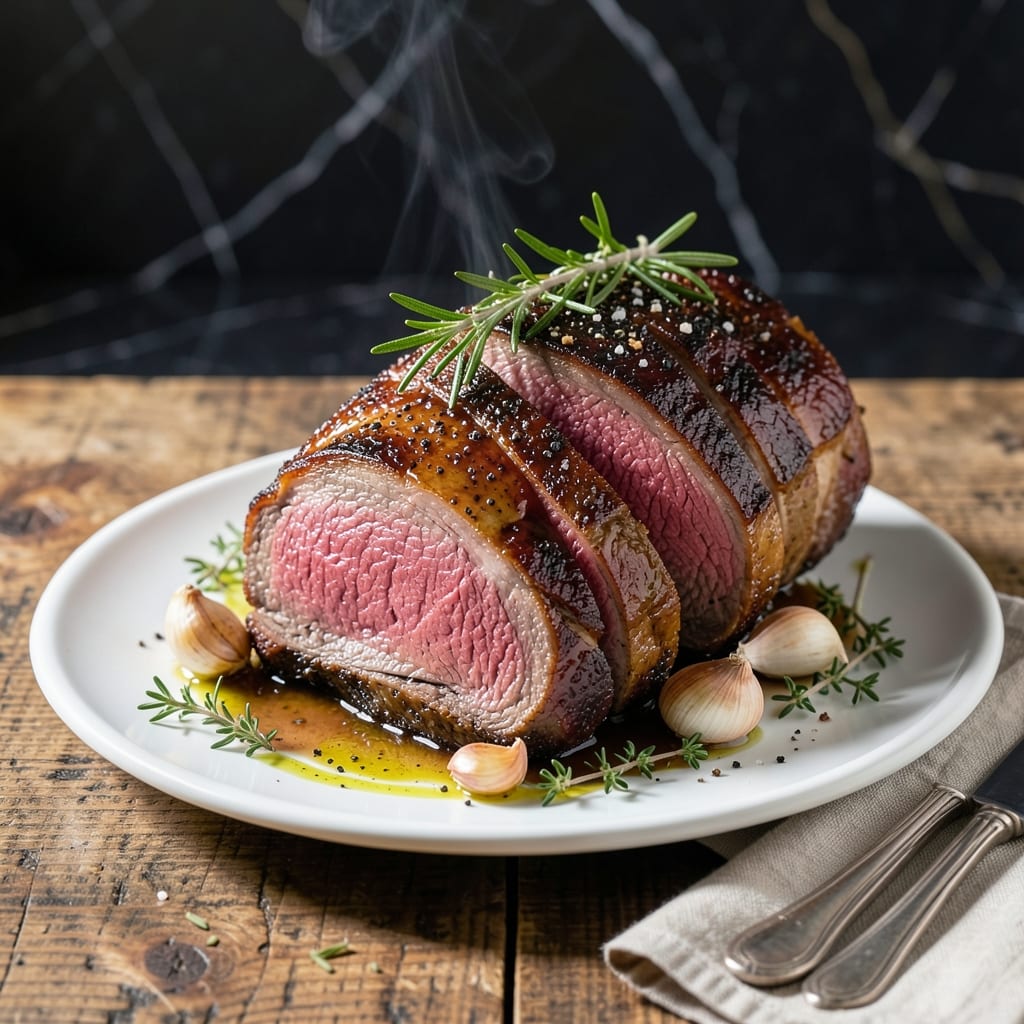
I discovered the magic of low-temperature roasting while working with a Portland butcher who swore by this method. 250°F transforms tough cuts into melt-in-your-mouth perfection.
This approach gives you full control over doneness, from edge to center. The slow roast allows the fat to render gradually, basting the meat from within.
What emerges is prime rib with a perfectly rosy interior and a flavor so deep it needs no embellishment. The crust develops a rich, caramelized exterior.
Serve with simple sides that won’t compete with the star. This method delivers restaurant-quality results every time.
Ingredients for Prime Rib Roast Recipe 250 Degrees
This is restaurant-quality beef with just pantry basics and fresh herbs.
| Ingredient | Amount | Notes |
|---|---|---|
| Prime Rib Roast 🥩 | 4 lb | Bone-in, well-marbled chuck end |
| Kosher Salt 🧂 | 2 tbsp | Diamond Crystal preferred for texture |
| Freshly Ground Black Pepper 🌶️ | 1 ½ tbsp | Coarse grind for crust |
| Garlic Cloves 🧄 | 8 cloves | Smashed, unpeeled for roasting |
| Fresh Rosemary Sprigs 🌿 | 4 whole | Woody stems removed, roughly chopped |
| Fresh Thyme Sprigs 🍃 | 4 whole | Stems intact for easy removal |
| Extra-Virgin Olive Oil 🫒 | ¼ cup | High-quality for searing finish |
| Unsalted Butter 🧈 | 4 tbsp | Softened for herb compound butter |
| Dijon Mustard 🟡 | 2 tbsp | For crust adhesion |
| Red Wine 🍷 | 1 cup | Dry bold variety like Cabernet |
| Beef Stock 🥩 | 1 cup | Low-sodium preferred |
| Yellow Onion 🧅 | 1 whole | Quartered for pan aromatics |
| Carrots 🥕 | 3 whole | Peeled, cut into chunks |
| Celery Stalks 🥬 | 2 whole | Cut into large pieces |
The rib roast is everything here. USDA Prime or Choice grade with good marbling—Costco or a trusted butcher are your best bets. Look for the chuck end (ribs 6-10) which has more fat than the loin end, perfect for low-temp roasting. Bone-in gives better flavor, but boneless works if that’s what’s available (just adjust cooking time). Avoid pre-seasoned cuts; you want to control the salt yourself.
No fresh herbs? Dried at one-third the amount, but fresh really does make a difference here. Short on red wine? Beef broth with a splash of balsamic vinegar works in a pinch. If you can’t find Dijon, whole-grain mustard adds a nice texture. The butter can be omitted for a leaner crust, but I wouldn’t recommend it—it’s worth the extra richness.
Leftovers keep beautifully—slice thin for sandwiches that’ll blow deli versions away. Store wrapped in foil for up to 5 days in the fridge, or freeze for 3 months. Always bring to room temp before reheating to preserve that perfect rosy interior (the good stuff, not the pre-shredded kind).
Why You’ll Love This Recipe
- Set It and Forget It: I rub the roast with salt, pepper, garlic, and rosemary, pop it in at 250, and let the oven do the work for hours.
- Melt-in-Your-Mouth Tender: That low and slow heat turns the prime rib so tender, the garlic-rosemary crust is just the cherry on top.
- Holiday Hero: This is my showstopper for Christmas dinner—impressive but unfussy, and it feeds a crowd without the stress.
- Leftovers for Days: Honestly, the sandwiches I make with the extras might be even better than the first meal.
Step-by-Step Instructions for Prime Rib Roast
This low-and-slow method guarantees tender, evenly cooked meat with a perfect crust.
Step 1: Prep and Season the Prime Rib Roast
Remove the 4 lb Prime Rib Roast from the refrigerator 2 hours before cooking to bring it to room temperature. Pat it completely dry with paper towels—this ensures the seasoning adheres properly and promotes browning.
In a small bowl, mix the 2 tbsp Kosher Salt and 1.5 tbsp Freshly Ground Black Pepper. Rub this mixture all over the roast, pressing it into the meat so it forms a crust. This dry brining step enhances flavor and tenderness. Place the seasoned roast on a rack set over a plate and let it sit uncovered.
Step 2: Create the Herb and Garlic Compound for Depth
In a food processor or with a knife, finely chop the 8 cloves Garlic Cloves, 4 whole Fresh Rosemary Sprigs, and the leaves from the 4 whole Fresh Thyme Sprigs. Combine this with the 4 tbsp Unsalted Butter and 2 tbsp Dijon Mustard to form a paste.
Spread this herb compound evenly over the entire surface of the roast. The Dijon Mustard acts as a binder, helping the herbs and butter cling to the meat during cooking. This layer will form a flavorful crust as the roast slow-cooks.
Step 3: Slow-Roast at Low Temperature
Preheat your oven to 250°F. Place the roast bone-side down in a roasting pan. Add the 1 whole Yellow Onion, 3 whole Carrots, and 2 whole Celery Stalks to the pan—these vegetables will add aroma and depth to the cooking environment.
Roast uncovered for 3 to 3.5 hours (about 45-50 minutes per pound) until the internal temperature reaches 120-125°F for medium-rare. Use a meat thermometer to check doneness in the thickest part of the roast, avoiding the bone. The low temperature ensures even cooking without drying out the meat.
Step 4: Sear for a Perfect Crust
Remove the roast from the oven and transfer it to a cutting board. Pour the 0.25 cup Extra-Virgin Olive Oil into a large skillet and heat over high heat until shimmering. Carefully place the roast in the skillet and sear for 1-2 minutes per side until deeply browned.
This final sear creates a beautiful, flavorful crust that contrasts with the tender interior. Be cautious—hot oil can splatter. Once seared, transfer the roast back to the cutting board and tent loosely with foil.
Step 5: Make the Pan Sauce and Rest Before Serving
Place the roasting pan with the vegetables on the stovetop over medium-high heat. Add the 1 cup Red Wine and 1 cup Beef Stock, scraping up any browned bits from the bottom of the pan. Simmer for 10-12 minutes until the liquid reduces by half and thickens slightly.
Strain the sauce through a fine-mesh sieve into a gravy boat or bowl. Let the roast rest for 20-30 minutes before carving—this allows the juices to redistribute for maximum tenderness. Slice against the grain and serve with the pan sauce.
Pro Tips For Making Prime Rib Roast Recipe 250 Degrees
- Dry the Roast: Pat the prime rib completely dry with paper towels before seasoning—I learned this the hard way after wondering why my crust never browned properly.
- Use a Meat Thermometer: At 250 degrees, the only way to nail medium-rare is to pull it at 120°F internal temp; guessing always ends in regret.
- Skip the Water Pan: Sounds counterintuitive, but adding water to the pan steams the meat instead of letting it develop that deep, crusty exterior.
- Rest Under Foil: Give it a full 20-30 minutes wrapped loosely in foil after cooking—this lets the juices redistribute so every slice stays juicy.
Wine and Beer Pairings for prime rib roast recipe 250 degrees
Bold Red Wines
A full-bodied Cabernet Sauvignon from Napa Valley is my top choice—the tannins soften against the beef’s richness. I also love a Malbec from Argentina for its dark fruit notes. Decant for 30 minutes to let the wine breathe and open up. 🍷
Elegant Whites
Surprisingly, a rich Chardonnay from Oregon’s Willamette Valley holds its own with the roast’s buttery crust. The oak aging complements the herb compound. Serve chilled to 55°F for optimal flavor.
Craft Beer Pairings
A Portland IPA from Great Notion Brewing cuts through the fat with its citrusy bitterness. For a maltier option, try a barrel-aged porter from Deschutes Brewery—its coffee notes pair beautifully. 🍺
Classic European Options
You can’t go wrong with a Bordeaux blend from France or a bold Rioja from Spain. Both have the structure to stand up to the prime rib’s intensity. I always have a few European bottles in my Portland cellar.
Dessert Wine Finish
For a special treat, serve a Port from Portugal with the meal’s final bites. Its sweetness contrasts the savory crust. Chill slightly to 60°F before pouring.
Nutrition Facts
Frequently Asked Questions
Why cook prime rib at such a low temperature?
Slow-roasting at 250°F ensures even cooking from edge to center. This gentle heat breaks down collagen gradually, resulting in tender, juicy meat without overcooking the outer layers.
How do I know when it’s done?
Use a meat thermometer! For medium-rare, pull it at 120-125°F internal temp. The temperature will rise another 5-10°F during resting. Always check the thickest part, avoiding bones.
Can I skip the searing step?
No! Searing creates the flavorful crust that makes this dish special. The 1-2 minutes per side in hot oil adds depth and texture contrast. It’s worth the extra effort.
What if my roast is larger than 4 pounds?
Add 45-50 minutes per pound to the cooking time. A 6 lb roast would need about 4.5-5 hours. Always use the thermometer as your guide, not just time.

- Pudding Recipe With Egg Yolks: Silky Smooth Custard in Minutes - November 3, 2026
- Pudding Pops Recipe Cook and Serve: Silky Frozen Treats Without the Machine - November 3, 2026
- Protein Ice Cream Recipe Blender Xanthan Gum: Ultra Creamy Texture Without the Guilt - November 3, 2026