
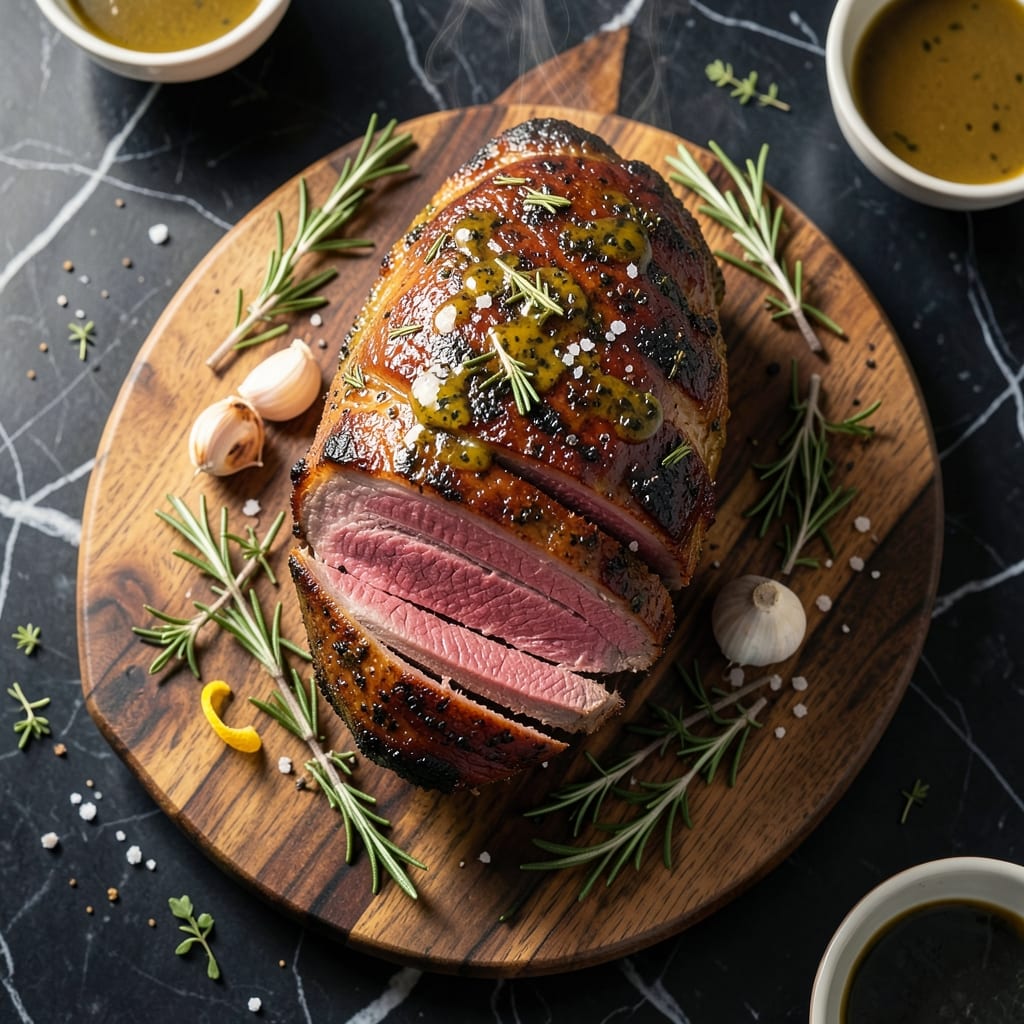
This prime rib method delivers restaurant-quality results every time, perfect for your holiday table. I developed this approach after years of testing, focusing on simplicity and precision.
The key is starting with a high-temperature sear to create a flavorful crust, then finishing at lower heat to ensure even cooking throughout. This guarantees tender, juicy meat with a beautifully browned exterior.
What you get is a show-stopping centerpiece that impresses guests without requiring advanced techniques. The meat stays perfectly pink from edge to edge, with rich, beefy flavor in every bite.
Serve with au jus for dipping and your favorite sides. This recipe makes holiday cooking stress-free.
Ingredients for Prime Rib Roast Recipe America’s Test Kitchen
A handful of quality ingredients create this impressive holiday centerpiece with minimal effort.
| Ingredient | Amount | Notes |
|---|---|---|
| Bone-In Prime Rib Roast 🥩 | 5 lb | First-cut ribeye preferred for even cooking |
| Kosher Salt 🧂 | 2 tbsp | Diamond Crystal brand recommended |
| Freshly Ground Black Pepper 🌶️ | 2 tsp | Coarse grind for crust |
| Garlic Cloves 🧄 | 6 cloves | Smashed and peeled |
| Fresh Rosemary Sprigs 🌿 | 4 whole | Stems removed and chopped |
| Fresh Thyme Sprigs 🍃 | 4 whole | Stems removed and chopped |
| Olive Oil 🫒 | 2 tbsp | Extra-virgin for richness |
| Dijon Mustard 🟡 | 2 tbsp | For herb paste crust |
| Red Wine 🍷 | 2 cups | Dry variety like Cabernet Sauvignon |
| Beef Stock 🥣 | 4 cups | Low-sodium preferred for au jus |
| Unsalted Butter 🧈 | 4 tbsp | For finishing the au jus |
| All-Purpose Flour 🌾 | 2 tbsp | For thickening au jus |
| Yellow Onion 🧅 | 1 whole | Roughly chopped for au jus |
The prime rib is the star—Costco and Whole Foods carry beautiful first-cut roasts during the holidays. Look for bright red meat with good marbling (those white fat streaks). Avoid pre-cut roasts if possible; a whole piece ensures even cooking. The kosher salt should be Diamond Crystal (the flaky kind) for even seasoning distribution. Fresh herbs are non-negotiable here—dried just won’t give you that vibrant crust.
No red wine? Beef broth with a splash of balsamic works in a pinch. Swap rosemary for fresh sage if that’s what you have. The Dijon can be whole-grain mustard for texture. For the au jus, chicken stock can replace beef, but the flavor won’t be as rich. If you’re out of butter, olive oil works but won’t add the same silkiness.
The roast needs to rest 30-45 minutes before carving—this keeps it juicy. Leftovers (if any) stay good for 4-5 days in the fridge, or freeze for 3 months. Slice cold meat thinly for sandwiches the next day.
Why You’ll Love This Recipe
- Set It and Forget It: Honestly, just salt, pepper, garlic, and rosemary on the roast, then let the oven do the work.
- That Crust Though: The bone-in prime rib gets this insane crispy, herby outer layer while staying tender inside.
- Holiday Hero: I make this for Christmas and birthdays—always impresses without the stress.
- Leftovers for Days: One roast means sandwiches, tacos, or hash for the whole week.
Step-by-Step Instructions for Prime Rib Roast
Follow this tested method for a showstopping holiday centerpiece with perfect crust and juicy interior.
Step 1: Create the Herb Paste and Season the Roast
Combine the 2 tbsp olive oil, 2 tbsp Dijon mustard, 2 tbsp kosher salt, 2 tsp freshly ground black pepper, and the chopped leaves from 4 whole fresh rosemary sprigs and 4 whole fresh thyme sprigs in a small bowl. Stir into a thick paste that clings to the meat.
Rub this paste all over the 5 lb bone-in prime rib roast, pressing it into every crevice. The mustard helps the seasoning adhere while creating a flavorful crust. Let it sit at room temperature for 1-2 hours before roasting to allow the flavors to penetrate the meat.
Step 2: Roast at High Heat for Crust Formation
Preheat your oven to 450°F. Place the seasoned roast bone-side down in a roasting pan. The bones act as a natural rack, promoting even cooking and allowing heat to circulate underneath.
Roast at 450°F for 30 minutes to develop a deep, flavorful crust. The high heat creates the Maillard reaction that gives prime rib its characteristic browned exterior. You’ll see the paste transform into a rich, golden crust as it caramelizes.
Step 3: Reduce Heat and Continue Roasting to Temperature
After the initial sear, reduce the oven temperature to 325°F and continue roasting. Insert a meat thermometer into the thickest part of the meat, avoiding the bone. Roast until the internal temperature reaches 120-125°F for medium-rare, which should take approximately 1.5-2 hours for a 5 lb roast.
The temperature will rise an additional 5-10°F during resting (carryover cooking), so remove it from the oven when it’s slightly below your target doneness. This two-stage roasting method ensures a perfect crust without overcooking the interior.
Step 4: Prepare the Au Jus While the Roast Rests
Place the roasting pan with all its drippings on the stovetop over medium heat. Add the roughly chopped yellow onion and cook for 3-4 minutes until softened. Sprinkle the 2 tbsp all-purpose flour over the onions and drippings, then whisk to combine.
Pour in the 2 cups red wine and 4 cups beef stock, scraping up all the browned bits from the pan. Simmer for 10-15 minutes until reduced by about a third. Whisk in the 4 tbsp unsalted butter one tablespoon at a time until the sauce is rich and glossy. Strain before serving.
Step 5: Rest, Carve, and Serve
Transfer the roast to a cutting board, tent loosely with foil, and let it rest for 20-30 minutes. This allows the juices to redistribute throughout the meat for maximum tenderness and flavor. The internal temperature will continue to rise during this time.
To carve, cut between the ribs to separate the roast into individual portions. Serve with the prepared au jus on the side. Each serving should display that beautiful pink center surrounded by the dark, flavorful crust you worked so hard to create.
Pro Tips For Making Prime Rib Roast Recipe America’S Test Kitchen
- Salt Overnight: I learned this the hard way—dry-brine your prime rib with kosher salt at least 12 hours ahead. It seasons deep into the meat and guarantees a perfectly crisp crust.
- Room Temp First: Pull the roast out of the fridge 2-3 hours before cooking. Cold meat cooks unevenly, and you’ll end up with a dry exterior before the center hits medium-rare.
- Skip the Water Pan: America’s Test Kitchen says to use one, but I’ve found it steams the crust. For a better sear, place the roast directly on the rack over a sheet pan—crispy outside, juicy inside.
- Rest 30 Minutes: Sounds excessive, but it’s non-negotiable for prime rib. Slicing too soon lets all the juices spill out—give it a full 30 minutes tented in foil before carving.
Storing and Reheating prime rib roast recipe americas test kitchen
Refrigerator Storage
Let your prime rib cool for no more than 2 hours before transferring to airtight containers. I use glass containers from Pyrex—they’re perfect for storing leftovers. The meat stays fresh at 40°F or below for up to 4-5 days. ❄️
Freezer Storage
For longer storage, wrap individual slices tightly in plastic wrap then place in freezer bags. Squeeze out excess air to prevent freezer burn. Your prime rib will maintain quality for up to 3 months at 0°F or below.
Stovetop Reheating
My preferred method for maintaining moisture. Place slices in a skillet with ¼ cup beef stock or au jus. Cover and heat over medium-low heat for 5-7 minutes, flipping once. The liquid creates steam that keeps the meat tender. 🔥
Oven Reheating
Preheat oven to 250°F. Place slices on a baking sheet, add a splash of beef stock, and cover with foil. Heat for 10-15 minutes until warmed through. This method works best for larger portions.
Microwave Reheating
For quick lunches, arrange slices on a microwave-safe plate with a damp paper towel. Heat on 50% power for 1-2 minutes, checking frequently. Add a spoonful of au jus to prevent drying out.
Pro Tip
Slice cold prime rib thinly for sandwiches—it’s a game-changer. I love making French dip sandwiches with the leftover au jus. The flavors actually intensify after a day in the fridge.
Nutrition Facts
Frequently Asked Questions
What’s the ideal internal temperature for medium-rare?
Remove from oven at 120-125°F. The temperature will rise to 130-135°F during resting. This ensures perfect pink throughout.
Can I use boneless instead of bone-in?
Yes, but adjust cooking time. Boneless cooks faster—check temperature 30 minutes earlier. Bones add flavor and act as a natural rack.
How long should it rest before carving?
Rest for 20-30 minutes tented with foil. This lets juices redistribute for maximum tenderness and flavor.
Why start with high heat?
The initial 450°F sear creates a flavorful crust via Maillard reaction. Then lower heat ensures even cooking inside.

- Progresso Recipe Starters Creamy Parmesan Basil Cooking Sauce: Rich Herb-Infused Base for Pasta and More - November 3, 2026
- Pudding Recipe With Egg Yolks: Silky Smooth Custard in Minutes - November 3, 2026
- Pudding Pops Recipe Cook and Serve: Silky Frozen Treats Without the Machine - November 3, 2026