
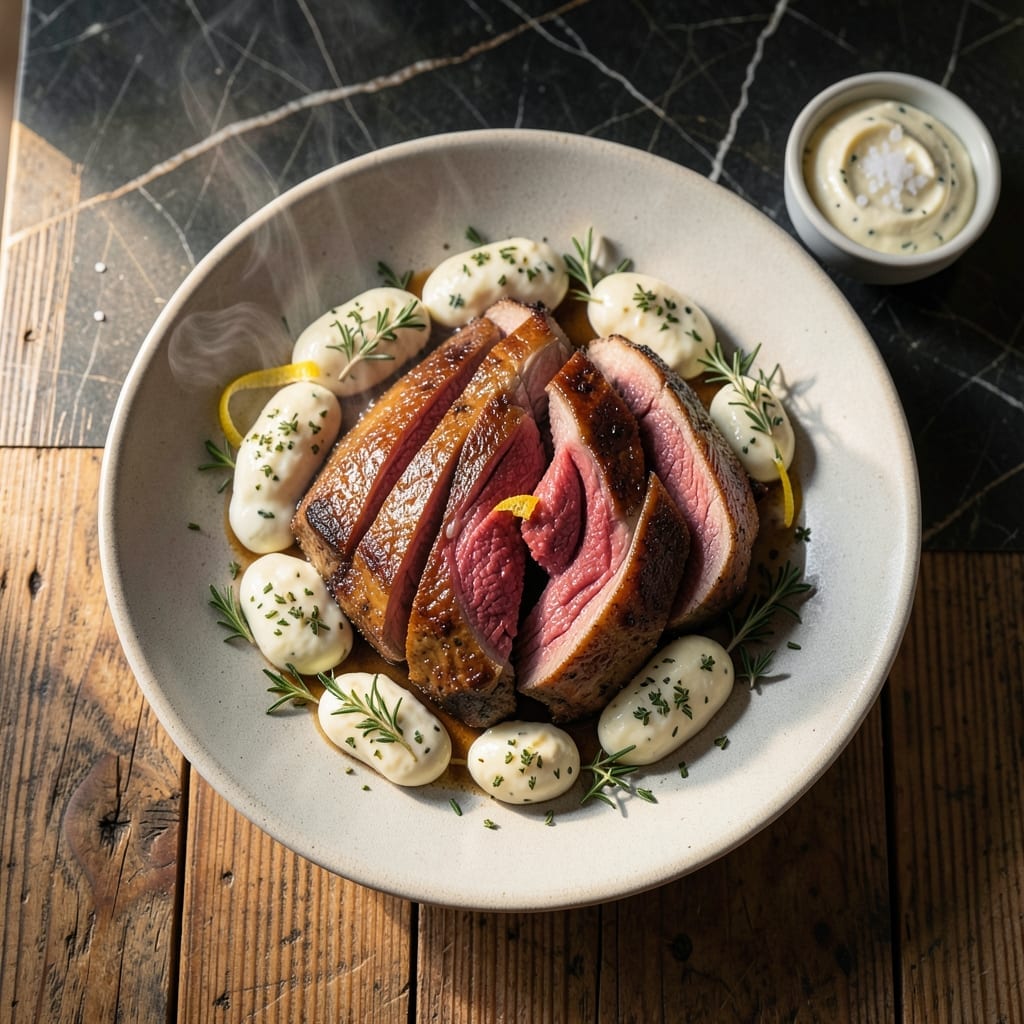
This prime rib roast with herb compound butter delivers perfect results every time. The secret lies in the rich, aromatic butter that elevates the natural beef flavor.
I developed this method to ensure a beautifully seared crust and tender, juicy interior. The compound butter, infused with fresh herbs, melts into the meat as it roasts, creating layers of flavor.
With precise timing and temperature control, you’ll achieve a roast that’s evenly cooked from edge to edge. The herb butter adds a luxurious finish that makes this dish truly special.
This technique guarantees a show-stopping centerpiece for any holiday table or special occasion. The compound butter can be prepared ahead, making the process seamless.
Ingredients for Prime Rib Roast Recipe Compound Butter
Rich beef, aromatic herbs, and compound butter create this restaurant-quality centerpiece with ease.
| Ingredient | Amount | Notes |
|---|---|---|
| Prime Rib Roast 🥩 | 4 lb | Bone-in, well-marbled preferred |
| Unsalted Butter 🧈 | 1 cup | Softened to room temperature |
| Fresh Rosemary 🌿 | 2 tbsp | Finely chopped, stems removed |
| Fresh Thyme 🍃 | 2 tbsp | Leaves only, finely chopped |
| Garlic Cloves 🧄 | 4 cloves | Minced or pressed |
| Kosher Salt 🧂 | 2 tbsp | Plus more for seasoning roast |
| Freshly Ground Black Pepper 🌶️ | 1 tbsp | Coarsely ground for crust |
| Dijon Mustard 🟡 | 2 tbsp | For compound butter base |
| Shallot 🧅 | 1 whole | Finely minced for butter |
| Red Wine 🍷 | ½ cup | Dry variety for deglazing |
| Beef Stock 🥣 | 1 cup | Low-sodium preferred for control |
| Olive Oil 🫒 | 2 tbsp | For searing crust |
The prime rib is the star here. Look for USDA Prime or Choice grade with abundant marbling—this fat renders down during cooking, basting the meat from within. Bone-in roasts provide better flavor and more even cooking. For sourcing, Whole Foods or a trusted butcher will have the best selection. Ask for the ribeye end (ribs 10-12) for optimal tenderness and fat distribution.
No fresh herbs? Dried at one-third the amount works, though the flavor won’t be as vibrant. Swap the red wine for beef broth with a splash of balsamic if avoiding alcohol. The Dijon mustard can be replaced with whole-grain mustard for more texture. If you can’t find shallots, yellow onion at half the quantity is a fine substitute—just mince it finely.
The compound butter can be made 2 days ahead and refrigerated. Bring it to room temperature before using. Leftovers (if any) freeze beautifully for 3 months. Slice the prime rib only when ready to serve to retain juices.
Why You’ll Love This Recipe
- Minimal Effort: I just mix softened butter with rosemary, thyme, and minced garlic—no fancy techniques required.
- Crave-Worthy Crust: The herb butter forms this golden, fragrant crust on the prime rib that’s honestly irresistible.
- Holiday Ready: I’ve served this for Christmas and Sunday dinners alike, and it always impresses.
- Leftovers? Please: Between us, the sandwiches I make with the leftovers taste even better the next day.
Step-by-Step Instructions for Prime Rib Roast
Achieve perfect results with this tested method for a show-stopping centerpiece.
Step 1: Prepare the Compound Butter
In a mixing bowl, combine the 1 cup Unsalted Butter with 2 tbsp Fresh Rosemary, 2 tbsp Fresh Thyme, 4 cloves Garlic Cloves, 2 tbsp Dijon Mustard, and 1 whole Shallot. Mix thoroughly until all ingredients are evenly distributed throughout the butter.
This herb-infused butter will create a flavorful crust and baste the roast as it cooks. The mixture should be soft and spreadable. I like to make this first so it has time to meld while I prep the roast.
Step 2: Season and Sear the Prime Rib Roast
Pat the 4 lb Prime Rib Roast completely dry with paper towels. This ensures a good sear. Season generously with 2 tbsp Kosher Salt and 1 tbsp Freshly Ground Black Pepper, pressing the seasoning into all surfaces of the meat.
Heat 2 tbsp Olive Oil in a large skillet over high heat. When the oil shimmers, sear the roast on all sides for 2-3 minutes per side until deeply browned. This creates a flavorful crust that locks in juices during roasting.
Step 3: Apply Compound Butter and Begin Roasting
Preheat your oven to 450°F. Place the seared roast bone-side down in a roasting pan. Spread the compound butter mixture evenly over the top and sides of the roast, pressing it into the meat.
The butter will melt and create a rich, herb-infused crust as it roasts. Insert a meat thermometer into the thickest part of the roast, avoiding the bone. Roast at 450°F for 20 minutes to start the cooking process.
Step 4: Reduce Heat and Finish Roasting
After the initial 20 minutes, reduce the oven temperature to 325°F. Continue roasting until the internal temperature reaches 120-125°F for medium-rare, which should take approximately 1 to 1.5 hours for a 4 lb roast.
Baste the roast with the pan juices every 30 minutes during cooking. You’ll know it’s ready when the thermometer reads your desired temperature and the crust is a deep, golden brown color.
Step 5: Rest and Make Pan Sauce
Transfer the roast to a cutting board and tent loosely with foil. Let it rest for 20-30 minutes—this allows the juices to redistribute for maximum tenderness.
While the roast rests, place the roasting pan on the stovetop over medium heat. Add 0.5 cup Red Wine and bring to a simmer, scraping up any browned bits. Add 1 cup Beef Stock and simmer for 5-7 minutes until slightly reduced. Strain and serve with the carved roast.
Pro Tips For Making Prime Rib Roast Recipe Compound Butter
- Room Temp Butter: Take the unsalted butter out 30 minutes before mixing—it blends way easier with the rosemary and garlic when soft, not rock-hard.
- Crush the Garlic: Smash the garlic cloves with the flat of your knife before mincing; it releases more flavor into the compound butter and saves you from chewing on chunks later.
- Don’t Over-Salt: Since prime rib is already well-seasoned, go light on salt in your compound butter—more than ¼ teaspoon for a stick of butter and you’ll regret it.
- Chop Herbs Fine: Finely mince the fresh rosemary and thyme so they distribute evenly and don’t leave big green flecks that overpower any single bite.
Health Benefits of These Flavors
Rich in Protein
Prime rib is an excellent source of high-quality protein, with a 4-ounce serving providing about 28 grams. This supports muscle maintenance and repair, making it a great choice for active lifestyles. I love how satisfying it is without feeling heavy. 💪
Iron and Zinc Boost
Beef is naturally rich in heme iron, which your body absorbs more easily than plant-based iron. A serving also delivers about 35% of your daily zinc needs, supporting immune function and metabolism. Perfect for keeping energy levels up during busy weeks.
B Vitamin Powerhouse
This cut is packed with B vitamins, especially B12 and B6, which are vital for energy production and brain health. The rosemary in the compound butter adds a small but meaningful dose of antioxidants too.
Healthy Fats
The marbling in prime rib contains monounsaturated fats, similar to those in olive oil. While it’s still a richer cut, these fats can support heart health when enjoyed as part of a balanced diet.
Bone-In Benefits
The bone-in version adds calcium and phosphorus to your meal, contributing to strong bones and teeth. Plus, the bone enhances flavor during cooking, making every bite more delicious. 🌟
Balanced Indulgence
While prime rib is a treat, pairing it with veggies (like roasted Brussels sprouts or asparagus) creates a balanced plate. The compound butter’s herbs add flavor without excess calories, keeping this dish feel special yet nutritious.
Nutrition Facts
Frequently Asked Questions
How far in advance can I make the compound butter?
You can prepare it up to 2 days ahead. Store it in an airtight container in the fridge. Bring it to room temperature before using for easier spreading.
Should I use salted or unsalted butter?
Always use unsalted butter so you can control the seasoning. The roast and compound butter already contain salt, so salted butter would make it too salty.
Can I cook the roast at a lower temperature for longer?
Yes, you can use the reverse sear method. Cook at 250°F until 110°F internal, then sear. This takes about 3-4 hours but yields even cooking.
What if my roast isn’t browning enough?
Ensure your oven is fully preheated to 450°F before starting. If needed, broil for 2-3 minutes at the end, watching closely to avoid burning.

- Pudding Recipe With Egg Yolks: Silky Smooth Custard in Minutes - November 3, 2026
- Pudding Pops Recipe Cook and Serve: Silky Frozen Treats Without the Machine - November 3, 2026
- Protein Ice Cream Recipe Blender Xanthan Gum: Ultra Creamy Texture Without the Guilt - November 3, 2026