
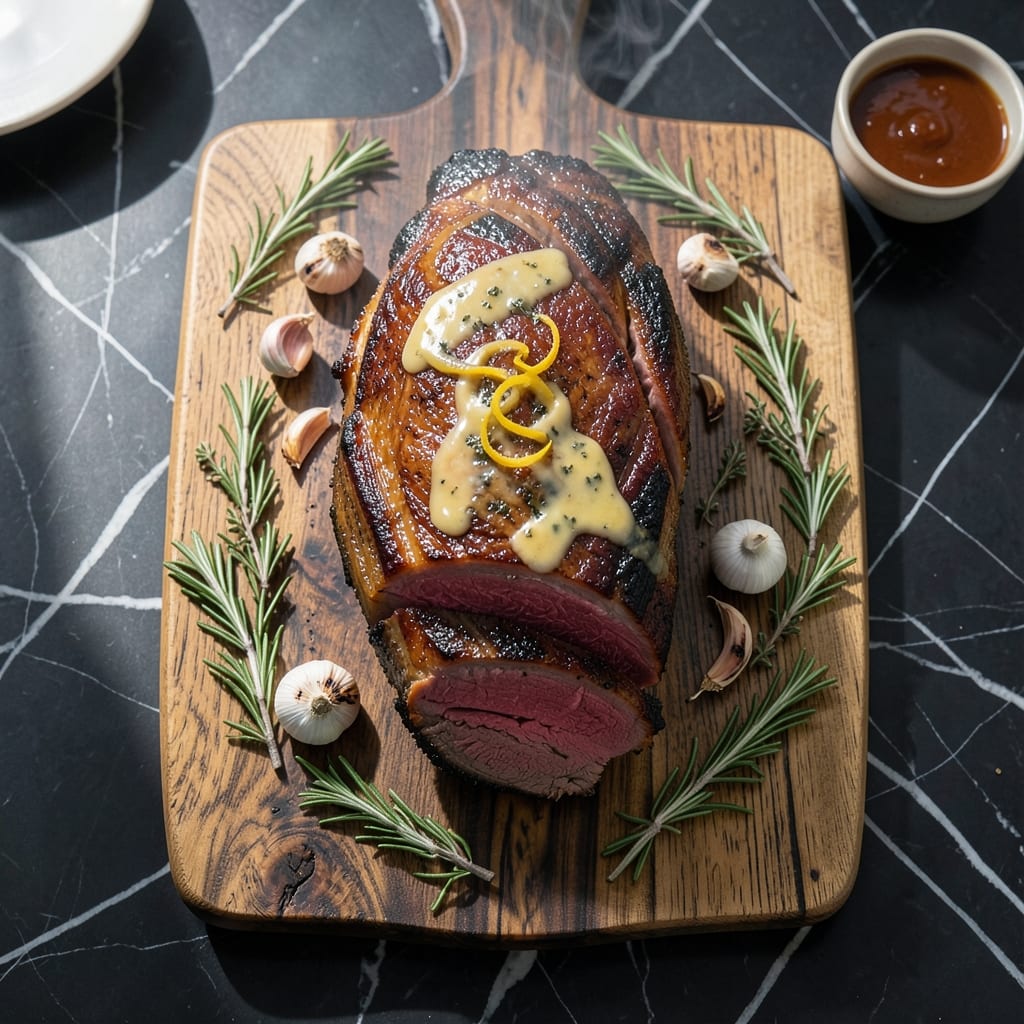
Achieving a perfect pink center in prime rib requires precision, not luck. I developed this method after testing multiple approaches in my small Boston kitchen, focusing on consistent results every time.
The key is starting with a proper dry brine and letting the roast come to room temperature before cooking. This ensures even cooking throughout, with a perfectly browned crust and juicy interior.
Using a meat thermometer is non-negotiable here—it removes all guesswork. The target internal temperature for medium rare is what transforms this cut from good to extraordinary.
After years of holiday meals and Sunday dinners, this is the technique I trust. The process is straightforward, but timing and temperature are everything.
Ingredients for Prime Rib Roast Recipe Medium Rare Temperature
Quality cut plus a few pantry staples delivers that showstopping centerpiece every time.
| Ingredient | Amount | Notes |
|---|---|---|
| Prime Rib Roast 🥩 | 4 lb | Bone-in, first cut preferred |
| Kosher Salt 🧂 | 2 tbsp | Diamond Crystal brand preferred |
| Freshly Ground Black Pepper 🌶️ | 2 tsp | Coarse grind for crust |
| Garlic Cloves 🧄 | 6 cloves | Smashed, not minced |
| Fresh Rosemary Sprigs 🌿 | 4 sprigs | Leaves stripped and chopped |
| Fresh Thyme Sprigs 🍃 | 4 sprigs | Leaves stripped and chopped |
| Unsalted Butter 🧈 | ½ cup | Softened for herb butter |
| Olive Oil 🫒 | 2 tbsp | Extra-virgin for searing |
| Red Wine 🍷 | 1 cup | Dry variety for pan sauce |
| Beef Stock 🥩 | 2 cups | Low-sodium preferred |
| Dijon Mustard 🟡 | 2 tbsp | For herb butter base |
| All-Purpose Flour 🌾 | 2 tbsp | For thickening pan sauce |
The roast itself is the star here. USDA Prime if you can swing it—Choice works too but needs more attention. I get mine from Whole Foods or a local butcher (ask for the ribeye end, aka first cut). Look for bright red meat with good marbling. The bone-in version gives you that extra flavor, but boneless cooks faster (adjust your timing). Always take it out of the fridge 3-4 hours before cooking.
No fresh herbs? Dried at one-third the amount, but fresh really shines here. Swap rosemary for tarragon if you’re feeling fancy. Short on red wine? Substitute extra beef stock with a splash of balsamic vinegar. The butter can be salted if that’s what you’ve got (just reduce the kosher salt slightly). For the stock, Better Than Bouillon paste is a solid backup—mix 2 tsp with hot water.
Store the roast uncovered in the fridge for 1-2 days max before cooking—this helps dry the surface for a better crust. Leftovers? Wrap tightly and refrigerate for up to 5 days or freeze for 3 months. The herb butter keeps 1 week in the fridge (great on steaks too).
Why You’ll Love This Recipe
- Set and Forget: Honestly, once it’s in the oven I can walk away and let the rosemary and garlic work their magic.
- Holiday Hero: I serve this at Christmas and everyone thinks I slaved for hours.
- Next-Day Luxury: Leftovers make the best sandwiches—tender beef with a garlicky kick between slices of sourdough.
Step-by-Step Instructions for Prime Rib Roast
This method delivers that perfect pink center every time with foolproof precision.
Step 1: Prepare the Herb Butter and Season the Roast
In a small bowl, combine the 0.5 cup unsalted butter, 2 tbsp Dijon mustard, chopped leaves from the 4 sprigs fresh rosemary sprigs and 4 sprigs fresh thyme sprigs, and 6 cloves garlic cloves. Mix until fully incorporated and set aside.
Pat the 4 lb prime rib roast dry with paper towels—this ensures a good crust. Rub the entire surface with the 2 tbsp olive oil, then season generously with the 2 tbsp kosher salt and 2 tsp freshly ground black pepper. The salt should form a visible layer, as this creates the flavorful crust.
Step 2: Sear the Roast for Maximum Flavor
Preheat your oven to 450°F. Place the roast bone-side down in a roasting pan. Spread the herb butter evenly over the top and sides, pressing it into the meat so it adheres well.
Transfer the pan to the oven and sear for 20 minutes. This high-heat blast creates a deep brown crust that locks in juices. You’ll see the butter start to bubble and brown—that’s exactly what you want. After 20 minutes, reduce the oven temperature to 325°F without opening the door to maintain heat.
Step 3: Slow Roast to Medium Rare Perfection
Continue roasting at 325°F until the internal temperature reaches 120-125°F on an instant-read thermometer inserted into the thickest part of the meat, away from the bone. For a 4 lb prime rib roast, this typically takes 1 to 1.5 hours.
Check the temperature every 15 minutes once you hit the 1-hour mark. The meat will continue cooking as it rests, so pulling it at 120°F ensures it reaches a perfect medium rare of 130-135°F after resting. Look for the center to be warm red with pink edges.
Step 4: Rest and Prepare the Pan Sauce
Transfer the roast to a cutting board, tent loosely with foil, and let it rest for 20-30 minutes. This resting period allows the juices to redistribute, ensuring every slice is moist and flavorful.
Place the roasting pan on the stovetop over medium heat. Add the 1 cup red wine and scrape up all the browned bits with a wooden spoon. Simmer for 2-3 minutes until reduced by half. Stir in the 2 cups beef stock and bring to a simmer. In a small bowl, whisk the 2 tbsp all-purpose flour with 2 tbsp of the hot liquid to create a slurry, then whisk it back into the pan. Simmer for 5-7 minutes until the sauce thickens enough to coat the back of a spoon.
Step 5: Slice and Serve with Pan Sauce
Remove the bones from the roast and slice the meat against the grain into ½-inch thick slices. Arrange the slices on a serving platter and pour some of the pan sauce over the top. Serve the remaining sauce on the side.
Each slice should have a beautiful pink center with a dark, flavorful crust. The pan sauce adds a rich, savory finish that complements the roast perfectly. Serve immediately while warm for the best experience.
Pro Tips For Making Prime Rib Roast Recipe Medium Rare Temperature
- Reverse Sear Method: Start at 250°F until the internal temp hits 110°F, then blast it at 450°F for 15 minutes for a perfect medium-rare crust. I learned this the hard way after my first few roasts came out uneven.
- Dry the Roast: Pat the prime rib bone-dry with paper towels before seasoning—moisture is the enemy of a good sear. My grandmother swore by this, and she was right.
- Skip the Overcrowding: Leave space between the roast and pan sides so heat circulates properly. After burning three roasts, I finally figured out airflow matters more than I thought.
- Use a Probe Thermometer: Check the thickest part, not near the bone, and pull it at 125°F—it’ll rise to 130°F while resting. Sounds weird, but it works every time.
Dietary Considerations for This prime rib roast recipe medium rare temperature
Low-Carb Friendly
This recipe is naturally low-carb, with the only carbs coming from the 2 tbsp all-purpose flour in the pan sauce. You can easily omit the flour or substitute it with xanthan gum (just ¼ tsp does the trick) for a keto-friendly version.
Gluten-Free Options
To make this gluten-free, swap the 2 tbsp all-purpose flour for cornstarch or a gluten-free flour blend. I tested this with King Arthur’s measure-for-measure blend, and the sauce thickened beautifully without altering the flavor. 💪
Dairy Considerations
The recipe calls for 0.5 cup unsalted butter in the herb butter, which adds richness. For a dairy-free version, use olive oil or vegan butter like Miyoko’s. The crust won’t brown quite as deeply, but the flavor remains robust.
Sodium Awareness
Prime rib is naturally high in sodium, especially with the 2 tbsp kosher salt dry brine. If watching sodium, reduce the salt to 1 tbsp and use low-sodium beef stock. You’ll still get a flavorful crust without the excess salt.
Red Wine Allergy
If you’re avoiding alcohol, replace the 1 cup red wine with 1 cup additional beef stock plus 1 tbsp balsamic vinegar. This mimics the acidity and depth the wine provides in the pan sauce.
Paleo Adaptations
This recipe is almost paleo by default. Just skip the pan sauce thickener entirely—the reduced wine and beef stock will still pack a flavorful punch. I’ve served it this way at many family dinners, and no one misses the flour. ✨
Nutrition Facts
Frequently Asked Questions
Should I cover the roast while cooking?
No, leave it uncovered to allow the crust to form properly. Covering traps steam, which softens the crust and prevents proper browning.
How do I know when it’s done without a thermometer?
Use the touch test: press the meat—it should feel like the base of your thumb when your hand is relaxed. But a thermometer is far more reliable for 120-125°F.
Why does my roast cook unevenly?
This usually happens if the roast wasn’t at room temperature before cooking. Let it sit out for 3-4 hours first. Also, avoid overcrowding the pan.
Can I cook it at a lower temperature for longer?
Yes, but reduce the heat to 275°F and expect 2-3 hours for a 4 lb roast. This reverse sear method works well for even cooking.

- Pudding Recipe With Egg Yolks: Silky Smooth Custard in Minutes - November 3, 2026
- Pudding Pops Recipe Cook and Serve: Silky Frozen Treats Without the Machine - November 3, 2026
- Protein Ice Cream Recipe Blender Xanthan Gum: Ultra Creamy Texture Without the Guilt - November 3, 2026