
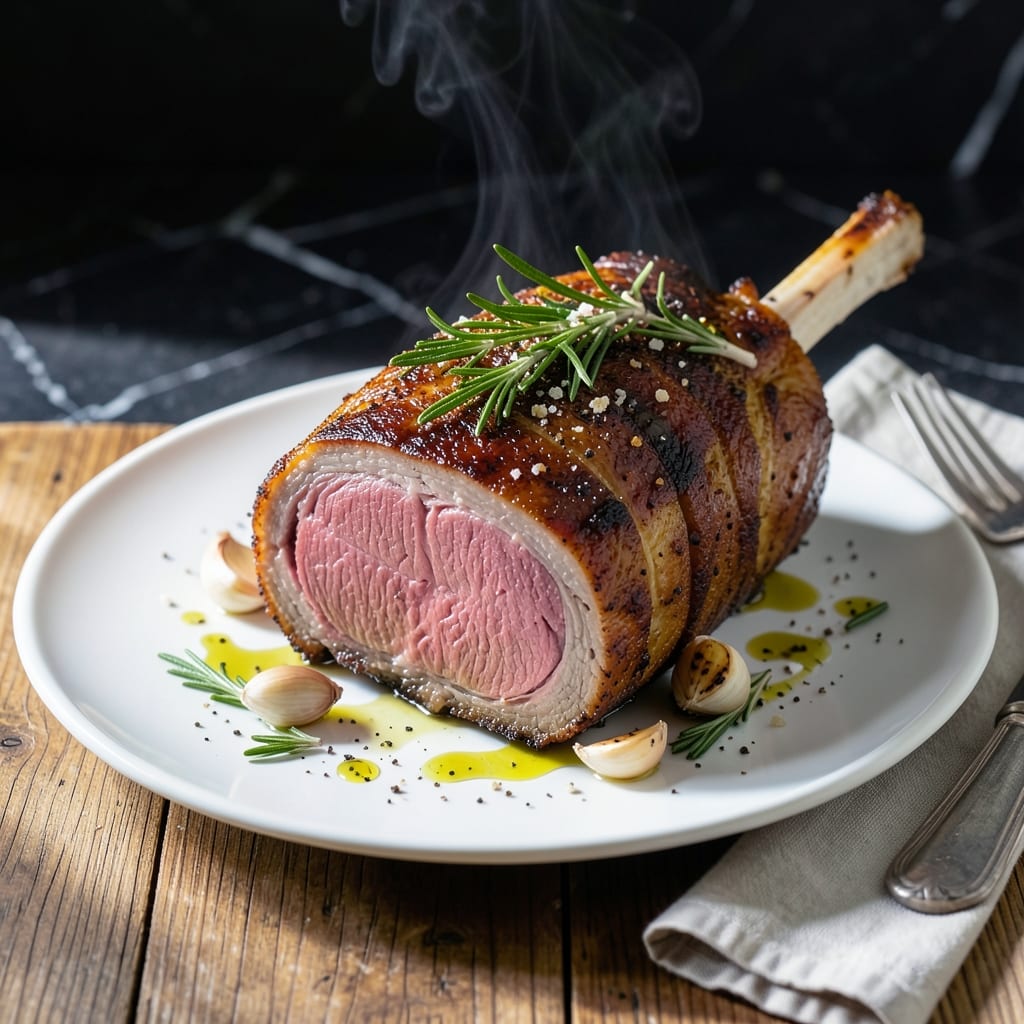
This prime rib with rosemary and garlic has been my go-to holiday centerpiece for years. The combination of aromatic herbs and tender, juicy beef never fails to impress a crowd.
I developed this method working in Charleston kitchens, learning to balance simplicity with show-stopping results. The key is a slow roast after an initial high-heat sear to lock in juices.
David always requests this for special occasions. The rosemary-garlic crust forms a perfectly seasoned bark that gives way to melt-in-your-mouth meat inside.
It’s the kind of dish that makes holidays memorable. With precise timing and temperature control, you’ll achieve restaurant-quality results every time.
Ingredients for Prime Rib Roast Recipe with Rosemary and Garlic
A few quality ingredients create this impressive holiday centerpiece everyone will rave about.
| Ingredient | Amount | Notes |
|---|---|---|
| Prime Rib Roast 🥩 | 5 lb | Bone-in, well-marbled preferred |
| Fresh Rosemary Sprigs 🌿 | 6 whole | About 4-inch long each |
| Garlic Cloves 🧄 | 8 cloves | Peeled, smashed slightly |
| Coarse Kosher Salt 🧂 | 2 tbsp | Diamond Crystal preferred |
| Freshly Ground Black Pepper 🌶️ | 2 tbsp | Coarse grind preferred |
| Olive Oil 🫒 | ¼ cup | Extra-virgin for richness |
| Fresh Thyme Sprigs 🌿 | 4 whole | Optional for added aroma |
| Dijon Mustard 🟡 | 2 tbsp | For herb crust binding |
| Red Wine 🍷 | 1 cup | Dry variety like Cabernet |
| Unsalted Butter 🧈 | 4 tbsp | Softened for finishing |
| Beef Stock 🥩 | 1 cup | Low-sodium preferred |
| All-Purpose Flour 🌾 | 2 tbsp | For thickening pan juices |
The prime rib is the star here. Look for USDA Prime or Choice grade—the marbling means flavor and juiciness. Bone-in roasts cook more evenly and add richness. I grab mine from Whole Foods or a trusted butcher. The rosemary should be vibrant green with a strong aroma (if it smells like nothing, it won’t taste like much). Strip the leaves from a few sprigs for the crust, keep the rest whole for roasting.
Short on rosemary? Substitute fresh sage or tarragon at a 1:1 ratio. No red wine? Beef broth with a splash of balsamic vinegar works in a pinch. The Dijon mustard can be swapped for whole-grain mustard, but avoid yellow mustard—it’s too mild. If you’re out of beef stock, low-sodium chicken stock is an acceptable substitute. Just don’t skip the butter finish (that’s non-negotiable for me).
Prime rib is best cooked fresh, but leftovers keep 3-4 days in the fridge. Slice before storing for easier reheating. The pan juices can be frozen for up to 3 months—perfect for making gravy later. Always bring the roast to room temp before cooking (about 2 hours on the counter).
Why You’ll Love This Recipe
- Set It and Forget: Honestly, once the rosemary and garlic are rubbed on, the oven does all the work.
- Rich, Herby Crust: That coarse salt and fresh rosemary form a crust so flavorful it tastes like a steakhouse special.
- Holiday or Tuesday: I’ve served this for Christmas dinner and, yes, even on a Tuesday night—it’s that versatile.
- Leftovers? Yes Please: Cold prime rib slices make the best next-day sandwiches with zero extra effort.
Step-by-Step Instructions for Prime Rib Roast With Rosemary and Garlic
Here’s my foolproof method for a perfectly herb-crusted roast every time.
Step 1: Prep the Herb Crust and Season the Roast
Take the 5 lb prime rib roast out of the fridge 2 hours before cooking to bring it to room temperature. This ensures even cooking throughout the thick cut. Pat it completely dry with paper towels—moisture prevents proper browning.
In a small bowl, combine the 2 tbsp coarse kosher salt, 2 tbsp freshly ground black pepper, 0.25 cup olive oil, 2 tbsp Dijon mustard, 6 whole fresh rosemary sprigs, and 4 whole fresh thyme sprigs. Mince 4 cloves of the garlic and add to the mix. Stir until it forms a thick paste. Rub this mixture all over the roast, pressing it into every crevice. The mustard helps the crust adhere while the herbs infuse incredible aroma.
Step 2: Sear for a Flavorful Crust
Preheat your oven to 450°F. Place the roast bone-side down in a large roasting pan or heavy oven-safe skillet. Scatter the remaining 4 cloves garlic around the pan—they’ll caramelize and add sweetness to the pan juices.
Roast at 450°F for exactly 20 minutes. This high-heat sear creates a deeply browned crust that locks in juices. Watch for the edges to darken and the fat cap to start rendering—this is your visual cue that the Maillard reaction is working its magic.
Step 3: Slow Roast to Perfect Doneness
Reduce the oven temperature to 325°F without opening the door (to avoid heat loss). Continue roasting until the internal temperature reaches 115-120°F for medium-rare, which should take about 1 hour 15 minutes to 1 hour 30 minutes for this size.
Use a meat thermometer inserted into the thickest part, avoiding the bone. The temperature will rise another 5-10°F during resting. You’ll know it’s ready when the crust is deep mahogany and the juices run rosy pink when pierced.
Step 4: Make the Red Wine Pan Sauce
Transfer the roast to a cutting board and tent loosely with foil. Place the roasting pan on the stovetop over medium-high heat. Add the 1 cup red wine and scrape up all the browned bits with a wooden spoon. Let it reduce by half.
Whisk in the 2 tbsp all-purpose flour to thicken, then add the 1 cup beef stock. Simmer for 5 minutes until it coats the back of a spoon. Finish by whisking in the 4 tbsp unsalted butter one piece at a time for a glossy, rich sauce. Strain out the solids before serving.
Step 5: Rest and Serve
Let the roast rest for at least 20 minutes before carving. This allows the juices to redistribute, ensuring every slice is moist and flavorful. The internal temperature will stabilize at your target doneness during this time.
Carve between the ribs for beautiful, even slices. Serve with the red wine pan sauce spooned over the top. The herb crust will be fragrant and crisp, while the interior remains tender and juicy—a true holiday centerpiece.
Pro Tips For Making Prime Rib Roast Recipe With Rosemary And Garlic
- Dry the Roast: Pat the prime rib completely dry with paper towels before seasoning—this guarantees a better crust. I learned this the hard way after wondering why my rosemary and garlic weren’t sticking properly.
- Slash the Garlic: Cut small slits in the roast and insert halved garlic cloves deep into the meat so the flavor infuses as it cooks. Sounds tedious, but it actually changes the outcome.
- Rest Before Slicing: Let the prime rib rest for at least 20 minutes under foil after roasting, or all the juices will end up on your cutting board. My grandmother swore by this, and she was right.
- Use Room-Temp Meat: Take the roast out of the fridge 1-2 hours before cooking—cold meat seizes up and cooks unevenly. I was skeptical until I tried it and got perfect doneness edge to edge.
Storing and Reheating prime rib roast recipe with rosemary and garlic
Refrigerator Storage
Let your prime rib cool for no more than 2 hours before slicing. I store it in airtight containers with some of the pan juices to keep it moist. It keeps beautifully in the fridge at 40°F or below for 3-4 days. David swears the flavors taste even better the next day. ❄️
Freezer Storage
For longer storage, wrap individual slices tightly in plastic wrap, then place in a freezer bag with any remaining sauce. Squeeze out all the air to prevent freezer burn. Your prime rib will stay delicious for up to 3 months at 0°F.
Oven Reheating
My preferred method for leftovers is the oven. Preheat to 350°F, place slices in a baking dish, and add a splash of beef stock. Cover with foil and warm for 10-15 minutes until reaching 145°F internal temperature. This keeps the meat juicy and tender. 🔥
Pan Sauce Reheating
The red wine pan sauce can be reheated gently in a saucepan over low heat. Add a pat of butter and whisk until smooth. If it’s too thick, thin with a little water or stock. Never boil it, or it may separate.
Serving Leftovers
I love turning prime rib leftovers into French dip sandwiches using crusty rolls and the reheated pan sauce for dipping. Another favorite is chopping it for a prime rib hash with potatoes and onions. The herb crust adds amazing flavor to these creations.
Nutrition Facts
Frequently Asked Questions
What’s the best way to ensure even cooking?
Let the roast sit at room temperature for 2 hours before cooking. This ensures the center cooks at the same rate as the outer layers, preventing dry edges.
Can I use dried rosemary instead of fresh?
Fresh is best for bold flavor, but if needed, use 1/3 the amount of dried. Soak it in warm water for 10 minutes to rehydrate before mixing into the crust.
How do I know when it’s done without overcooking?
Use a meat thermometer! Pull it at 115-120°F for medium-rare. The temp will rise another 5-10°F while resting, so don’t wait for it to hit your target in the oven.
What’s the trick to a crispy herb crust?
Pat the roast completely dry before applying the herb paste. The initial 450°F sear for 20 minutes locks in juices while creating that perfect crust.

- Protein Pudding Recipe With Sugar Free Pudding: High-Protein Creamy Indulgence - November 3, 2026
- Progresso Recipe Starters Creamy Parmesan Basil Cooking Sauce: Rich Herb-Infused Base for Pasta and More - November 3, 2026
- Pudding Recipe With Egg Yolks: Silky Smooth Custard in Minutes - November 3, 2026