
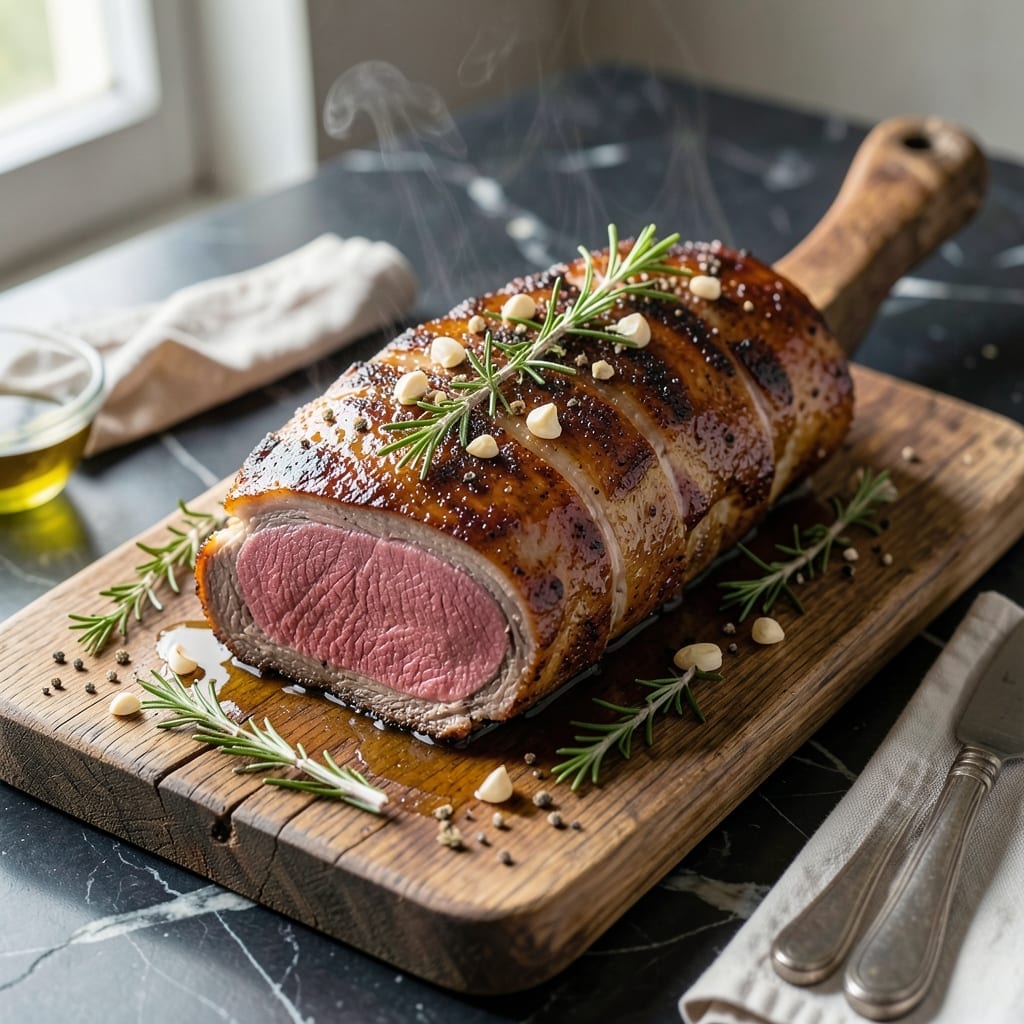
I’ve tested this method in my tiny Boston kitchen more times than I care to admit. The reverse sear guarantees even cooking from edge to edge, with no gray band in sight.
Starting low and slow in the oven allows the roast to cook gently, while a final high-heat sear develops a crispy, golden crust. This approach eliminates the guesswork of traditional roasting.
You’ll achieve perfectly medium doneness throughout, with a rich, beefy flavor that shines in every bite. The resting period is non-negotiable—it ensures juices redistribute for the most tender result.
Pair with horseradish cream and roasted vegetables for a meal that feels special enough for holidays but simple enough for Sunday dinner.
Ingredients for Prime Rib Roast Recipe Medium
Quality beef, fresh herbs, and a few pantry staples create this impressive centerpiece dish.
| Ingredient | Amount | Notes |
|---|---|---|
| Prime Rib Roast 🥩 | 4 lb | Bone-in, well-marbled preferred |
| Kosher Salt 🧂 | 2 tbsp | Diamond Crystal brand recommended |
| Coarsely Ground Black Pepper 🌶️ | 2 tsp | Freshly ground for best flavor |
| Garlic Cloves 🧄 | 6 cloves | Smashed, divided for crust and sauce |
| Fresh Rosemary Sprigs 🌿 | 4 whole | Stems removed, finely chopped |
| Fresh Thyme Sprigs 🍃 | 4 whole | Leaves stripped, finely chopped |
| Olive Oil 🫒 | ¼ cup | Extra-virgin for richness |
| Unsalted Butter 🧈 | 4 tbsp | Softened, for herb crust |
| Red Wine 🍷 | 1 cup | Dry variety like Cabernet Sauvignon |
| Beef Stock 🥘 | 1 cup | Low-sodium preferred for reduction |
| Prepared Horseradish 🌿 | ¼ cup | For serving with cream sauce |
| Heavy Cream 🥛 | ½ cup | Full-fat for creaminess |
| Dijon Mustard 🟡 | 1 tbsp | For horseradish cream sauce |
The prime rib is the star here. Look for USDA Prime or Choice grade with abundant marbling—this fat renders down, keeping the meat juicy. Bone-in roasts (ribeye or standing rib) have more flavor and are easier to carve. I source mine from Whole Foods or Costco (their Prime cuts are excellent). Ask the butcher for a 4-bone roast (about 8-10 lbs) if you’re serving a crowd, but for 4 people, this 4-lb portion is perfect.
No fresh herbs? Dried at one-third the amount works in a pinch, but fresh makes a difference—especially for the crust. Red wine can be swapped with additional beef stock plus a splash of balsamic vinegar. For the horseradish cream, Greek yogurt can replace heavy cream (though it’ll be slightly tangier). If you’re skipping the sauce entirely, a compound butter with herbs and garlic on the side is delicious.
Prime rib is best enjoyed the same day, but leftovers keep 3-4 days in the fridge. Slice thin against the grain for sandwiches. The roast can also be frozen for up to 3 months—just thaw in the fridge overnight before reheating gently in the oven.
Why You’ll Love This Recipe
- Set It and Forget: I rub the roast with salt, pepper, garlic, and rosemary then let the oven do the rest.
- That Crust Though: The coarse salt and pepper form a crave-worthy crust that cracks with every slice.
- Holiday Hero: Between us, this is my go-to for Christmas dinner and Sunday suppers alike.
- Leftover Luxury: Honestly, cold prime rib between bread might be better than the first serving.
Step-by-Step Instructions for Prime Rib Roast Medium
Here’s my foolproof method for achieving perfect medium doneness with a beautiful crust.
Step 1: Prepare and Season the Roast
Pat the 4 lb Prime Rib Roast completely dry with paper towels. This is crucial for achieving that perfect sear later. I like to leave the bone-in for extra flavor and even cooking.
Rub the roast all over with the 0.25 cup Olive Oil, then season generously with the 2 tbsp Kosher Salt and 2 tsp Coarsely Ground Black Pepper. Press the seasoning into the meat so it adheres well. The oil helps the seasoning stick and promotes even browning.
Finely chop the leaves from the 4 whole Fresh Rosemary Sprigs and 4 whole Fresh Thyme Sprigs. Crush 3 cloves Garlic Cloves and mix with the herbs and 4 tbsp Unsalted Butter to make a paste. Spread this herb butter over the top and sides of the roast.
Step 2: Reverse Sear in Low Oven
Preheat your oven to 250°F. Place the roast bone-side down on a wire rack in a roasting pan. This low temperature allows the meat to cook evenly from edge to center without overcooking the outer layers.
Roast for approximately 2 to 2.5 hours until the internal temperature reaches 115-120°F for medium-rare to medium doneness. Use a meat thermometer inserted into the thickest part of the roast, avoiding the bone. The meat will continue cooking during the searing step, so we pull it early.
Step 3: Sear for Crust Formation
Remove the roast from the oven and increase the temperature to 450°F. Once hot, return the roast to the oven and sear for 10-15 minutes until the external temperature reaches 130-135°F for perfect medium doneness.
Watch for a deep brown crust to form on the surface. The herb butter should be sizzling and creating a fragrant aroma. This high-heat step develops the Maillard reaction, giving you that coveted crispy exterior while keeping the inside perfectly pink and juicy.
Step 4: Rest and Prepare Creamy Horseradish Sauce
Transfer the roast to a cutting board, tent loosely with foil, and let it rest for 20-30 minutes. This resting period allows the juices to redistribute throughout the meat, ensuring every slice is moist and flavorful.
While the roast rests, make the sauce. In a small saucepan, combine the 1 cup Red Wine and 1 cup Beef Stock. Simmer for 10 minutes until reduced by half. Whisk in the 0.5 cup Heavy Cream, 0.25 cup Prepared Horseradish, and 1 tbsp Dijon Mustard until smooth. Simmer for 3-5 minutes until slightly thickened.
Step 5: Slice and Serve
Carve the roast between the bones into thick slices. Arrange on a platter and drizzle some of the juices from the cutting board over the top. Serve immediately with the creamy horseradish sauce on the side.
The roast should have a beautiful brown crust on the outside with a perfect pink center. Each bite should be tender, juicy, and full of herb-infused flavor. The horseradish cream adds a delightful kick that complements the richness of the prime rib beautifully.
Pro Tips For Making Prime Rib Roast Recipe Medium
- Pull at 120°F: Use a meat thermometer and remove the roast at 120°F—it’ll rise to a perfect medium 125-130°F while resting. I learned this the hard way after overcooking a $60 roast.
- Salt Overnight: Dry-brine the prime rib with kosher salt 12-24 hours ahead. Sounds weird, but it works: the salt penetrates deep, seasons evenly, and helps form that coveted crust.
- Skip the Water Pan: Resist the urge to add water to the roasting pan—it steams the meat instead of letting it sear. My grandmother swore by this, and she was right: dry heat means better browning.
- Crush the Garlic: Smash the garlic cloves before rubbing them on the roast—it releases more flavor without burning. I was skeptical until I tried it, but the difference is noticeable.
Perfect Pairings for This Recipe
Wine Pairings
For this dish, I always reach for a bold Cabernet Sauvignon—its tannins cut through the richness beautifully. A 2018 Napa Valley vintage offers dark fruit notes that complement the beef’s depth. Serve at 65°F for optimal flavor.
Side Dish Ideas
My go-to is garlic mashed potatoes—creamy texture soaks up every last bit of juice. I use Yukon Golds and fold in ½ cup whole milk with 4 tbsp butter. Roasted Brussels sprouts with balsamic glaze add a nice contrast. 💪
Bread Options
A crusty sourdough from my local Boston bakery is perfect for mopping up sauce. I toast slices with olive oil and rub with a garlic clove. Popovers are another festive choice—light, airy, and buttery.
Vegetable Pairings
Roasted carrots with thyme bring sweetness that balances the savory roast. Toss 2 lb carrots with 2 tbsp olive oil and roast at 400°F for 25 minutes. Asparagus with lemon zest adds freshness.
Cheese Course
End with a sharp aged cheddar from Cabot Creamery—its tanginess cleanses the palate. Or try Gorgonzola drizzled with honey for a sweet-savory finish. I always include a cheese course for special dinners. ✨
Nutrition Facts
Frequently Asked Questions
How long should I rest the roast after cooking?
Let it rest for 20-30 minutes before slicing. This allows juices to redistribute for maximum tenderness and flavor. Skipping this step can result in dry meat.
Can I use a boneless roast instead?
Yes, but expect slightly less flavor. Adjust cooking time to 1.5-2 hours at 250°F since boneless cooks faster. Bone-in acts as a natural insulator.
What if my roast is larger than 4 lbs?
Increase low-heat time by 15-20 minutes per pound. Always use a thermometer—130-135°F internal is key for medium. Larger roasts take longer to reach temperature.
Why does the reverse sear method work better?
It cooks the meat evenly from edge to center. Traditional high-heat methods can overcook the outer layers before the center reaches temperature.

- Pudding Recipe With Egg Yolks: Silky Smooth Custard in Minutes - November 3, 2026
- Pudding Pops Recipe Cook and Serve: Silky Frozen Treats Without the Machine - November 3, 2026
- Protein Ice Cream Recipe Blender Xanthan Gum: Ultra Creamy Texture Without the Guilt - November 3, 2026