
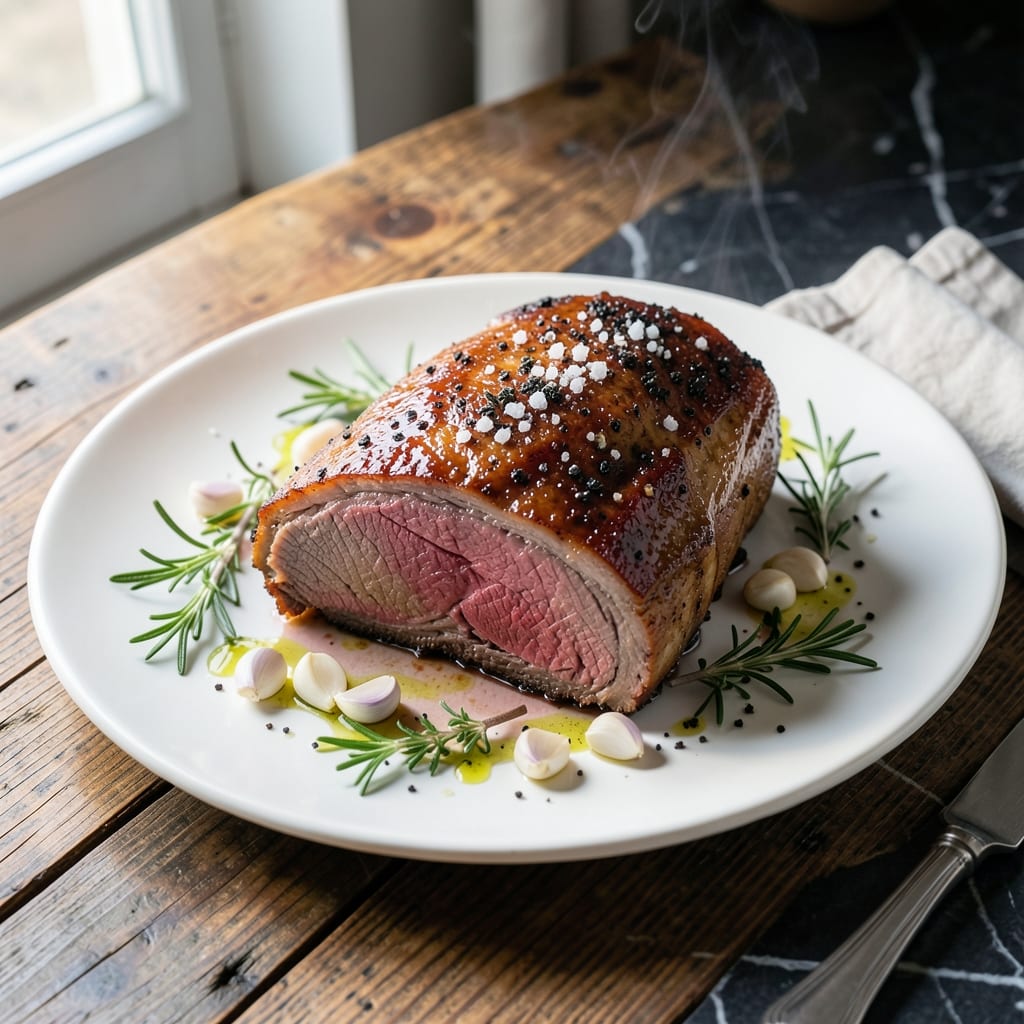
This reverse sear method delivers perfectly even cooking from edge to edge, every time. I developed this technique after years of uneven results with traditional roasting, and it’s become my go-to for prime rib.
Starting low in a 250°F oven ensures the meat cooks gently, while a final high-heat sear creates a golden crust. The result is a roast with consistent doneness throughout—no more overcooked edges.
What you get is tender, juicy prime rib with a beautifully caramelized exterior. This method gives you complete control over the final temperature, so whether you prefer rare or medium, it’ll be exact.
Serve with au jus and horseradish cream for a meal that feels like a special occasion. Here’s how to master it.
Ingredients for Prime Rib Roast Recipe Oven Reverse Sear
A handful of quality ingredients transforms prime rib into a restaurant-worthy centerpiece.
| Ingredient | Amount | Notes |
|---|---|---|
| Prime Rib Roast 🥩 | 5 lb | Bone-in, first cut preferred |
| Kosher Salt 🧂 | 2 tbsp | Diamond Crystal preferred |
| Freshly Ground Black Pepper 🌶️ | 2 tsp | Coarse grind for crust |
| Garlic Cloves 🧄 | 6 cloves | Smashed, peeled |
| Fresh Rosemary Sprigs 🌿 | 4 sprigs | Whole, stem-on |
| Fresh Thyme Sprigs 🍃 | 4 sprigs | Whole, stem-on |
| Olive Oil 🫒 | 2 tbsp | High smoke point |
| Unsalted Butter 🧈 | 2 tbsp | Softened for finishing |
| Beef Stock 🥩 | 2 cups | Low-sodium preferred |
| Red Wine 🍷 | 1 cup | Dry, bold variety |
| All-Purpose Flour 🌾 | 2 tbsp | For thickening au jus |
| Prepared Horseradish 🌿 | ½ cup | For cream sauce |
| Heavy Cream 🥛 | 1 cup | Full-fat for richness |
| Dijon Mustard 🟡 | 2 tbsp | For horseradish cream |
The prime rib is the star— bone-in first cut gives the best marbling and flavor. Look for USDA Prime or Choice at Whole Foods or a trusted butcher. The fat cap should be bright white with good streaking. If you can’t find bone-in, boneless works (just tie it yourself). I always order mine a week ahead from Costco—they’ll cut it to your exact specs.
No fresh herbs? Dried work at one-third the amount, but fresh makes a noticeable difference in the crust. Out of red wine? Substitute extra beef stock plus a splash of balsamic vinegar. For the horseradish cream, Greek yogurt can stand in for heavy cream if you’re watching calories. The beef stock can be homemade or Better Than Bouillon paste—both are winners.
Prime rib keeps in the fridge 3-4 days before cooking—leave it uncovered on a rack for better air circulation. Leftover slices make killer sandwiches and will stay fresh 5 days sealed tight. The au jus and horseradish cream freeze beautifully for up to 3 months.
Why You’ll Love This Recipe
- Set It and Forget: The reverse sear means I just pop it in the oven and let it do its thing for hours with zero babysitting.
- That Crust Though: Honestly, the garlic and rosemary rub forms this insane crust that cracks with every slice.
- Holiday Hero: I’ve served this at Christmas, Easter, and even a random Sunday—always gets rave reviews.
- Leftovers for Days: One roast feeds us for three meals, and the cold slices make killer sandwiches.
Step-by-Step Instructions for Prime Rib Roast Oven Reverse Sear
Here’s the method that delivers edge-to-edge perfection with minimal effort.
Step 1: Season and Slow-Roast the Prime Rib
Pat the 5 lb Prime Rib Roast dry with paper towels, then rub it all over with the 2 tbsp Kosher Salt and 2 tsp Freshly Ground Black Pepper. I press the seasoning into the meat so it adheres well and forms a beautiful crust.
Place the roast bone-side down on a rack in a roasting pan. Insert a meat thermometer into the thickest part, avoiding the bone. Roast in a preheated 250°F oven for about 2.5 to 3 hours, until the internal temperature reaches 120°F for medium-rare. The low heat ensures even cooking from edge to edge.
Step 2: Prepare the Aromatic Herb Paste
While the roast cooks, mince the 6 cloves Garlic Cloves and strip the leaves from the 4 sprigs Fresh Rosemary Sprigs and 4 sprigs Fresh Thyme Sprigs. Combine these with the 2 tbsp Olive Oil in a small bowl to create a fragrant paste.
This paste will add layers of flavor to the prime rib. The garlic mellows during cooking, while the rosemary and thyme infuse the meat with earthy, herbal notes that complement the rich beef.
Step 3: Sear and Finish the Roast
Remove the roast from the oven when it hits 120°F and brush it all over with the herb paste. Increase the oven temperature to 500°F and return the roast to the oven for 10-15 minutes to develop a deep, caramelized crust.
Watch closely during this phase—the high heat will create a beautiful sear. You’re looking for a dark golden brown crust and an internal temperature of 130°F for perfect medium-rare.
Step 4: Rest and Prepare the Au Jus
Transfer the roast to a cutting board, tent loosely with foil, and let it rest for 20-30 minutes. Meanwhile, place the roasting pan on the stovetop over medium heat. Add the 1 cup Red Wine and deglaze, scraping up all the browned bits.
Stir in the 2 cups Beef Stock and bring to a simmer. Whisk in the 2 tbsp All-Purpose Flour mixed with 2 tbsp Unsalted Butter to create a rich, velvety au jus. Strain and serve alongside the roast for dipping.
Step 5: Make the Horseradish Cream Sauce
In a small bowl, whisk together the 0.5 cup Prepared Horseradish, 1 cup Heavy Cream, and 2 tbsp Dijon Mustard until smooth. This tangy, creamy sauce cuts through the richness of the beef beautifully.
Serve the sauce on the side or drizzle it over individual slices of prime rib. The sharpness of the horseradish balances the dish perfectly, adding a bright contrast to the rich, savory meat.
Pro Tips For Making Prime Rib Roast Recipe Oven Reverse Sear
- Dry the Roast: Pat the prime rib thoroughly dry with paper towels before seasoning—this ensures the salt sticks and the crust forms properly.
- Low and Slow First: Start in a 250°F oven until the internal temp hits 110°F for medium-rare, then sear at 450°F for the perfect finish.
- Skip the Cold Meat: Let the roast sit at room temperature for 2 hours before cooking—I learned this the hard way after pulling one straight from the fridge.
- Use a Thermometer: A meat thermometer is non-negotiable; guesswork ruins prime rib, and 125°F internal is your target for medium-rare.
Best Sauces and Condiments for This Recipe
Classic Au Jus
The rich, savory au jus made from the roast’s pan drippings is non-negotiable. I always use the 2 cups Beef Stock and 1 cup Red Wine from the recipe, reduced by half for concentration. Strain it through a fine-mesh sieve for a silky texture. 💫
Horseradish Cream
This recipe’s built-in horseradish cream with 2 tbsp Dijon Mustard is my favorite—it cuts through the fat with its sharp, tangy bite. For extra depth, I sometimes fold in 1 tsp Worcestershire sauce from my Boston deli. Serve it chilled in a small bowl for dipping.
Red Wine Reduction
Simmer the remaining Red Wine with a splash of balsamic vinegar until syrupy. Drizzle this over slices for an elegant finish. The acidity balances the meat’s richness beautifully. I learned this trick from a sommelier friend in the North End.
Compound Butter
Mix the 2 tbsp Unsalted Butter with minced garlic and fresh herbs. Place a pat on each slice just before serving—it melts into the warm meat, adding a luxurious finish. This is my go-to for impressing dinner guests.
Creamy Peppercorn
Crush 1 tbsp black peppercorns and steep in the warm au jus for 5 minutes. Stir in ¼ cup Heavy Cream for a velvety sauce with a subtle kick. This pairs especially well with the reverse sear’s perfect medium-rare center. ✨
Nutrition Facts
Frequently Asked Questions
What’s the ideal internal temperature for medium-rare?
Aim for 120-125°F when removing from the low oven. After searing and resting, it’ll rise to 130°F, perfect for juicy medium-rare. Use a reliable meat thermometer for accuracy.
How long should I rest the roast before slicing?
Let it rest for 20-30 minutes after searing. This allows juices to redistribute throughout the meat, ensuring every slice is moist and flavorful. Skipping this step can lead to dry slices.
Can I use a boneless roast for this method?
Yes, but bone-in is recommended for better flavor. If using boneless, tie the roast with kitchen twine to maintain shape. Cook time remains similar, but check temperature earlier.
Why does the crust sometimes burn during searing?
This happens if the herb paste contains too much oil or the oven isn’t fully preheated to 500°F. Pat the roast dry before searing and monitor closely during the final 10-15 minutes.

- Pudding Recipe With Egg Yolks: Silky Smooth Custard in Minutes - November 3, 2026
- Pudding Pops Recipe Cook and Serve: Silky Frozen Treats Without the Machine - November 3, 2026
- Protein Ice Cream Recipe Blender Xanthan Gum: Ultra Creamy Texture Without the Guilt - November 3, 2026