
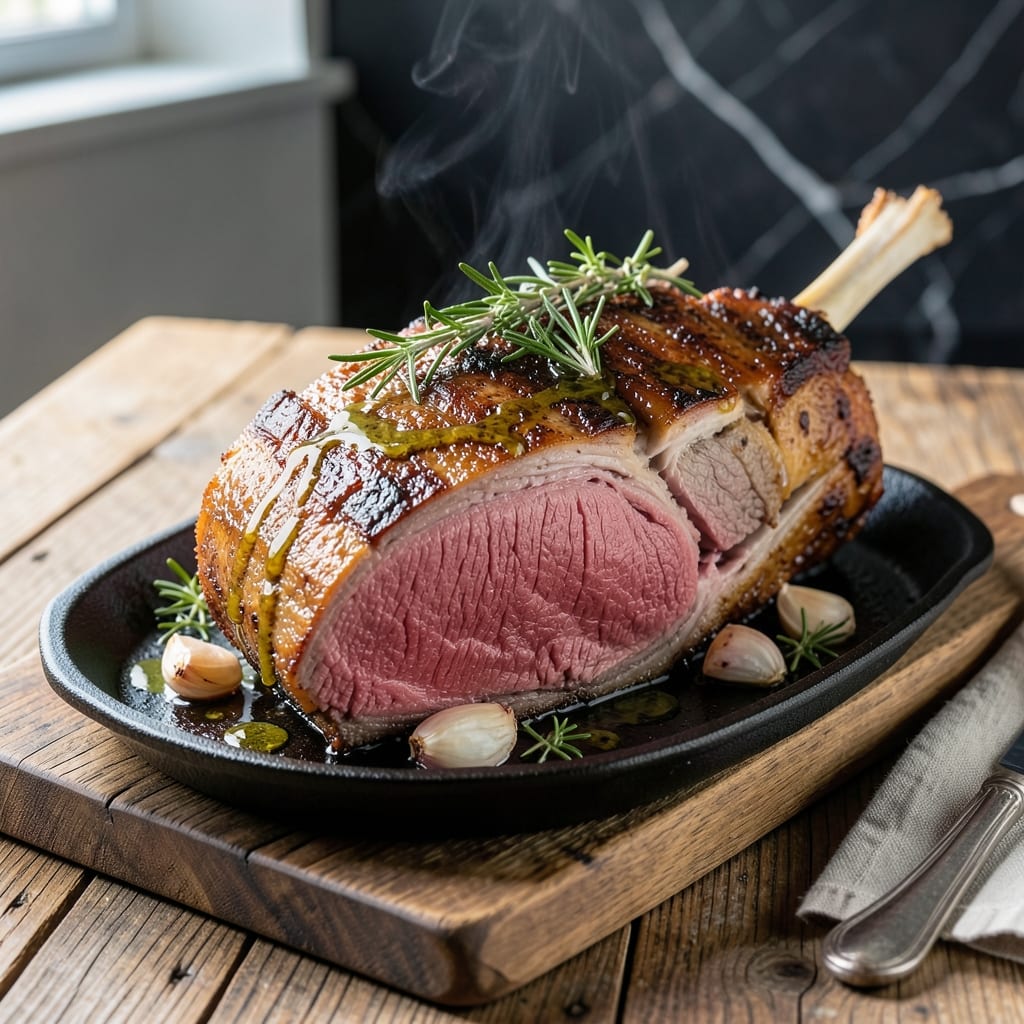
Achieving perfectly even doneness from edge to edge in a prime rib roast requires precision and patience. This reverse sear method ensures every slice delivers the same level of tenderness and flavor.
I developed this technique after years of inconsistent results with traditional roasting. By starting low in the oven and finishing with a high-heat sear, you maintain complete control over the cooking process.
The reverse sear method transforms a simple roast into a restaurant-quality centerpiece. The meat cooks evenly throughout, with a beautiful crust forming only at the end.
This approach guarantees juicy, flavorful results every time, whether you’re serving a holiday crowd or treating your family to a special meal.
Ingredients for Prime Rib Roast Recipe Reverse Sear
A handful of premium ingredients transform this roast into a showstopper centerpiece worth the effort.
| Ingredient | Amount | Notes |
|---|---|---|
| Bone-In Prime Rib Roast 🥩 | 5 lb | First 3 ribs, well-marbled |
| Kosher Salt 🧂 | 1 ½ tbsp | Diamond Crystal preferred |
| Freshly Ground Black Pepper 🌶️ | 1 tbsp | Coarse grind recommended |
| Garlic Cloves 🧄 | 6 cloves | Smashed, not minced |
| Fresh Rosemary Sprigs 🌿 | 4 whole | Woody stems removed |
| Fresh Thyme Sprigs 🍃 | 6 whole | Lightly bruised |
| Extra-Virgin Olive Oil 🫒 | ¼ cup | High smoke point variety |
| Unsalted Butter 🧈 | 4 tbsp | Room temperature |
| Red Wine 🍷 | 1 cup | Dry variety like Cabernet |
| Beef Stock 🥩 | 1 cup | Low-sodium preferred |
| Dijon Mustard 🟡 | 2 tbsp | Whole grain works too |
| Horseradish Root 🥬 | 2 tbsp | Freshly grated preferred |
The prime rib is the star—look for USDA Prime or Choice grade with abundant marbling. Your butcher at Whole Foods or a local meat market can help select the right cut (first 3 ribs for even cooking). The bone-in version adds flavor and helps with even heat distribution. If you’re serving a crowd, Costco has excellent pre-packaged options that work surprisingly well.
No fresh herbs? Dried at one-third the amount works in a pinch, but fresh makes a noticeable difference. Out of red wine? Additional beef stock with a splash of balsamic vinegar mimics the depth. The butter can be swapped for duck fat if you want extra richness. Horseradish not your thing? Prepared horseradish from a jar saves time and still delivers that signature kick.
The roast can rest at room temperature for 1 hour before cooking (don’t skip this). Leftovers? Wrap tightly and refrigerate for up to 5 days—perfect for sandwiches. For longer storage, vacuum-seal and freeze for 6 months.
Why You’ll Love This Recipe
- Set It and Forget: I pop the prime rib in the oven low and slow, then just sear it at the end—no babysitting required.
- Herb-Crusted Heaven: The rosemary and garlic form this insane crust that cracks with every slice, and the salt brings out the beef’s natural richness.
- Holiday Hero: Between us, this is the only dish I make for Christmas that gets requested by name every single year.
- Leftovers for Days: Honestly, I love the sandwiches even more the next day—pile the cold slices high with horseradish mayo.
Step-by-Step Instructions for Prime Rib Roast Reverse Sear
This method guarantees edge-to-edge perfection with minimal effort and maximum flavor.
Step 1: Season and Slow-Roast the Prime Rib
Pat the 5 lb Bone-In Prime Rib Roast dry with paper towels. This is crucial—any moisture prevents proper browning. Rub the roast all over with the 0.25 cup Extra-Virgin Olive Oil, then season aggressively with the 1.5 tbsp Kosher Salt and 1 tbsp Freshly Ground Black Pepper, pressing to adhere.
Place the roast on a wire rack set over a baking sheet. Add the 6 cloves Garlic Cloves, 4 whole Fresh Rosemary Sprigs, and 6 whole Fresh Thyme Sprigs around the meat. Roast in a 250°F oven for 2 to 2.5 hours until the internal temperature reaches 120-125°F for medium-rare.
Step 2: Prepare the Basting Liquid
While the roast cooks, combine the 1 cup Red Wine, 1 cup Beef Stock, 2 tbsp Dijon Mustard, and 2 tbsp Horseradish Root in a saucepan. Simmer over medium heat for 10-12 minutes until reduced by half.
Stir in the 4 tbsp Unsalted Butter until melted and fully incorporated. This creates a rich, aromatic basting liquid that adds depth to the crust. Keep it warm on low heat—you’ll use it in the next step.
Step 3: Sear for a Crust
Remove the roast from the oven and increase the temperature to 500°F. Brush the roast all over with the basting liquid, then return it to the oven. Roast for 10-15 minutes, basting every 5 minutes, until the exterior is deeply browned and crisp.
Watch for dark, caramelized crust and an internal temperature of 130-132°F for perfect medium-rare. The high heat finishes the cooking while creating a flavorful crust that locks in juices.
Step 4: Rest and Serve
Transfer the roast to a cutting board and tent loosely with foil. Let it rest for 15-20 minutes—this allows the juices to redistribute for moist, tender slices. The internal temperature will rise 5-10°F during this time.
Carve between the ribs into thick slices and serve immediately with the remaining basting liquid spooned over the top. Each bite will have that signature edge-to-edge doneness with a crust that cracks with every cut.
Pro Tips For Making Prime Rib Roast Recipe Reverse Sear
- Dry the Roast: Pat the prime rib completely dry with paper towels before seasoning—this guarantees a better sear and crust formation when you reverse sear it.
- Salt Overnight: Season the roast with kosher salt at least 12 hours before cooking; this draws out moisture first, then reabsorbs it for deeper flavor and even seasoning.
- Use a Probe: I learned this the hard way—don’t guess doneness. A meat thermometer ensures you pull it at exactly 115-120°F for medium-rare before the final sear.
- Sear with Butter: After the low-and-slow oven phase, sear the roast in a screaming-hot pan with butter, garlic, and rosemary for a fragrant, golden crust that’s worth the extra 5 minutes.
Regional Styles of This Recipe
Texas Style
In Texas, we go big on beef flavor. I rub the roast with a mix of coarse salt, black pepper, and smoked paprika before the slow roast. The key is using a traeger pellet grill at 225°F for that authentic smoke kiss. 🔥
Pacific Northwest
Here in Portland, I love adding local touches. Use juniper berries and fresh sage from my garden with the rosemary. The New Seasons Market carries excellent local prime rib cuts perfect for this method.
Midwest Tradition
Back in Cincinnati, Mrs. Henderson taught me to add 1 tbsp brown sugar to the crust for caramelization. She’d always use a meat thermometer—never guesswork. This creates a slightly sweeter crust that pairs beautifully with the rich beef.
French Influence
For a French twist, I add 2 tbsp herbes de Provence to the seasoning. Use Dijon mustard in the basting liquid for extra tang. The result is a sophisticated flavor profile that still lets the beef shine.
California Style
West Coast cooks love adding fresh rosemary and garlic directly to the crust. I also brush with red wine reduction before the final sear. This creates a wine-infused crust that’s popular in Napa Valley kitchens.
Southern Comfort
In the South, we might add 1 tsp cayenne to the rub for heat. The reverse sear method works perfectly with this spice blend, creating a crust with just enough kick to complement the tender meat. 💡
Nutrition Facts
Frequently Asked Questions
What’s the ideal internal temperature for medium-rare?
Aim for 120-125°F during the slow roast, then 130-132°F after searing. The temperature rises 5-10°F while resting, so remove it just before reaching your target.
Can I use a boneless roast instead?
Yes, but bone-in helps with even cooking and adds flavor. For boneless, reduce cooking time by about 15-20% and use a meat thermometer to avoid overcooking.
How do I prevent the crust from burning during the sear?
Watch closely and baste every 5 minutes. If it browns too quickly, tent loosely with foil and lower heat to 450°F. The sugar in the basting liquid can caramelize fast.
Is resting really necessary?
Resting for 15-20 minutes lets juices redistribute. Skipping this step means dry meat as all the moisture will spill out when you slice.

- Pudding Recipe With Egg Yolks: Silky Smooth Custard in Minutes - November 3, 2026
- Pudding Pops Recipe Cook and Serve: Silky Frozen Treats Without the Machine - November 3, 2026
- Protein Ice Cream Recipe Blender Xanthan Gum: Ultra Creamy Texture Without the Guilt - November 3, 2026