
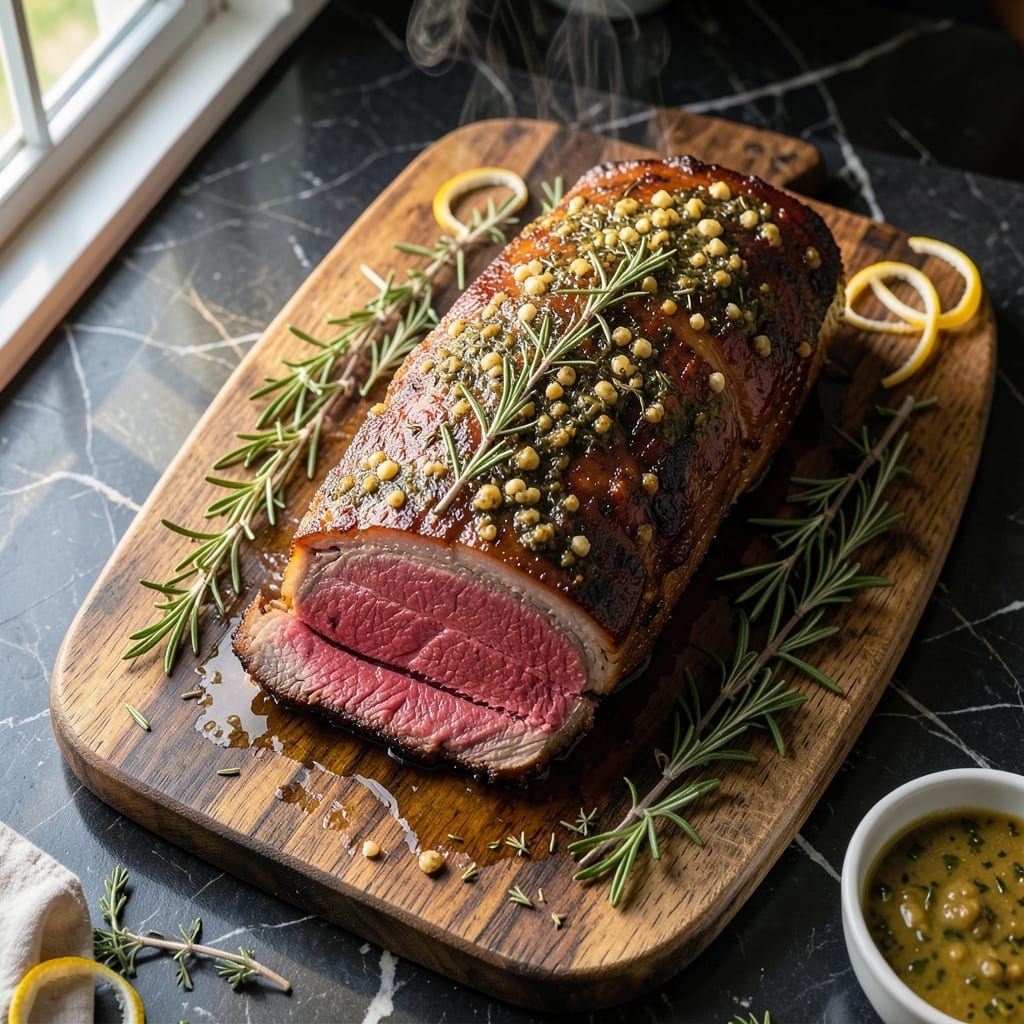
There’s something deeply satisfying about a perfectly cooked prime rib roast—tender, juicy, and packed with rich beef flavor. This method delivers restaurant-quality results at home with a simple herb crust and slow-roasting technique.
I’ve tested this recipe in my small Boston kitchen, adjusting temperatures and timing to ensure the meat cooks evenly without drying out. The herb crust adds aromatic depth while forming a beautiful, flavorful seal on the outside.
The result is a slow-roasted masterpiece with a crispy exterior and fork-tender interior. Every slice reveals perfectly pink beef that’s as impressive as it is delicious.
Serve with au jus for dipping and your favorite sides for a meal that feels special enough for holidays but simple enough for Sunday dinner.
Ingredients for Prime Rib Roast Recipe the Kitchen
Prime beef, fresh herbs, and bold flavors come together for this showstopping centerpiece dish.
| Ingredient | Amount | Notes |
|---|---|---|
| Prime Rib Roast 🥩 | 4 lb | Bone-in, well-marbled preferred |
| Kosher Salt 🧂 | 2 tbsp | Diamond Crystal preferred |
| Freshly Ground Black Pepper 🌶️ | 2 tbsp | Coarse grind for crust |
| Garlic Cloves 🧄 | 6 cloves | Minced for herb crust |
| Fresh Rosemary 🌿 | 3 tbsp | Finely chopped, stems discarded |
| Fresh Thyme 🍃 | 2 tbsp | Leaves stripped from stems |
| Dijon Mustard 🟡 | 3 tbsp | For binding herb crust |
| Olive Oil 🫒 | 2 tbsp | Extra-virgin for richness |
| Red Wine 🍷 | 1 cup | Dry variety for au jus |
| Beef Stock 💧 | 2 cups | Low-sodium preferred |
| Unsalted Butter 🧈 | 4 tbsp | For au jus finishing |
| All-Purpose Flour 🌾 | 2 tbsp | For thickening au jus |
The prime rib is the star—look for USDA Prime or Choice grade at Whole Foods or a trusted butcher. Bone-in roasts have more flavor, and the fat cap should be thick (that’s where the juiciness comes from). I always ask for the roast to be trimmed and tied for me (saves time and ensures even cooking). If you’re buying pre-packaged, Costco has solid options at a better price point (worth the membership for this).
No red wine? Beef broth with a splash of balsamic vinegar works for the au jus. Fresh herbs are ideal, but dried at one-third the amount gets the job done in a pinch. Out of Dijon? Whole-grain mustard adds a nice texture. The beef stock can be homemade or store-bought—Better Than Bouillon is my go-to for depth of flavor. Skip the pre-minced garlic; fresh cloves taste infinitely better.
Leftovers keep beautifully—slice and store in airtight containers for up to 5 days. The au jus can be frozen for 3 months (leave the butter out if freezing). Reheat slices gently in the au jus to keep them moist. Honestly, prime rib tastes even better the next day.
Why You’ll Love This Recipe
- Set It & Forget: I rub the roast with salt, pepper, garlic, and rosemary, then let the oven do the work—hardly any hands-on time.
- Herb Crust Magic: That crust from the garlic and rosemary? Ridiculously good, with every bite packed with savory depth.
- Holiday Showstopper: I serve this for Christmas and birthdays—always impresses, yet it’s unfussy enough for a fancy Sunday dinner.
- Leftovers Luxury: Between us, the sandwiches I make with the leftovers might be even better than the original meal.
Step-by-Step Instructions for Slow-Roasted Prime Rib with Herb Crust
Here’s my foolproof method for achieving a perfectly cooked roast with a flavorful crust.
Step 1: Prepare the Herb Crust
In a small bowl, combine the 2 tbsp Kosher Salt, 2 tbsp Freshly Ground Black Pepper, minced 6 cloves Garlic Cloves, 3 tbsp Fresh Rosemary, and 2 tbsp Fresh Thyme. Stir in the 3 tbsp Dijon Mustard and 2 tbsp Olive Oil until you have a thick paste.
This paste will form the flavorful crust that adheres to the 4 lb Prime Rib Roast. The mustard acts as a binder while the herbs and garlic infuse every bite with aromatic depth. Don’t skip the olive oil—it helps the crust crisp up beautifully in the oven.
Step 2: Apply the Crust and Prep for Roasting
Pat the prime rib dry with paper towels—this is crucial for a good sear. Place it bone-side down on a rack in a roasting pan. Rub the herb paste all over the surface, pressing it in to ensure it adheres well. The fat cap should be on top to baste the meat as it roasts.
Let the seasoned roast sit at room temperature for 1 hour before going into the oven. This takes the chill off the meat, ensuring more even cooking. The paste should look glossy and evenly distributed across the entire surface.
Step 3: Slow-Roast to Perfection
Preheat your oven to 250°F. This low and slow approach guarantees a perfectly even cook from edge to edge. Roast the prime rib for 2 to 2.5 hours, or until an instant-read thermometer inserted into the thickest part reads 125°F for medium-rare.
You’ll know it’s ready when the crust is deep golden brown and the internal temperature hits your target. The meat should feel slightly springy to the touch but still yield under gentle pressure. This temperature ensures a rosy, juicy center throughout.
Step 4: Make the Au Jus
Transfer the roast to a cutting board and tent loosely with foil. Place the roasting pan on the stovetop over medium heat. Add the 1 cup Red Wine and deglaze, scraping up all the browned bits from the bottom of the pan.
Pour in the 2 cups Beef Stock and bring to a simmer. In a small bowl, mix the 2 tbsp All-Purpose Flour with 2 tbsp of the 4 tbsp Unsalted Butter to form a beurre manié. Whisk this into the simmering liquid and cook for 3-4 minutes until thickened. Finish by whisking in the remaining 2 tbsp Unsalted Butter for a glossy finish.
Step 5: Rest and Serve
Let the prime rib rest for 20-30 minutes before carving. This allows the juices to redistribute, ensuring every slice is moist and flavorful. The internal temperature will rise by 5-10°F during this time.
Carve between the ribs and serve with the au jus on the side. Each slice should have a crisp, herbaceous crust and a tender, pink center. The au jus adds a rich, savory depth that complements the roast perfectly.
Pro Tips For Making Prime Rib Roast Recipe The Kitchen
- Start High, Finish Low: Sear the roast at 450°F for 20 minutes to build a deep crust, then drop to 325°F—this gives you that perfect brown exterior without overcooking the center.
- Salt Overnight: Rub the prime rib with kosher salt at least 12 hours before cooking; it penetrates deep into the meat for even seasoning and a better texture.
- Rest Before Carving: Let it rest under foil for 20-30 minutes after roasting—skipping this means all those juices end up on the cutting board, not in the meat.
- Crush the Garlic: Smash the garlic cloves before rubbing them on the roast; it releases more flavor without leaving harsh chunks in your final dish.
Perfect Pairings for These Flavors
Classic Sides
I always pair this roast with creamy horseradish mashed potatoes—the tangy kick cuts through the richness beautifully. Use 2 lbs Yukon Golds and fold in ½ cup prepared horseradish at the end. It’s my Nonna’s trick for balancing bold flavors.
Yorkshire Puddings
For a British touch, bake popover-style Yorkshire puddings in the same pan after removing the roast. The rendered beef fat creates an irresistible crispness. I use a 12-cup muffin tin and bake at 425°F for 20 minutes until golden and puffed. 💛
Winter Vegetables
Roasted root vegetables like carrots, parsnips, and Brussels sprouts caramelize perfectly alongside the prime rib. Toss with 2 tbsp olive oil and roast at 400°F for 25-30 minutes. Their natural sweetness complements the savory beef.
Wine Pairings
A bold Cabernet Sauvignon stands up to the rich flavors—I love Josh Cellars or Decoy for accessible options. For white wine lovers, a buttery Chardonnay works surprisingly well. Serve slightly below room temperature. 🍷
Bread Basket
Warm sourdough rolls from a local Boston bakery are perfect for soaking up au jus. I grab mine from Flour Bakery on Sunday mornings. Add a herb butter with chopped rosemary for extra flair.
Nutrition Facts
Frequently Asked Questions
What’s the ideal internal temperature for medium-rare?
Remove from oven at 125°F—it will rise to 130-135°F while resting. This ensures a perfect pink center throughout.
Can I use a boneless roast instead?
Yes, but bone-in adds flavor and helps conduct heat more evenly. If using boneless, reduce cooking time by about 15-20% and watch the temperature closely.
How do I prevent the herb crust from burning?
Tent loosely with foil if it browns too quickly. The low 250°F oven temperature in this method usually prevents burning, but ovens vary.
Should I sear the roast first?
Not necessary with this slow-roast method. The herb crust creates a beautiful exterior without pre-searing. The long cook time develops deep flavor naturally.

- Protein Pudding Recipe With Sugar Free Pudding: High-Protein Creamy Indulgence - November 3, 2026
- Progresso Recipe Starters Creamy Parmesan Basil Cooking Sauce: Rich Herb-Infused Base for Pasta and More - November 3, 2026
- Pudding Recipe With Egg Yolks: Silky Smooth Custard in Minutes - November 3, 2026