
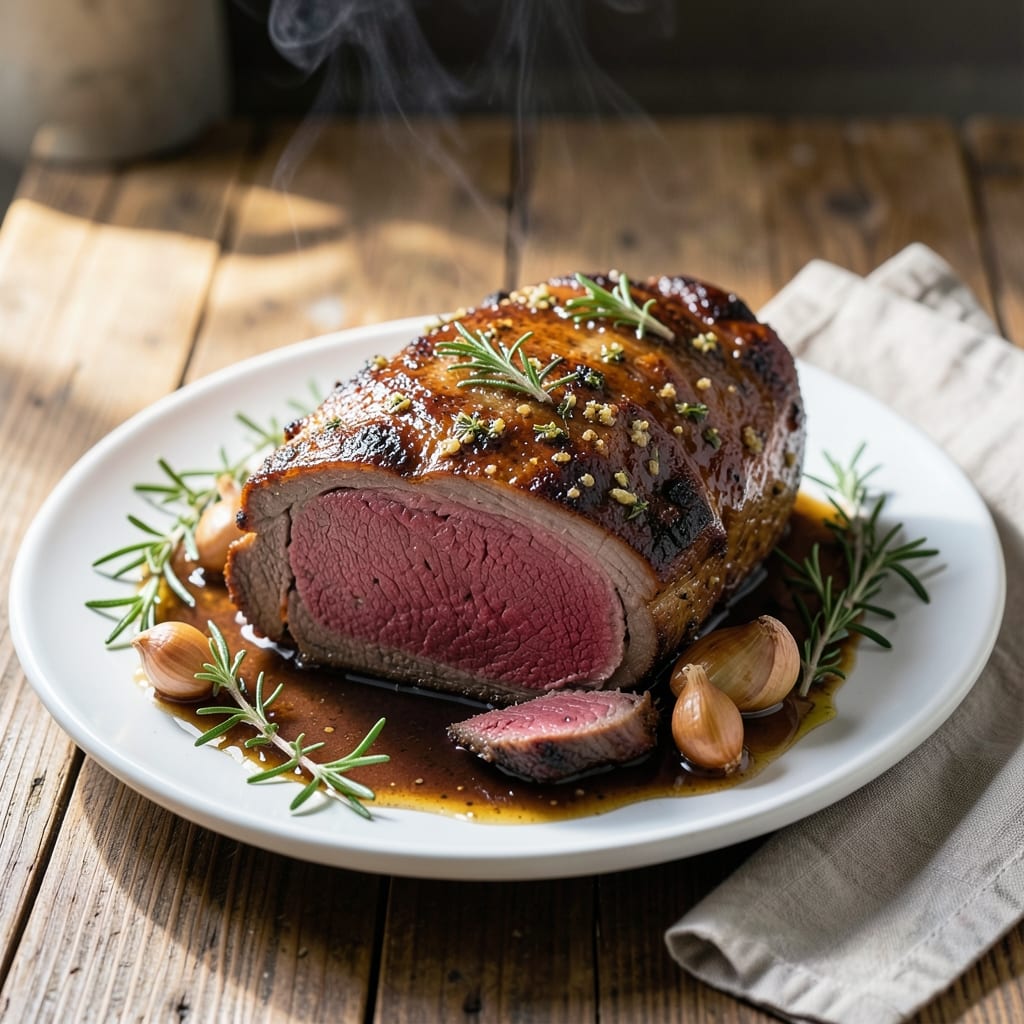
This prime rib roast is the centerpiece your holiday table deserves. A herb-crusted masterpiece that delivers tender, flavorful meat with minimal effort.
I’ve refined this method over years of holiday dinners, drawing inspiration from Tyler Florence’s approach. The key is a simple dry brine overnight, followed by a high-heat sear to create a perfectly browned crust.
What emerges from the oven is a showstopping roast with a savory herb crust and juicy, pink centers. The aroma alone will have your guests gathering in the kitchen.
Serve with au jus for dipping and watch it disappear. Here’s how to make it unforgettable.
Ingredients for Prime Rib Roast Recipe Tyler Florence
A few quality ingredients create this herb-crusted holiday masterpiece. Probably have most already.
| Ingredient | Amount | Notes |
|---|---|---|
| Prime Rib Roast 🥩 | 4 lb | Bone-in, well-marbled preferred |
| Kosher Salt 🧂 | 2 tbsp | Diamond Crystal preferred for dry brine |
| Freshly Ground Black Pepper 🌶️ | 1 tbsp | Coarse grind for crust texture |
| Fresh Rosemary 🌿 | 3 tbsp | Finely chopped, stems discarded |
| Fresh Thyme 🍃 | 3 tbsp | Finely chopped, stems discarded |
| Fresh Garlic Cloves 🧄 | 6 cloves | Minced for herb paste |
| Dijon Mustard 🟡 | ¼ cup | For herb paste binding |
| Extra-Virgin Olive Oil 🫒 | ¼ cup | For searing and roasting |
| Red Wine 🍷 | 1 cup | Dry variety for au jus |
| Beef Stock 🥣 | 2 cups | Low-sodium preferred for au jus |
| Unsalted Butter 🧈 | 4 tbsp | For finishing herb crust |
| All-Purpose Flour 🌾 | 1 tbsp | For thickening au jus |
The prime rib is the star—look for bone-in with plenty of marbling at Whole Foods or your trusted butcher. I always ask for the center-cut portion (ribs 6-8) for even cooking. The herbs need to be fresh; dried won’t give you that vibrant crust. Don’t skimp on the kosher salt—it’s doing the heavy lifting for that dry brine overnight. (Worth the wait, trust me.)
No red wine? Substitute beef broth with a splash of balsamic vinegar. Short on fresh herbs? Use half the amount of dried, but fresh really makes the difference here. The Dijon can be swapped for whole-grain mustard if that’s what you have. For the stock, Better Than Bouillon is my go-to—just mix with hot water. (Frozen wine works in a pinch for the au jus.)
The roast needs to rest before slicing—at least 20 minutes. Leftovers keep 4-5 days wrapped tightly in the fridge, or freeze slices for 3 months. The au jus can be made ahead and reheated—it only gets richer.
Why You’ll Love This Recipe
- Set It & Forget: Honestly, once it’s in the oven, it does all the work—just a little salt, pepper, and those fresh rosemary and thyme sprigs.
- That Herby Crust: The rosemary and thyme form this crazy aromatic crust that makes every bite taste like a high-end steakhouse.
- Holiday Hero: I serve this for Christmas and birthdays—always impresses, and it’s way simpler than it looks.
- Leftovers for Days: Between us, the sandwiches I make with the leftovers might be even better than the original meal.
Step-by-Step Instructions for Herb-Crusted Prime Rib Roast
This method delivers a showstopping centerpiece with a fragrant crust and perfect medium-rare center.
Step 1: Dry Brine and Prepare the Roast
Begin by patting the 4 lb prime rib roast completely dry with paper towels. This step is crucial for developing a proper crust. Season the roast generously with the 2 tbsp kosher salt and 1 tbsp freshly ground black pepper, pressing the seasoning into all surfaces to ensure it adheres well.
Place the roast on a wire rack set over a baking sheet, uncovered, in the refrigerator. Let it sit for 12-24 hours—this dry brine process seasons the meat deeply and creates a perfect surface for the herb crust while keeping the interior juicy.
Step 2: Create the Herb Paste and Sear
Remove the roast from the refrigerator 2 hours before cooking to bring it to room temperature. In a small bowl, combine the 3 tbsp fresh rosemary, 3 tbsp fresh thyme, 6 cloves minced fresh garlic cloves, 0.25 cup dijon mustard, and 0.25 cup extra-virgin olive oil to form a thick paste.
Rub this herb mixture all over the roast, ensuring an even coating. Heat a large roasting pan over high heat and sear the roast on all sides until deeply browned, about 2-3 minutes per side. This creates a flavorful crust and enhances the herb paste’s aroma.
Step 3: Roast to Perfection
Preheat your oven to 450°F. Place the seared roast bone-side down in the roasting pan. Insert a meat thermometer into the thickest part of the roast, avoiding the bone. Roast for 20 minutes at this high temperature to develop a deep crust.
Reduce the oven temperature to 325°F and continue roasting until the internal temperature reaches 120-125°F for medium-rare, about 1-1.5 hours total cooking time. Baste the roast with the pan juices every 30 minutes for even browning and added flavor.
Step 4: Rest and Prepare the Au Jus
Transfer the roast to a cutting board, tent loosely with foil, and let it rest for 20-30 minutes. This allows the juices to redistribute, ensuring a moist, tender result. Meanwhile, place the roasting pan on the stovetop over medium heat.
Add the 1 cup red wine to the pan and deglaze, scraping up all the browned bits with a wooden spoon. Simmer for 3-4 minutes until reduced by half. Stir in the 2 cups beef stock and bring to a simmer. Cook for 5 minutes until slightly reduced.
Step 5: Finish the Sauce and Serve
Strain the au jus through a fine-mesh sieve into a saucepan. Whisk in the 1 tbsp all-purpose flour to thicken slightly, then stir in the 4 tbsp unsalted butter, one tablespoon at a time, until the sauce is glossy and smooth. Taste and adjust seasoning if needed.
Carve the roast between the ribs into thick slices and arrange on a serving platter. Drizzle some of the au jus over the top and serve the remaining sauce on the side. The roast should have a thick, fragrant herb crust with a rosy pink center, perfect for a holiday feast.
Pro Tips For Making Prime Rib Roast Recipe Tyler Florence
- Dry the Roast: Pat the prime rib completely dry with paper towels before seasoning—I learned this the hard way after my first few roasts steamed instead of seared in the oven.
- Use Room Temp Meat: Take the roast out of the fridge 2 hours before cooking; cold meat cooks unevenly, and Tyler’s method relies on that initial high-heat blast.
- Don’t Skip the Herb Paste: Crush the rosemary and thyme with the salt and pepper into a paste—it sticks better and actually changes the outcome compared to just sprinkling herbs on top.
- Rest Before Carving: Let it rest under foil for at least 20 minutes after roasting, or all those beautiful juices will end up on the cutting board instead of in the meat.
Make-Ahead Tips for This Recipe
Overnight Prep
Start your dry brine the night before—pat the 4 lb prime rib roast dry, then coat with 2 tbsp kosher salt and 1 tbsp black pepper. Let it sit uncovered on a rack in the fridge for 12-24 hours. This builds flavor and ensures a perfect crust. I always set a reminder so I don’t forget it in there! 💡
Herb Paste Advance
Make the herb paste up to 24 hours ahead. Combine 3 tbsp each fresh rosemary and thyme, 6 minced garlic cloves, ¼ cup Dijon mustard, and ¼ cup olive oil. Store in an airtight container—the flavors meld beautifully overnight.
Au Jus Early
Prepare the au jus base the day before. Simmer 1 cup red wine and 2 cups beef stock until reduced by half, then strain and refrigerate. Reheat and finish with 4 tbsp butter right before serving. This saves 20 minutes on the big day.
Room Temp Timing
Take the roast out of the fridge 2 hours before cooking to bring it to room temperature. I set mine on the counter while I prep side dishes—just don’t leave it out longer than 2 hours for safety. This step ensures even cooking.
Resting Space
Plan for the 20-30 minute rest after roasting. Tent the meat with foil and place it on a warm platter. I use this time to finish sides and reheat the au jus. The juices redistribute, making every slice tender and juicy. 💛
Nutrition Facts
Frequently Asked Questions
Do I need to use fresh herbs for the crust?
Fresh herbs make the best flavor, but you can use dried in a pinch. Use 1 tablespoon dried for every 3 tablespoons fresh. The crust won’t be as vibrant, but it’ll still taste great.
How do I know when it’s done without a meat thermometer?
Press the roast with tongs—medium-rare feels like the base of your thumb when relaxed. But a thermometer is best for accuracy. Aim for 120-125°F internally.
Can I cook this in a slow cooker?
Not recommended. A slow cooker won’t give you the same sear or crust. This method relies on high heat first, then gentle roasting for perfect results.
What if my au jus is too thin?
Simmer it longer to reduce, or mix 1 teaspoon cornstarch with 1 tablespoon cold water and stir in. Let it thicken for 2-3 minutes before serving.

- Protein Pudding Recipe With Sugar Free Pudding: High-Protein Creamy Indulgence - November 3, 2026
- Progresso Recipe Starters Creamy Parmesan Basil Cooking Sauce: Rich Herb-Infused Base for Pasta and More - November 3, 2026
- Pudding Recipe With Egg Yolks: Silky Smooth Custard in Minutes - November 3, 2026