
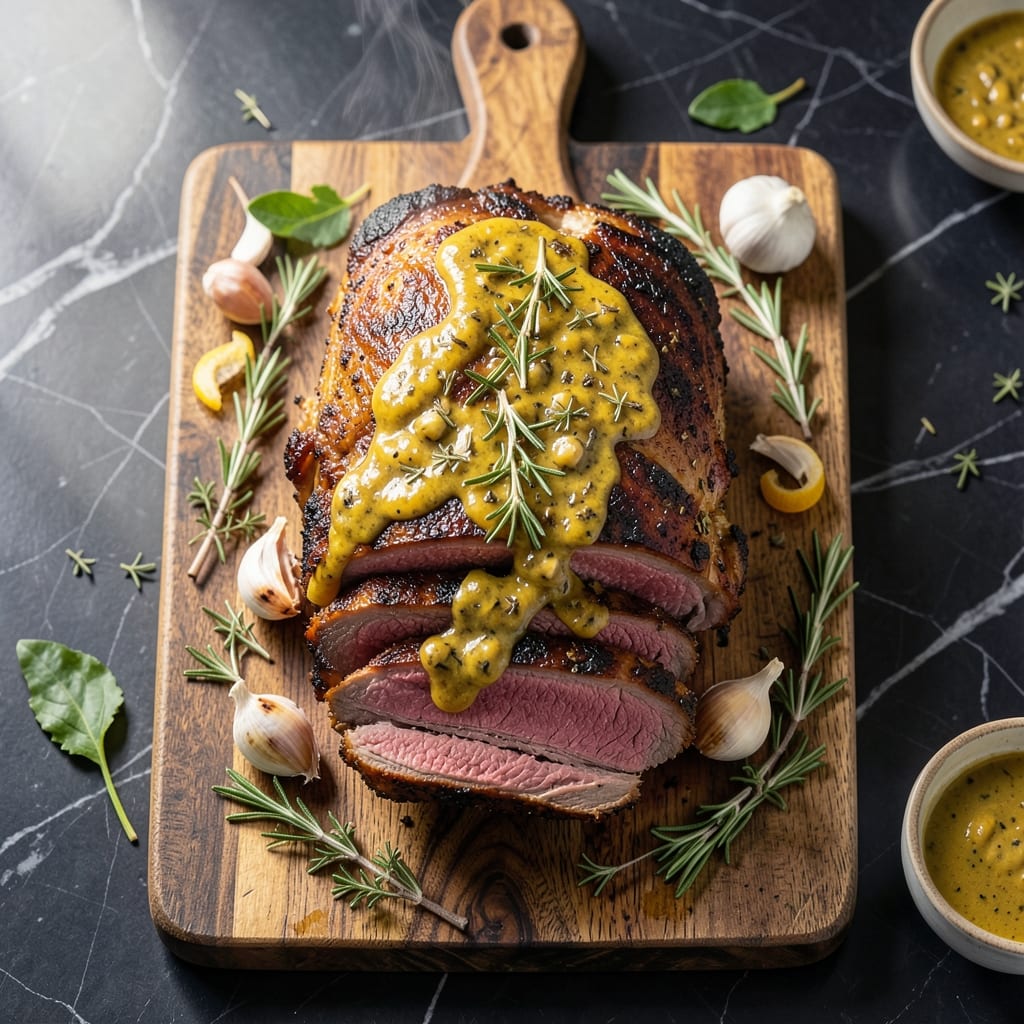
This prime rib roast delivers holiday grandeur without the stress. A simple seasoning blend and precise roasting method guarantee perfectly tender results every time.
I developed this technique to ensure the meat stays juicy while forming a flavorful crust. The key is starting with a high-heat sear, then finishing at a lower temperature.
What emerges is a centerpiece worthy of your most special gatherings. The rich, beefy flavor pairs beautifully with red wine or horseradish cream.
Serve with roasted vegetables and creamy mashed potatoes for a complete meal that impresses without effort.
Ingredients for Prime Rib Roast Recipe Video
A few quality ingredients transform into an impressive holiday centerpiece with ease.
| Ingredient | Amount | Notes |
|---|---|---|
| Prime Rib Roast 🥩 | 4 lb | Bone-in, well-marbled preferred |
| Kosher Salt 🧂 | 2 tbsp | Diamond Crystal brand recommended |
| Freshly Ground Black Pepper 🌶️ | 2 tsp | Coarse grind preferred |
| Garlic Cloves 🧄 | 6 cloves | Peeled, smashed into paste |
| Fresh Rosemary Sprigs 🌿 | 4 whole | Stems removed, finely chopped |
| Fresh Thyme Sprigs 🍃 | 4 whole | Leaves stripped from stems |
| Dijon Mustard 🟡 | 2 tbsp | Whole grain variety preferred |
| Extra-Virgin Olive Oil 🫒 | 2 tbsp | High-quality, cold-pressed |
| Dry Red Wine 🍷 | 1 cup | Bold variety like Cabernet Sauvignon |
| Beef Stock 🥩 | 2 cups | Low-sodium preferred |
| Unsalted Butter 🧈 | 4 tbsp | At room temperature |
| Horse Radish 🌿 | ¼ cup | Freshly grated for cream |
The prime rib is paramount. Costco and Whole Foods consistently carry well-marbled, bone-in roasts ideal for this preparation. Opt for USDA Prime or Choice grade—the marbling ensures juiciness. Ask your butcher for a roast with the rib bones left intact for a dramatic presentation. The fat cap should be at least 1/2-inch thick to protect the meat during high-heat searing.
No red wine? Substitute with additional beef stock plus 1 tbsp balsamic vinegar for acidity. Fresh herbs are ideal, but dried at one-third the quantity works in a pinch. If horseradish cream feels like overkill, prepared horseradish from a jar (drained well) is acceptable. The Dijon mustard can be swapped for whole grain mustard, but avoid yellow mustard—its flavor is too mild.
The roast can rest at room temperature for 1 hour before carving—this allows juices to redistribute. Leftovers (if any) keep in the fridge for 4-5 days or freeze for 3 months. Slice against the grain for serving, and save the bones for stock.
Why You’ll Love This Recipe
- Hands-Off Cooking: I just season, sear, and let the oven do the work—hardly any active time.
- Garlic-Rosemary Magic: The garlic and rosemary form a crust that’s so flavorful, it’s the star of the plate.
- Holiday or Sunday: This works for Christmas dinner or a fancy Sunday supper with the same great results.
- Leftovers Gold: The next-day sandwiches with that rosemary-kissed beef? I make extra just for that.
Step-by-Step Instructions for Prime Rib Roast
Master the reverse sear method for a perfectly cooked holiday centerpiece with even doneness throughout.
Step 1: Prepare the Herb Crust and Season the Roast
Combine the 2 tbsp Dijon mustard, 2 tbsp Extra-Virgin Olive Oil, 6 cloves Garlic Cloves (smashed into paste), 4 whole Fresh Rosemary Sprigs (finely chopped), and 4 whole Fresh Thyme Sprigs (leaves stripped) in a bowl. This aromatic paste will form the flavor base for your crust.
Pat the 4 lb Prime Rib Roast dry with paper towels, then rub the herb mixture evenly over all surfaces. Season generously with the 2 tbsp Kosher Salt and 2 tsp Freshly Ground Black Pepper. Let it sit at room temperature for 1 hour to allow the flavors to penetrate the meat.
Step 2: Slow Roast in a Low Oven
Preheat your oven to 250°F. Place the roast bone-side down on a rack in a roasting pan. This low-and-slow approach ensures even cooking from edge to edge, which is critical for a thick cut like prime rib.
Roast until the internal temperature reaches 110-115°F for medium-rare, about 2 to 2.5 hours. Use a meat thermometer inserted into the thickest part of the roast, avoiding the bone. The meat should still feel slightly soft to the touch but not squishy.
Step 3: Sear for a Crust and Prepare the Pan Sauce
Remove the roast from the oven and increase the temperature to 450°F. Return the roast to the oven and sear for 10-15 minutes until the external temperature reaches 125-130°F and the crust is deeply browned. Watch closely to prevent overcooking.
Transfer the roast to a cutting board and tent loosely with foil. Place the roasting pan on the stovetop over medium-high heat. Add the 1 cup Dry Red Wine and scrape up all the browned bits with a wooden spoon. Simmer for 2 minutes to reduce by half.
Step 4: Finish the Pan Sauce and Rest the Meat
Add the 2 cups Beef Stock to the pan and bring to a boil. Reduce the heat to medium and simmer for 8-10 minutes until the liquid reduces by about half. Whisk in the 4 tbsp Unsalted Butter one piece at a time until the sauce is glossy and coats the back of a spoon.
Let the roast rest for 20-30 minutes before carving. This allows the juices to redistribute, ensuring each slice is moist and flavorful. Strain the pan sauce through a fine-mesh sieve and serve alongside the carved prime rib.
Step 5: Serve with Horseradish Cream
Stir the 0.25 cup Horse Radish into a small bowl of whipped cream or crème fraîche for a tangy accompaniment. Slice the prime rib against the grain into 1-inch thick portions and arrange on a platter. Drizzle some of the pan sauce over the top and serve the rest on the side.
Pro Tips For Making Prime Rib Roast Recipe Video
- Dry the Roast: Pat the prime rib completely dry with paper towels before seasoning—I learned this the hard way after my first few roasts steamed instead of seared in the oven.
- Salt the Night Before: Rub the kosher salt into the meat at least 12 hours ahead, or even overnight. It penetrates deep and guarantees a well-seasoned crust.
- Skip the Cold Start: Let the roast sit at room temperature for 1-2 hours before cooking. A cold center means uneven cooking, and nobody wants that.
- Use a Meat Thermometer: Resist the urge to guess—pull it at 125°F for medium-rare. After burning one to well-done, I finally invested in a good thermometer and never looked back.
Creative Variations of This prime rib roast recipe video
Herb-Crusted with Coffee
For a bold Pacific Northwest twist, add 2 tbsp finely ground coffee to your herb paste. The deep, earthy notes complement the beef beautifully—I love using Stumptown from our local Portland roasters. This variation adds an intriguing depth that surprises guests. 🌿
Garlic-Horseradish Crust
Mix 3 tbsp prepared horseradish and 2 minced garlic cloves with your Dijon mustard and olive oil. This creates a spicy, aromatic crust that pairs wonderfully with the natural richness of the prime rib. The heat from the horseradish cuts through the fat perfectly.
Red Wine Reduction
Instead of a pan sauce, reduce the 1 cup Dry Red Wine with ½ cup beef stock and 1 tbsp balsamic vinegar until syrupy. Drizzle this glossy reduction over each slice for an elegant presentation. I learned this trick from a butcher at New Seasons Market.
Smoked Prime Rib
For a smoky flavor, cold-smoke the roast for 2 hours at 200°F before the reverse sear. Use applewood or hickory chips for best results. This technique reminds me of summer BBQs in Cincinnati, but with a more refined approach. 🔥
Butter-Basted Version
During the final sear, baste the roast every 2-3 minutes with melted unsalted butter, rosemary, and thyme. This creates an extra-luxurious crust and infuses the meat with additional herbal notes. Use a long-handled spoon for safety.
Prime Rib Sliders
Use leftovers to make incredible sliders on brioche buns with horseradish cream and caramelized onions. Thinly slice the meat against the grain and pile high. These are perfect for casual gatherings the next day.
Nutrition Facts
Frequently Asked Questions
What’s the best internal temperature for medium-rare?
Remove from oven at 110-115°F for perfect medium-rare. It will rise to 125-130°F during resting, ensuring tender, juicy slices.
Do I need to cover it while resting?
Yes, tent loosely with foil for 20-30 minutes. This keeps it warm while juices redistribute, preventing dry meat.
Can I use a boneless roast instead?
Use the same method but reduce cook time by 15-20%. Bone-in adds flavor but boneless is easier to carve.
How do I prevent the crust from burning during searing?
Watch closely at 450°F and rotate the pan if needed. The high heat is brief but crucial for a perfect crust.

- Protein Pudding Recipe With Sugar Free Pudding: High-Protein Creamy Indulgence - November 3, 2026
- Progresso Recipe Starters Creamy Parmesan Basil Cooking Sauce: Rich Herb-Infused Base for Pasta and More - November 3, 2026
- Pudding Recipe With Egg Yolks: Silky Smooth Custard in Minutes - November 3, 2026