
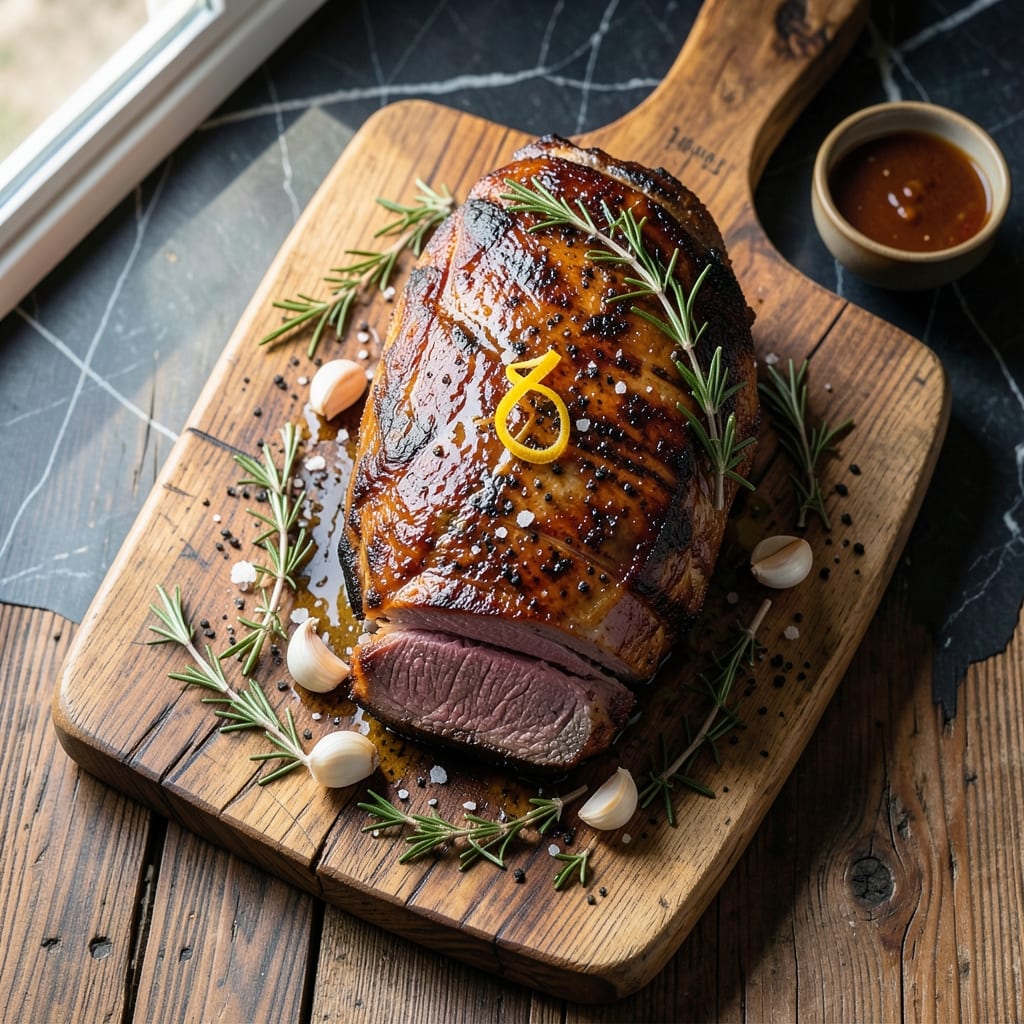
This slow-roasted prime rib transforms holiday dinners into unforgettable feasts with minimal effort. The key lies in a precise temperature gradient that guarantees perfectly pink meat from edge to edge.
Starting with a high-heat sear creates a deeply caramelized crust, while the subsequent low-and-slow roast ensures even cooking. A simple herb rub enhances the beef’s natural richness without overpowering it.
The result is a showstopping centerpiece with a crisp exterior and buttery interior. Traditional sides like Yorkshire pudding and roasted vegetables complete the meal.
This method delivers restaurant-quality results every time, making your holiday table the talk of the season.
Ingredients for Prime Rib Roast Recipe Youtube
A few quality ingredients create this restaurant-quality centerpiece with minimal effort.
| Ingredient | Amount | Notes |
|---|---|---|
| Prime Rib Roast 🥩 | 5 lb | Bone-in, well-marbled preferred |
| Kosher Salt 🧂 | 2 tbsp | Diamond Crystal brand recommended |
| Freshly Ground Black Pepper 🌶️ | 2 tbsp | Coarse grind preferred |
| Fresh Rosemary Sprigs 🌿 | 4 whole | Stems removed, finely chopped |
| Fresh Thyme Sprigs 🍃 | 4 whole | Leaves stripped from stems |
| Garlic Cloves 🧄 | 6 cloves | Minced to fine paste |
| Olive Oil 🫒 | ¼ cup | Extra-virgin for herb rub |
| Unsalted Butter 🧈 | 4 tbsp | Room temperature, for basting |
| Red Wine 🍷 | 1 cup | Dry variety like Cabernet Sauvignon |
| Beef Stock 🥩 | 1 cup | Low-sodium preferred |
| Dijon Mustard 🟡 | 2 tbsp | For herb crust binding |
| All-Purpose Flour 🌾 | ¼ cup | For optional thickened pan sauce |
The prime rib itself is non-negotiable. Bone-in provides superior flavor and moisture, and USDA Prime grade from Whole Foods or Costco guarantees the marbling you need for that buttery texture. Look for a roast with a thick fat cap—this renders down to create the most flavorful crust. Most butchers will trim and tie it for you if you ask. Don’t skip the dry brining step—it’s what ensures even seasoning throughout.
No red wine? Beef stock with a splash of balsamic vinegar adds the necessary acidity. Fresh herbs are ideal, but dried at one-third the amount works in a pinch (toast them first to wake up the flavors). If you’re avoiding alcohol entirely, low-sodium beef broth with a teaspoon of apple cider vinegar mimics the depth. The Dijon can be swapped for whole-grain mustard if you prefer a rustic texture.
The roast can rest at room temperature for 1 hour before cooking—this ensures even cooking. Leftovers? They reheat beautifully: slice, place in a baking dish with a splash of stock, cover with foil, and warm at 325°F for 15-20 minutes. Keeps in the fridge for 4-5 days.
Why You’ll Love This Recipe
- Set and Forget: I just season the roast with salt, pepper, and fresh herbs, then let the oven do all the work.
- Herb Crust Heaven: The rosemary and thyme create this crazy aromatic crust that makes every bite taste like a special occasion.
- Holiday Hero: Between us, this is my go-to for Christmas dinner—impressive without the stress.
- Leftovers Luxury: Honestly, the next-day sandwiches with that rare center and herby edge might be even better.
Step-by-Step Instructions for Prime Rib Roast
Master this slow-roasting technique for a tender, impressive holiday centerpiece every time.
Step 1: Prepare the Herb Rub and Season the Roast
Finely chop the 4 whole fresh rosemary sprigs and strip the leaves from the 4 whole fresh thyme sprigs. In a small bowl, combine these herbs with the 6 cloves minced garlic cloves, 2 tbsp kosher salt, 2 tbsp freshly ground black pepper, 0.25 cup olive oil, and 2 tbsp Dijon mustard. This paste will create a flavorful crust.
Pat the 5 lb prime rib roast dry with paper towels. Rub the herb mixture evenly over all surfaces, pressing it into the meat. The roast should be completely coated—this ensures maximum flavor penetration during roasting. Let it sit at room temperature for 1 hour before cooking.
Step 2: Preheat and Begin Slow Roasting
Position a rack in the lower third of your oven and preheat to 250°F. This low temperature is crucial for even cooking without overcooking the outer layers. Place the roast bone-side down on a rack set in a roasting pan—this allows heat to circulate evenly.
Insert a meat thermometer into the thickest part of the roast, avoiding the bone. Slow-roast the prime rib for approximately 3 to 3.5 hours, or until the internal temperature reaches 120-125°F for medium-rare. Baste the roast with the 4 tbsp unsalted butter every 45 minutes to enhance browning and flavor.
Step 3: Finish with High Heat for a Perfect Crust
Once the roast nears 120°F internally, increase the oven temperature to 450°F. This final blast of heat will create a beautiful, crispy crust. Return the roast to the oven and cook for an additional 10-15 minutes, or until the internal temperature reaches 125-130°F for medium-rare perfection.
Watch closely during this phase—the crust should turn a deep golden brown and develop a slight crunch. Remove the roast from the oven when it reaches the desired temperature.
Step 4: Rest and Prepare the Pan Sauce
Transfer the roast to a cutting board and tent loosely with foil. Let it rest for 20-30 minutes—this allows the juices to redistribute, ensuring every slice is moist and flavorful. Meanwhile, place the roasting pan on the stovetop over medium heat.
Pour off excess fat, leaving the browned bits in the pan. Add the 1 cup red wine and 1 cup beef stock, scraping up the fond with a wooden spoon. Simmer for 5-7 minutes until reduced by half. For a thicker sauce, whisk in the 0.25 cup all-purpose flour and cook for an additional 2-3 minutes until smooth.
Step 5: Carve and Serve
Remove the foil and carve the roast by slicing between the bones for elegant portions. Arrange the slices on a serving platter and drizzle with the warm pan sauce. The meat should be pink and juicy in the center with a well-browned exterior.
Serve immediately while hot, accompanied by your favorite holiday sides. Each serving should showcase the roast’s tender texture and rich, herby crust—perfect for a festive meal.
Pro Tips For Making Prime Rib Roast Recipe Youtube
- Dry the Meat: Pat the prime rib roast completely dry with paper towels before seasoning—moisture is the enemy of a good crust. I learned this the hard way after my first few roasts came out steamed instead of seared.
- Salt Generously: Use more kosher salt than you think you need, at least 1 tablespoon per pound, and apply it 1-2 hours before cooking. Sounds excessive, but it’s the only way to get that deep, flavorful crust.
- Start High, Finish Low: Sear the roast at 450°F for 20 minutes, then drop the temp to 250°F to finish—this locks in the juices while ensuring even cooking. My grandmother swore by this method, and it never fails.
- Rest Before Carving: Let the prime rib rest under foil for at least 20-30 minutes after cooking—it keeps the juices inside the meat instead of all over the cutting board. I was skeptical until I tried it, and now I’d never skip it.
Health Benefits of These Flavors
Rich in B Vitamins
This creation packs a powerful punch of B vitamins, especially B12 and B6, which are essential for energy production and brain function. A 6-ounce serving provides about 30% of your daily B12 needs and 20% of B6. These nutrients help your body metabolize the protein efficiently. 💪
Iron and Zinc Boost
The beef in this dish is an excellent source of heme iron, the type your body absorbs most easily. You’ll get about 3.5mg per serving, which is nearly 20% of your daily requirement. It also provides zinc, crucial for immune function and wound healing.
High-Quality Protein
Each serving delivers approximately 40 grams of protein, containing all nine essential amino acids your body needs. This high-quality protein supports muscle maintenance and repair. The slow-roasting method helps preserve these valuable nutrients.
Healthy Fats
While often associated with saturated fat, this cut also contains monounsaturated fats similar to those in olive oil. The marbling in a well-chosen roast provides these heart-healthy fats. Consuming it in moderation as part of a balanced diet can be beneficial.
Selenium Content
This meal provides a good amount of selenium, an important mineral that acts as a powerful antioxidant. A serving contains about 50mcg, which is over 90% of your daily needs. Selenium supports thyroid function and protects cells from damage.
Low in Carbohydrates
With virtually no carbohydrates, this dish fits perfectly into low-carb or keto diets. The lack of carbs means it won’t spike your blood sugar, making it an excellent choice for those monitoring their glucose levels. 💛
Nutrition Facts
Frequently Asked Questions
What’s the ideal internal temperature for medium-rare?
Aim for 125-130°F for perfect medium-rare. Use a meat thermometer for accuracy.
How long should it rest before carving?
Let it rest for 20-30 minutes after roasting. This keeps the juices inside the meat.
Can I use a boneless roast instead?
Yes, but bone-in adds more flavor. Adjust cooking time slightly since boneless cooks faster.
What if my crust isn’t browning enough?
Increase oven temp to 450°F for the final 10-15 minutes. Watch closely to avoid burning.

- Protein Pudding Recipe With Sugar Free Pudding: High-Protein Creamy Indulgence - November 3, 2026
- Progresso Recipe Starters Creamy Parmesan Basil Cooking Sauce: Rich Herb-Infused Base for Pasta and More - November 3, 2026
- Pudding Recipe With Egg Yolks: Silky Smooth Custard in Minutes - November 3, 2026