
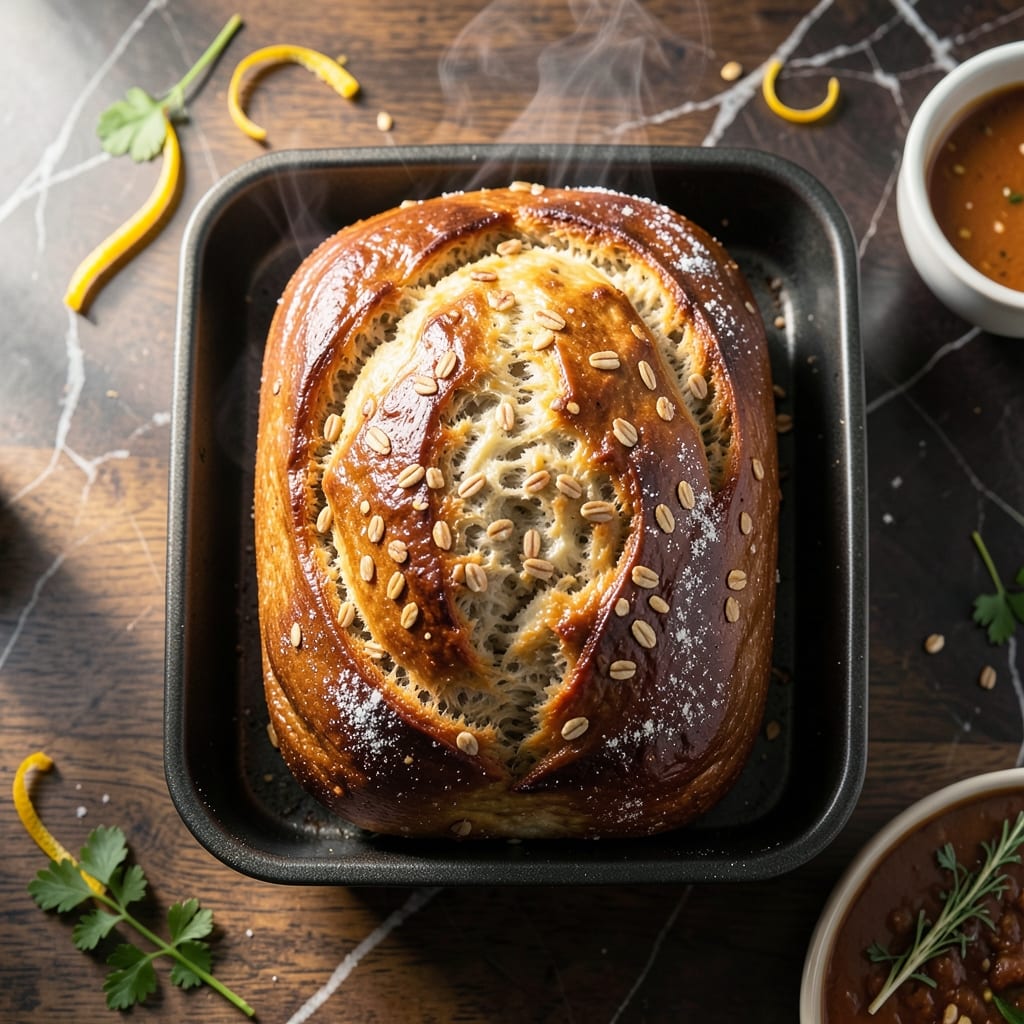
I developed this high-protein bread recipe after years of experimenting with bread machine settings and ingredient ratios to create a loaf that actually tastes like bread, not a protein bar.
The bread machine does all the work—mixing, kneading, and baking—while you focus on other tasks. This method ensures a consistent, perfectly risen loaf every time without the guesswork of traditional baking.
What you get is a soft, sliceable loaf packed with protein but still light and airy. It’s ideal for sandwiches, toast, or simply enjoying on its own with a spread of butter.
No special techniques required, just quality ingredients and the right machine settings. Here’s how to make it.
Ingredients for Protein Bread Recipe Bread Machine
High-protein ingredients meet bread machine convenience for a perfectly risen, sliceable loaf every time.
| Ingredient | Amount | Notes |
|---|---|---|
| Bread Flour 🌾 | 3 cups | High-protein bread flour preferred |
| Vital Wheat Gluten 🌾 | ½ cup | Essential for structure and rise |
| Unflavored Whey Protein Powder 🥛 | ¾ cup | Or plant-based protein for vegan |
| Old-Fashioned Oats 🌾 | ½ cup | Rolled oats for texture |
| Nonfat Dry Milk Powder 🥛 | ¼ cup | Enhances tenderness and browning |
| Granulated Sugar 🧂 | 2 tbsp | Feeds the yeast for fermentation |
| Active Dry Yeast 🍞 | 2 ¼ tsp | One packet, proofed if needed |
| Salt 🧂 | 1 ½ tsp | Fine sea salt for even distribution |
| Unsalted Butter 🧈 | 2 tbsp | Melted, or vegetable oil |
| Large Egg 🥚 | 1 whole | Room temperature for best results |
| Water 💧 | 1 ¼ cups | Warm, about 110°F |
| Honey 🍯 | 1 tbsp | Optional for slight sweetness |
The flour and vital wheat gluten are non-negotiable for structure. King Arthur brand bread flour is my go-to—consistent protein content and reliable results. Vital wheat gluten from Bob’s Red Mill blends seamlessly. Whey protein powder should be unflavored (I use Isopure), as flavored varieties can impart unwanted tastes. Nonfat dry milk adds tenderness without excess fat.
No whey protein? Substitute plant-based protein powder at a 1:1 ratio. Out of vital wheat gluten? Bread won’t rise as high but will still bake—just expect a denser texture. Old-fashioned oats can be swapped for quick oats in a pinch, though texture will be slightly finer. For a dairy-free version, replace dry milk with soy milk powder or omit entirely.
Store dry ingredients in airtight containers in a cool, dark place for up to 6 months. The dough should rest briefly before baking if your machine has that setting. Slice only when completely cooled to maintain structure. Leftovers freeze beautifully for up to 3 months.
Why You’ll Love This Recipe
- Set It & Forget It: I dump everything in the bread machine, press start, and let it do the work—no kneading, no mess.
- Nutty, Hearty Flavor: The oats and whey protein give it this subtle richness that’s way more satisfying than regular bread.
- Meal Prep Hero: I slice and freeze a loaf, then toast it all week for sandwiches or avocado toast.
- Budget Protein Boost: Honestly, this costs less than store-bought protein bread and packs way more protein per slice.
Step-by-Step Instructions for Protein Bread Bread Machine
Follow this precise sequence for a perfectly textured high-protein loaf with minimal effort.
Step 1: Prepare the Wet Ingredients
Begin by warming the 1.25 cups Water to approximately 110°F—this temperature activates the yeast without killing it. I use a instant-read thermometer for accuracy. In a small bowl, whisk the large egg until uniform, then add the 2 tbsp Unsalted Butter (melted) and 1 tbsp Honey.
The combination of these wet ingredients creates a rich base that supports the dense protein components. Ensure the butter is fully melted but not hot; residual heat could prematurely cook the egg or inhibit yeast activity.
Step 2: Combine the Dry Ingredients
In the bread machine pan, add the 3 cups Bread Flour, 0.5 cup Vital Wheat Gluten, 0.75 cup Unflavored Whey Protein Powder, 0.5 cup Old-Fashioned Oats, and 0.25 cup Nonfat Dry Milk Powder. These dry components form the structural backbone of the loaf, with the vital wheat gluten and whey protein powder providing essential elasticity and rise.
Next, add the 2 tbsp Granulated Sugar, 2.25 tsp Active Dry Yeast, and 1.5 tsp Salt. I place the yeast in a small well or corner of the pan to prevent premature activation when the wet ingredients are added. The sugar feeds the yeast, while the salt regulates its activity for controlled fermentation.
Step 3: Layer and Initiate the Bread Machine
Pour the prepared wet ingredients over the dry ingredients in the bread machine pan. Use a spatula to gently tap the pan on the counter once or twice—this helps settle the contents without overmixing. The liquid should lightly cover the dry mixture, but avoid stirring; the bread machine’s paddle will handle the incorporation.
Select the basic or whole wheat cycle on your bread machine, depending on its settings. The cycle should include a kneading phase of approximately 10-15 minutes, followed by a first rise, second knead, second rise, and bake. If your machine has a custom setting, aim for a total cycle time of 3-4 hours.
Step 4: Monitor and Adjust as Needed
About 10 minutes into the kneading cycle, check the dough consistency. It should form a smooth, slightly tacky ball that pulls away from the sides of the pan. If the dough appears too dry, add 1-2 teaspoons of water. If it’s too sticky, sprinkle in 1-2 teaspoons of bread flour. The high protein content can make the dough stiffer than traditional bread, so resist the urge to over-adjust.
The first rise should take 45-60 minutes, during which the dough will roughly double in size. The vital wheat gluten and whey protein powder will work synergistically to create a strong gluten network capable of supporting the dense ingredients. The loaf should rise to just below the top of the pan by the end of the second rise.
Step 5: Bake and Cool for Optimal Texture
The baking phase typically lasts 30-40 minutes. The loaf is done when the top is deep golden brown and the internal temperature reaches 190-200°F. The nonfat dry milk powder contributes to a beautifully browned crust, while the old-fashioned oats add a subtle chewiness to the crumb.
Once baked, immediately remove the pan from the machine and transfer the loaf to a wire rack. Allow it to cool for at least 20 minutes before slicing. This cooling period lets the structure set, preventing a gummy texture. The result should be a high, evenly domed loaf with a tender, slightly dense crumb packed with protein.
Pro Tips For Making Protein Bread Recipe Bread Machine
- Measure dry milk precisely: Nonfat dry milk powder can clump—spoon it into the measuring cup and level it off, or weigh it (1/4 cup = ~20g). I learned this the hard way after a dense, gummy loaf.
- Boost gluten gradually: Vital wheat gluten is potent—start with 2 tablespoons per cup of bread flour, then adjust up to 3 if your bread’s texture seems slack.
- Skip packed whey: Unflavored whey protein powder absorbs moisture fast, so don’t pack it into the measuring cup or your dough will be too dry to knead.
- Grind oats fine: Pulse old-fashioned oats in a blender for 5-10 seconds until they’re the texture of coarse cornmeal—this prevents chewy bits and helps the bread rise evenly.
Regional Styles of protein bread recipe bread machine
Italian-Inspired Style
For an Italian twist, I replace 1 cup of bread flour with fine semolina flour, which adds a subtle nuttiness and golden hue. This reminds me of the rustic loaves my grandmother baked in Sicily. The semolina also gives the crust a delightful crispness.
American South Style
In the South, we love our cornbread, so I add ½ cup finely ground cornmeal to the dry ingredients. This creates a denser, slightly sweet loaf perfect for pairing with hearty stews. The cornmeal also gives the bread a beautiful speckled appearance.
Mediterranean Style
For a Mediterranean flair, I mix in 2 tbsp dried herbs—like oregano, rosemary, and thyme—with the dry ingredients. This infuses the bread with aromatic flavors that pair wonderfully with olive oil dips or bruschetta. 🌿
Asian-Inspired Style
To create an Asian-inspired version, I add 1 tbsp sesame seeds and 1 tsp five-spice powder to the dry mix. The sesame seeds add a nutty crunch, while the five-spice powder gives the bread a warm, complex flavor perfect for savory dishes.
German-Style Rye
For a German touch, I substitute 1 cup of bread flour with dark rye flour and add 1 tbsp caraway seeds. This creates a hearty, slightly tangy loaf reminiscent of traditional German rye breads. It’s fantastic with smoked meats or strong cheeses.
French Country Style
For a French-inspired loaf, I add 2 tbsp chopped fresh rosemary and 1 tsp coarse sea salt on top before baking. This gives the bread a rustic, herbaceous flavor that’s perfect for serving with cheese or charcuterie boards. 💫
Nutrition Facts
Frequently Asked Questions
Can I use a different protein powder?
Yes, you can substitute plant-based protein powder at a 1:1 ratio. Just ensure it’s unflavored to avoid altering the bread’s taste.
Why is vital wheat gluten necessary?
It provides the structure and elasticity needed for the bread to rise properly. Without it, the loaf may be dense or flat.
How do I know when the dough is the right consistency?
It should form a smooth, slightly tacky ball that pulls away from the pan sides after 10 minutes of kneading. If too dry, add 1-2 tsp water.
Can I bake this without a bread machine?
Yes, but you’ll need to knead, rise, and bake it manually. Expect a longer process and slightly different texture.

- Protein Pudding Recipe With Sugar Free Pudding: High-Protein Creamy Indulgence - November 3, 2026
- Progresso Recipe Starters Creamy Parmesan Basil Cooking Sauce: Rich Herb-Infused Base for Pasta and More - November 3, 2026
- Pudding Recipe With Egg Yolks: Silky Smooth Custard in Minutes - November 3, 2026