
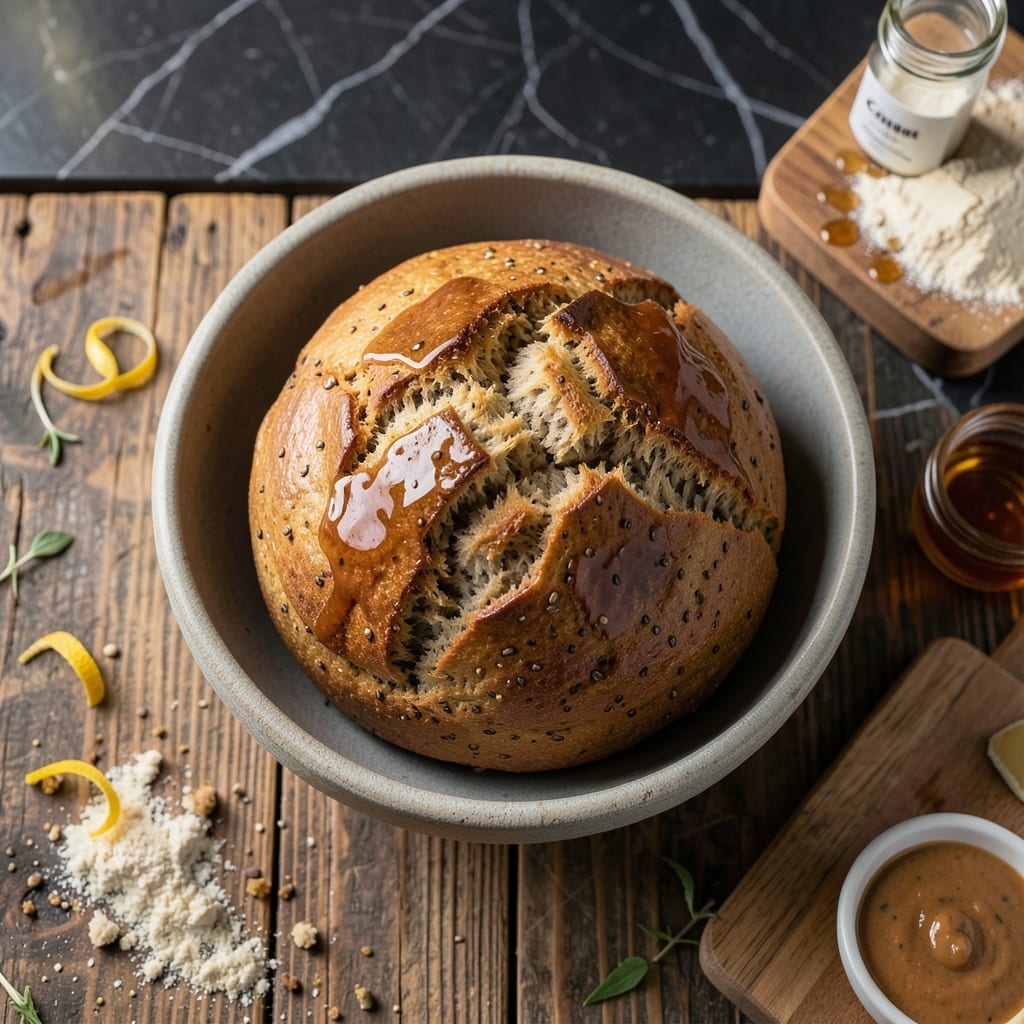
This protein-packed bread delivers a soft, fluffy texture that defies all vegan baking stereotypes. The secret lies in the perfect balance of plant-based protein sources and precise leavening agents to create that ideal rise.
I developed this recipe after countless trials to achieve bread that’s both high in protein and genuinely enjoyable. Chickpea flour and flaxseed provide the nutritional boost while maintaining the light crumb you expect from traditional bread.
The result is a loaf that’s as satisfying as it is nutritious, with no eggs or dairy in sight. It toasts beautifully and holds up well for sandwiches, making it a versatile addition to any meal.
Bake at home with confidence using this tested method for consistent, delicious results every time.
Ingredients for Protein Bread Recipe Vegan
Pantry staples and a few special ingredients create this high-protein loaf with incredible texture.
| Ingredient | Amount | Notes |
|---|---|---|
| Chickpea Flour 🌾 | 1 ½ cups | Also called gram flour |
| Ground Flaxseed 🌿 | ½ cup | For flax egg binding |
| Vital Wheat Gluten 🌾 | 1 cup | Essential for structure |
| Bread Flour 🌾 | 2 cups | High protein all-purpose works |
| Instant Yeast 🍞 | 2 ¼ tsp | One packet, active dry OK |
| Warm Water 💧 | 1 ¼ cups | About 110°F (warm to touch) |
| Maple Syrup 🍁 | 2 tbsp | Feeds yeast, adds sweetness |
| Olive Oil 🫒 | 2 tbsp | Extra-virgin for richness |
| Apple Cider Vinegar 🍏 | 1 tbsp | Helps with rise and texture |
| Sea Salt 🧂 | 1 ½ tsp | Fine grain preferred |
| Pumpkin Seeds 🎃 | ¼ cup | Optional for crunch |
| Sunflower Seeds 🌻 | ¼ cup | Optional for crunch |
The chickpea flour and vital wheat gluten are non-negotiable here. Bob’s Red Mill is my go-to for both—consistent quality and easy to find at Whole Foods or any well-stocked grocery. Ground flaxseed works best when freshly ground (I use a coffee grinder), but pre-ground from the freezer section is fine. Look for vital wheat gluten in the baking aisle, not the gluten-free section (that’s a common mix-up).
No chickpea flour? Lentil flour at one-to-one ratio works in a pinch. Swap maple syrup for agave or date syrup if that’s what you have. The seeds are totally optional—walnuts or pecans add great crunch too. For extra protein, stir in 1/4 cup hemp seeds. Just don’t skip the apple cider vinegar—it’s doing important work behind the scenes.
The dough rests best in a warm spot (I turn my oven light on). Baked loaves keep 3-4 days at room temperature, or freeze slices for 3 months. Toasting revives any slight staleness beautifully.
Why You’ll Love This Recipe
- No Fuss Mixing: I just dump the chickpea flour, flaxseed, and yeast into one bowl—no fancy steps, no waiting for dough to rise forever.
- Nutty Comfort: The toasted chickpea flour gives it this warm, earthy taste that’s way more interesting than plain white bread.
- Meal Prep Hero: I slice it thin, freeze the loaf, and grab a piece for avocado toast or sandwiches all week long.
- Budget Stretcher: A bag of chickpea flour costs pennies and makes two loaves—way cheaper than buying those sad protein breads at the store.
Step-by-Step Instructions for Protein Bread Vegan
Here’s the method I use for consistently fluffy, high-protein vegan bread every time.
Step 1: Activate the Yeast and Mix Wet Ingredients
In a large mixing bowl, combine the 1.25 cups warm water, 2 tbsp maple syrup, and 2.25 tsp instant yeast. Let it sit for 5-7 minutes until you see a foamy layer forming on top—that’s how you know the yeast is active and ready to work.
Once foamy, whisk in the 2 tbsp olive oil, 1 tbsp apple cider vinegar, and 1.5 tsp sea salt. I always use fine grain sea salt here because it dissolves more evenly. The vinegar might seem odd, but it reacts with the baking process to create a lighter crumb.
Step 2: Combine Dry Ingredients and Form the Dough
In a separate bowl, whisk together the 1.5 cups chickpea flour, 0.5 cup ground flaxseed, 1 cup vital wheat gluten, and 2 cups bread flour. The vital wheat gluten is non-negotiable here—it’s what gives this vegan bread its structure and chew.
Create a well in the center of your dry ingredients and pour in the wet mixture. Use a sturdy wooden spoon to combine everything into a shaggy dough. It’ll be sticky at first, but keep mixing until all the flour is hydrated. The dough should pull away from the sides of the bowl but still feel slightly tacky.
Step 3: Knead Until Smooth and Elastic
Turn the dough out onto a lightly floured surface. Here’s where the magic happens: knead for 8-10 minutes until the dough becomes smooth and elastic. I like to use the heel of my hand and push the dough away, then fold it back over itself repeatedly.
You’ll notice the texture change from rough and crumbly to silky and stretchy. This development of gluten strands is what creates that perfect bread texture. If the dough sticks, add a sprinkle of bread flour, but don’t overdo it—you want it slightly tacky for the best rise.
Step 4: First Rise and Shape the Loaf
Lightly oil a clean bowl, place the dough inside, and cover with a damp towel. Let it rise in a warm place for 1 to 1.5 hours or until it has doubled in size. I find the oven with the light on works perfectly for this.
Once risen, punch down the dough to release air bubbles. Gently fold in the 0.25 cup pumpkin seeds and 0.25 cup sunflower seeds if using—they add a nice crunch and extra protein. Shape into a loaf and place in a greased 9×5-inch loaf pan.
Step 5: Second Rise and Bake to Perfection
Cover the pan and let the dough rise again for 45-60 minutes until it domes about 1 inch above the rim of the pan. Preheat your oven to 375°F during the last 15 minutes of rising.
Bake for 40-45 minutes until the top is deep golden brown and the internal temperature reaches 190-200°F. If the top browns too quickly, tent with foil. Remove from the pan immediately and let cool on a wire rack for at least 30 minutes before slicing—this prevents a gummy texture.
Pro Tips For Making Protein Bread Recipe Vegan
- Let Dough Rest: After mixing, let the dough rest for 10-15 minutes before shaping—I learned this the hard way when my loaves kept collapsing in the oven.
- Warm Your Flour: Sounds weird, but it works: take your bread flour out of the fridge 30 minutes early so it mixes better with the yeast.
- Skip Dry Yeast: Resist the urge to use active dry yeast instead of instant—it won’t activate properly with these dry ingredients and your bread won’t rise.
- Add Flax Last: Mix the ground flaxseed in at the very end, just before baking, to keep it from absorbing too much moisture and making the dough gummy.
Health Benefits of protein bread recipe vegan
Muscle Building Power
This loaf packs a serious protein punch with chickpea flour and vital wheat gluten providing about 20g protein per slice. That’s nearly half your daily needs in one serving, perfect for muscle repair and growth. I love having this after a workout for quick recovery. 💪
Plant-Based Nutrition
The ground flaxseed adds omega-3 fatty acids and fiber, while pumpkin seeds contribute magnesium and zinc. Together with the whole grain flours, you get a complete amino acid profile that rivals animal-based proteins.
Digestive Health Boost
The combination of fiber-rich chickpea flour and flaxseed supports healthy digestion. Each slice provides about 8g of fiber, which promotes regularity and feeds your gut microbiome. I notice improved digestion when I eat this regularly.
Low Glycemic Impact
Unlike traditional white bread, this version has a lower glycemic index due to its protein and fiber content. The maple syrup adds minimal natural sweetness without spiking blood sugar, making it great for sustained energy. 🌱
Allergen-Friendly
Naturally free from dairy, eggs, and nuts, this bread is safe for many common allergies. The plant-based ingredients make it suitable for vegan diets while still delivering the satisfaction of traditional bread.
Vitamin and Mineral Rich
You’ll get a dose of iron from the chickpea flour, B vitamins from the whole grains, and antioxidants from the seeds. This nutritional powerhouse supports overall health while tasting delicious.
Nutrition Facts
Frequently Asked Questions
Can I use all-purpose flour instead of bread flour?
Yes, but expect a slightly denser texture. Bread flour’s higher protein content creates better structure. For best results, use 1.5 cups all-purpose plus 0.5 cup vital wheat gluten to compensate.
Why is vital wheat gluten necessary?
It provides the elastic structure that traditional bread gets from gluten. Without it, your loaf may not rise properly or hold its shape. This ingredient is what makes vegan bread fluffy rather than dense.
How do I store leftovers to keep them fresh?
Keep in an airtight container at room temperature for up to 4 days. For longer storage, slice and freeze for up to 3 months. Toast slices directly from frozen for best texture.
Can I make this gluten-free?
Unfortunately no – this recipe relies on gluten for structure. For gluten-free, you’d need to use a completely different base like almond flour and add xanthan gum, which would change the texture significantly.

- Pudding Recipe With Egg Yolks: Silky Smooth Custard in Minutes - November 3, 2026
- Pudding Pops Recipe Cook and Serve: Silky Frozen Treats Without the Machine - November 3, 2026
- Protein Ice Cream Recipe Blender Xanthan Gum: Ultra Creamy Texture Without the Guilt - November 3, 2026