
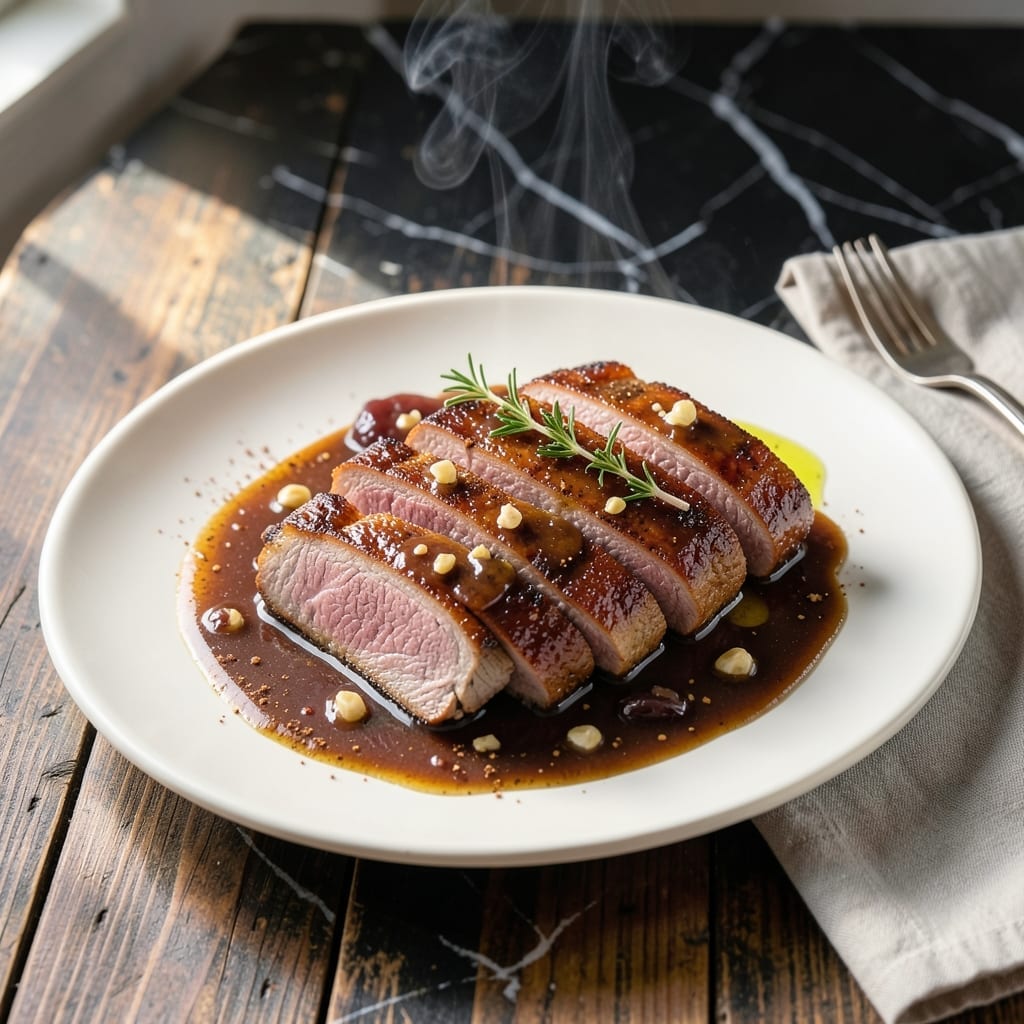
This prune sauce transforms pork roasts into restaurant-quality dishes with minimal effort. The natural sweetness of prunes balances beautifully with tangy vinegar and warm spices.
I developed this recipe to elevate simple pork cuts without complicated techniques. The sauce reduces to a glossy glaze that clings perfectly to roasted meats, adding depth and sophistication.
What makes this special is its versatility—use it as a finishing glaze or serve alongside pork as a dipping sauce. The rich, slightly sticky texture coats every bite.
Make it ahead and store in the fridge for up to a week. This sauce keeps well and intensifies in flavor over time.
Ingredients for Prune Sauce Recipe for Pork
Ten ingredients create a glossy, restaurant-quality glaze with rich depth and balance.
| Ingredient | Amount | Notes |
|---|---|---|
| Pitted Prunes 🍈 | 1 ½ cups | Chopped for even texture |
| Apple Cider Vinegar 🍏 | ½ cup | Balances sweetness with tang |
| Brown Sugar 🍚 | ¼ cup | Light or dark variety |
| Dijon Mustard 🟡 | 2 tbsp | Adds depth and sharpness |
| Minced Garlic 🧄 | 2 cloves | Freshly minced preferred |
| Ground Cinnamon 🌿 | ½ tsp | Warmth without overpowering |
| Ground Ginger 🌶️ | ¼ tsp | Enhances spice complexity |
| Salt 🧂 | ½ tsp | Kosher or sea salt |
| Black Pepper 🌶️ | ¼ tsp | Freshly ground preferred |
| Water 💧 | ½ cup | Adjusts sauce consistency |
Prunes are the foundation here. Sun-Maid or Sunsweet brands are reliable for consistent quality and moisture content. Look for plump, soft prunes without added sugars—dried in natural sunlight is ideal. The apple cider vinegar should be raw and unfiltered for maximum tang; Bragg is a solid choice. Ground spices lose potency quickly, so check their aroma before using.
No prunes? Dried apricots or dates work, but adjust sweetness—they’re sweeter than prunes. Swap apple cider vinegar for red wine vinegar if you prefer a sharper bite. Brown sugar can be replaced with maple syrup or honey (1:1 ratio), though the caramel notes will differ slightly. Dijon mustard is non-negotiable—its sharpness cuts through the sweetness perfectly.
This sauce thickens as it cools. Store in an airtight container in the fridge for up to 1 week. For longer storage, freeze in ice cube trays for 3 months. Reheat gently with a splash of water to restore the glossy texture.
Why You’ll Love This Recipe
- One Pot Wonder: I just dump everything in a saucepan—prunes, vinegar, sugar—and let it simmer while I prep the pork.
- Sweet-Tangy Magic: The brown sugar caramelizes with the vinegar, and the Dijon gives it this warm, punchy kick that clings to every bite of pork.
- Dinner or Leftovers: Honestly, it’s just as good reheated the next day over rice or spooned onto sandwiches.
- Pantry Hero: Between us, I always have these ingredients on hand, and it still tastes like I put in serious effort.
Step-by-Step Instructions for Prune Sauce for Pork
This method ensures a perfectly balanced glaze with deep, complex flavors to complement any pork dish.
Step 1: Rehydrate and Soften the Prunes
In a medium saucepan, combine the 1.5 cups Pitted Prunes with the 0.5 cup Water. Place over medium heat and bring to a gentle simmer. This process rehydrates the prunes and begins to soften their texture, which is essential for a smooth sauce.
Allow the prunes to simmer for 8-10 minutes until they’ve absorbed most of the water and become tender when pierced with a fork. Keep a close eye to ensure they don’t stick to the bottom of the pan. Remove from heat once they’re plump and soft.
Step 2: Blend the Prunes into a Smooth Base
Transfer the rehydrated prunes and any remaining liquid to a blender or food processor. Pulse until the mixture reaches a smooth, uniform consistency. For an extra-silky texture, you can strain the puree through a fine-mesh sieve to remove any stubborn bits.
This step is critical for achieving a velvety glaze that clings beautifully to pork. If the mixture seems too thick, add a splash of the 0.5 cup Apple Cider Vinegar to help loosen it slightly, but reserve the majority for the next step.
Step 3: Build the Flavor Foundation
Return the prune puree to the saucepan and place it over medium-low heat. Add the 0.5 cup Apple Cider Vinegar, 0.25 cup Brown Sugar, 2 tbsp Dijon Mustard, 2 cloves Minced Garlic, 0.5 tsp Ground Cinnamon, 0.25 tsp Ground Ginger, 0.5 tsp Salt, and 0.25 tsp Black Pepper.
Stir well to combine all the ingredients, ensuring the brown sugar fully dissolves. The vinegar will add a bright tang, while the mustard, cinnamon, and ginger deepen the complexity of the sauce. Let the mixture simmer gently for 5 minutes to meld the flavors.
Step 4: Reduce to the Perfect Consistency
Reduce the heat to low and let the sauce simmer uncovered for an additional 10-12 minutes. Stir occasionally to prevent sticking and to monitor the thickness. The sauce should reduce by about a third, becoming glossy and thick enough to coat the back of a spoon.
Taste and adjust the seasoning if needed—though the initial measurements should yield a well-balanced sweet-tart profile. If the sauce thickens too much before reducing sufficiently, add a tablespoon of water and continue simmering.
Once the sauce reaches your desired consistency, remove it from the heat. It will thicken slightly as it cools, so aim for a texture that’s just a bit looser than your final goal. Use immediately or store in an airtight container for later use.
Pro Tips For Making Prune Sauce Recipe For Pork
- Simmer the Prunes: Let the prunes soak in warm water for 10 minutes first—this softens them so they break down faster in the sauce and you won’t be left with chewy bits.
- Bloom the Garlic: Cook the minced garlic in a little oil for 30 seconds before adding other ingredients; raw garlic can overpower the sweetness of the prunes and sugar.
- Balance the Sweetness: Taste before adding all the brown sugar—some prunes are sweeter than others, and you might need less than the recipe calls for.
- Reduce the Sauce: After blending, simmer the sauce for 5-7 minutes to thicken it slightly; a watery sauce will slide right off your pork instead of clinging to it.
Essential Equipment for Perfect Results
Saucepan Selection
I always reach for my 3-quart stainless steel saucepan with a heavy bottom for this sauce. The even heat distribution prevents hot spots that could scorch the sugar in the prunes. All-Clad or Cuisinart MultiClad are reliable brands that won’t break the bank. 💡
Blender Choice
An immersion blender works perfectly for this small batch—just 1.5 cups prunes—and minimizes cleanup. If using a standard blender, a 4-cup capacity model like the Ninja Foodi handles the job efficiently without overfilling.
Fine-Mesh Sieve
For that ultra-smooth texture, I strain the blended prunes through a fine-mesh sieve. The OXO Good Grips version fits over most bowls and has a comfortable handle. This step removes any stubborn bits, ensuring a velvety sauce.
Measuring Tools
Precision matters with the 0.5 tsp cinnamon and 0.25 tsp ginger. I use stainless steel measuring spoons from Spring Chef—they nest together and won’t rust. For the 0.5 cup vinegar, a clear 1-cup liquid measure lets you see the exact line.
Storage Containers
Once cooled, transfer the sauce to 8-ounce glass jars with tight-fitting lids. Ball Mason jars work perfectly and let you see the rich color. For longer storage, freezer-safe glass containers prevent absorption of odors. ❄️
Wooden Spoon
A wooden spoon is ideal for stirring during reduction—it won’t scratch your saucepan and handles the 10-12 minute simmer beautifully. I keep a 12-inch olive wood spoon dedicated to sauces to avoid cross-contamination with strongly flavored dishes.
Nutrition Facts
Frequently Asked Questions
Can I use dried plums instead of prunes?
Dried plums and prunes are the same fruit. Just ensure they are pitted and chopped for even texture. The flavor will be identical.
How do I adjust the thickness of the sauce?
Simmer longer for a thicker glaze or add water by the tablespoon for a looser consistency. It thickens slightly as it cools.
What other meats pair well with this sauce?
It’s fantastic with duck, chicken, or even grilled sausages. The sweet-tart profile complements rich, savory meats beautifully.
How long does the sauce keep in the fridge?
Store in an airtight container for up to 1 week. For longer storage, freeze for up to 3 months.

- White Jello Shot Recipe: Creamy Vodka Magic in 30 Seconds - November 5, 2026
- Mary Berry’s Boiled Fruit Cake Recipe: Moist Center and Spiced Crust Magic - November 5, 2026
- Atlantic Salmon Recipe: Honey-Dill Pan-Seared With Crispy Skin - November 5, 2026