
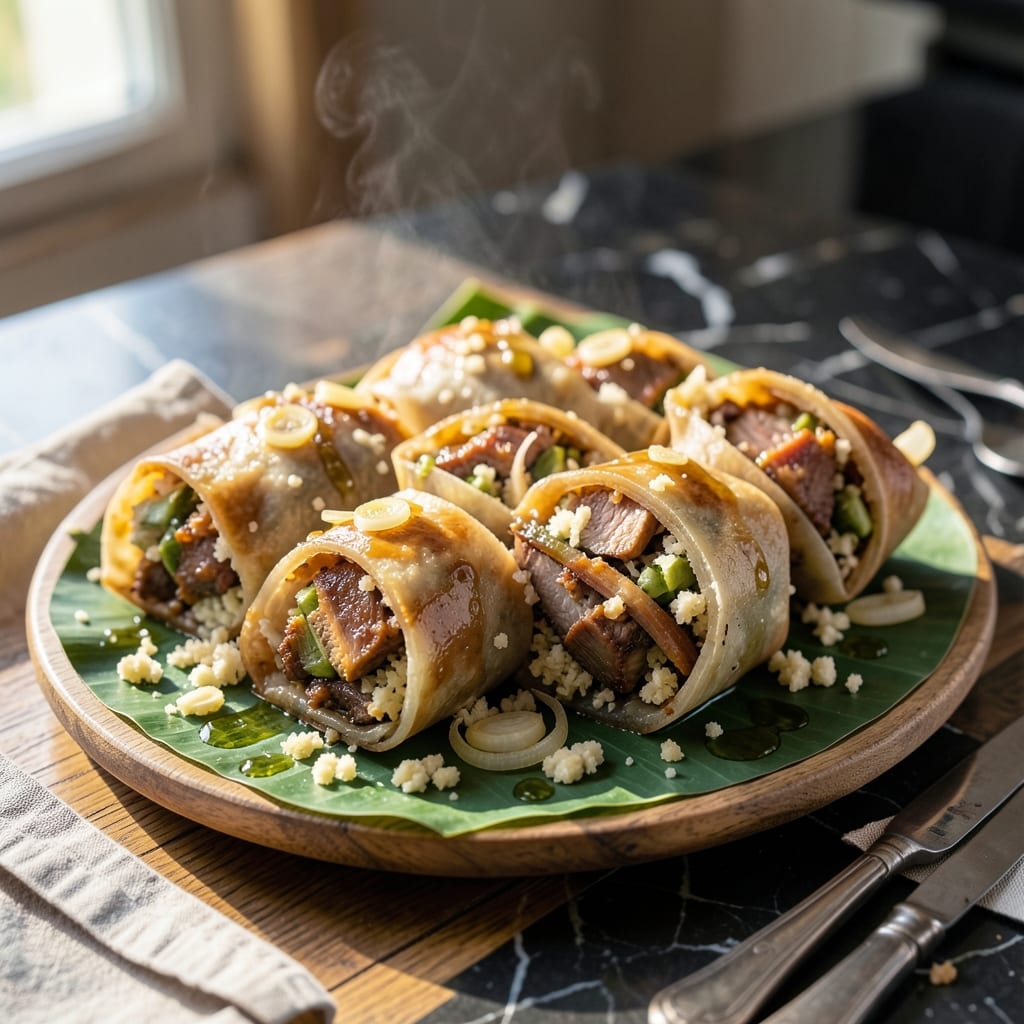
There’s something deeply rewarding about making traditional holiday pasteles at home. This recipe honors the authentic Puerto Rican method, using green banana dough wrapped around a savory pork filling.
The process may seem involved, but the results are worth every step. The dough comes together with grated green bananas, yautía, and a touch of salt, creating a unique texture that steams to perfection.
Each bite delivers the rich, aromatic filling encased in tender masa, just like abuela used to make. These pasteles bring the warmth of Puerto Rican celebrations to your table.
Perfect for sharing with family during the holidays. Here’s how to make them.
Ingredients for Puerto Rican Pasteles Recipe Video
Traditional ingredients come together for authentic holiday flavor in this beloved dish.
| Ingredient | Amount | Notes |
|---|---|---|
| Green Bananas 🍌 | 6 whole | Very green, firm for grating |
| Yautía 🌰 | 2 whole | Peeled and grated |
| Pork Shoulder 🥩 | 1 ½ lb | Diced, bone-in for flavor |
| Olive Oil 🫒 | 2 tbsp | For cooking pork filling |
| Onion 🧅 | 1 whole | Finely chopped |
| Garlic Cloves 🧄 | 4 cloves | Minced for filling |
| Bell Pepper 🌶️ | 1 whole | Diced, any color |
| Recao 🌿 | ½ cup | Chopped culantro leaves |
| Tomato Sauce 🍅 | ½ cup | For moist filling |
| Adobo Seasoning 🧂 | 2 tsp | Puerto Rican blend preferred |
| Salt 🧂 | 1 tsp | Divided for dough and filling |
| Black Pepper 🌶️ | ½ tsp | Freshly ground |
| Achiote Oil 🫒 | 1 tbsp | For authentic color |
| Dried Raisins 🍇 | ¼ cup | Optional for sweetness |
| Pimento-Stuffed Olives 🫒 | ¼ cup | Chopped, traditional addition |
The green bananas must be underripe—look for all-green skins with no yellow. Latin markets often carry yautía (malanga), or check the tropical produce section at Whole Foods. For the pork, bone-in shoulder gives the richest filling; ask your butcher to cube it. Achiote oil adds the signature color—find it in Latin aisles or make your own by infusing oil with annatto seeds.
No yautía? Taro root or green plantains can substitute in a pinch. Recao (culantro) is essential—don’t confuse it with cilantro (it’s a different herb). If you can’t find it fresh, Goya sells frozen recao. For a quicker version, pre-made sofrito from the Latin foods section works, though fresh is always better. The raisins and olives are traditional but optional.
Keep grated banana mixture chilled until assembly. Wrap pasteles tightly in foil or banana leaves—freezes beautifully for up to 3 months. Thaw overnight in the fridge before steaming. Leftovers reheat well, covered, in a 350°F oven for 15 minutes.
Why You’ll Love This Recipe
- One Pot Wonder: I love that everything—green bananas, yautía, pork shoulder—goes straight into one pot, so cleanup is a breeze.
- Holiday Ready: Between us, this is my go-to for Christmas dinners, but honestly, I make it whenever I crave comfort food.
- Budget Stretcher: A pound of pork shoulder and a few starchy roots feed my family for days, and the leftovers taste even better.
Step-by-Step Instructions for Puerto Rican Pasteles
This traditional method ensures authentic flavor and perfect texture every single time.
Step 1: Prepare the Green Banana and Yautía Dough
Peel the 6 whole Green Bananas and 2 whole Yautía, then grate them using the fine side of a box grater. I recommend wearing gloves for this step, as the green bananas can stain your hands. The mixture should be fine and uniform in texture.
Transfer the grated mixture to a large bowl and add 1 tsp Salt. Mix well with your hands, squeezing the dough to help it come together. The dough is ready when it holds its shape when pressed. If it feels too wet, let it sit for 5 minutes to allow the starches to release.
Step 2: Cook the Pork Shoulder Filling
Heat the 2 tbsp Olive Oil in a large pot over medium heat. Add the diced 1.5 lb Pork Shoulder and cook for 5 minutes, stirring occasionally, until the meat begins to brown. Season with 2 tsp Adobo Seasoning, 0.5 tsp Black Pepper, and half of the 1 tsp Salt.
Add the chopped 1 whole Onion, minced 4 cloves Garlic Cloves, diced 1 whole Bell Pepper, 0.5 cup Recao, and 0.5 cup Tomato Sauce. Stir well and cook for 10 minutes, until the pork is fully cooked and the vegetables are tender.
Finish the filling by stirring in the 1 tbsp Achiote Oil, 0.25 cup Dried Raisins, and chopped 0.25 cup Pimento-Stuffed Olives. Cook for an additional 5 minutes to allow the flavors to meld. The filling should be moist but not soupy.
Step 3: Assemble the Pasteles
Lay out a piece of parchment paper and place a ½ cup portion of the green banana and yautía dough in the center. Press it down lightly to form a thin, even layer. Spoon about ¼ cup of the pork filling in the middle of the dough. Fold the dough over the filling to encase it completely, forming a rectangular package.
Fold the parchment paper around each pastel to secure it tightly, creating a neat, compact bundle. This wrapping technique helps the pasteles hold their shape during cooking and makes them easier to handle.
Step 4: Cook the Pasteles
Bring a large pot of water to a rolling boil. Carefully add the wrapped pasteles, ensuring they are fully submerged. Boil for 45-50 minutes until the dough is firm and cooked through. You can test one by carefully unwrapping and checking that the dough is no longer translucent.
Remove the pasteles from the water using a slotted spoon and let them cool slightly before unwrapping. The dough should hold its shape, and the filling should be rich and flavorful.
Step 5: Serve and Enjoy
Serve the pasteles warm, unwrapped from the parchment paper. The dough should be firm yet tender, with a vibrant color from the green bananas and yautía. The filling will be savory, with the rich flavors of pork, adobo, and achiote oil shining through.
Traditionally, pasteles are enjoyed during the holidays, but this dish is perfect for any special occasion. The combination of textures and flavors makes every bite a delicious experience.
Pro Tips For Making Puerto Rican Pasteles Recipe Video
- Grind Twice: Run the green banana and yautía mixture through the grinder twice for a smoother masa—I learned this the hard way after biting into chunks in my first batch.
- Pre-cook the Pork: Parboil the pork shoulder for 20-25 minutes before shredding to lock in moisture and guarantee tender filling every time.
- Skip Wet Hands: Oil your hands lightly instead of wetting them when shaping the pasteles to prevent the masa from sticking and falling apart.
- Use a Leaf Liner: Line your pot with extra banana leaves or parchment before stacking pasteles to avoid a messy, stuck-on disaster when unmolding.
Best Sauces and Condiments for This Dish
Classic Mojo Sauce
This bright citrus sauce is my go-to pairing for pasteles. Blend ½ cup sour orange juice (or ¼ cup each lime and orange juice) with 4 minced garlic cloves, 1 tsp salt, and ½ tsp cumin. Drizzle over warm pasteles for a zesty kick. 🌟
Spicy Mayoketchup
A Puerto Rican staple that elevates pasteles instantly. Mix ½ cup mayonnaise with ¼ cup ketchup, 1 tbsp hot sauce, and 1 tsp adobo seasoning. The sweet-spicy combo cuts through the rich filling beautifully.
Garlic Ají Dulce
For heat lovers, blend 10 ají dulce peppers (or habaneros) with 3 garlic cloves, ¼ cup olive oil, and 2 tbsp white vinegar. I love the smoky depth this adds to each bite.
Creamy Avocado Sauce
Blend 2 ripe avocados with ¼ cup Greek yogurt, 1 lime’s juice, and ½ tsp salt until smooth. This cooling sauce balances the savory pork filling perfectly.
Thin with 1-2 tbsp water if needed for drizzling. 💛
Sofrito Drizzle
Simmer ½ cup leftover sofrito from the filling with ¼ cup tomato sauce and 1 tbsp achiote oil for 5 minutes. Drizzle this vibrant sauce over pasteles for an extra layer of authentic flavor.
Nutrition Facts
Frequently Asked Questions
Can I use ripe bananas instead of green ones?
No, the dough requires unripe green bananas for starch and firm texture. Ripe bananas are too soft and sweet, making the masa fall apart. Look for all-green skins with no yellow spots.
How do I store leftover pasteles?
Cool completely, then refrigerate in an airtight container for up to 5 days. For longer storage, freeze wrapped pasteles for up to 3 months. Thaw overnight before reheating.
What can I substitute for yautía?
Taro root or green plantains work well as substitutes. Both have a similar starchy texture when grated. Avoid potatoes—they’re too watery for authentic results.
Why did my dough crack while wrapping?
This usually means the dough was too dry. Add 1-2 tbsp water and knead until it holds together. Also, work quickly—grated banana oxidizes and dries out fast.

- Pudding Recipe With Egg Yolks: Silky Smooth Custard in Minutes - November 3, 2026
- Pudding Pops Recipe Cook and Serve: Silky Frozen Treats Without the Machine - November 3, 2026
- Protein Ice Cream Recipe Blender Xanthan Gum: Ultra Creamy Texture Without the Guilt - November 3, 2026