
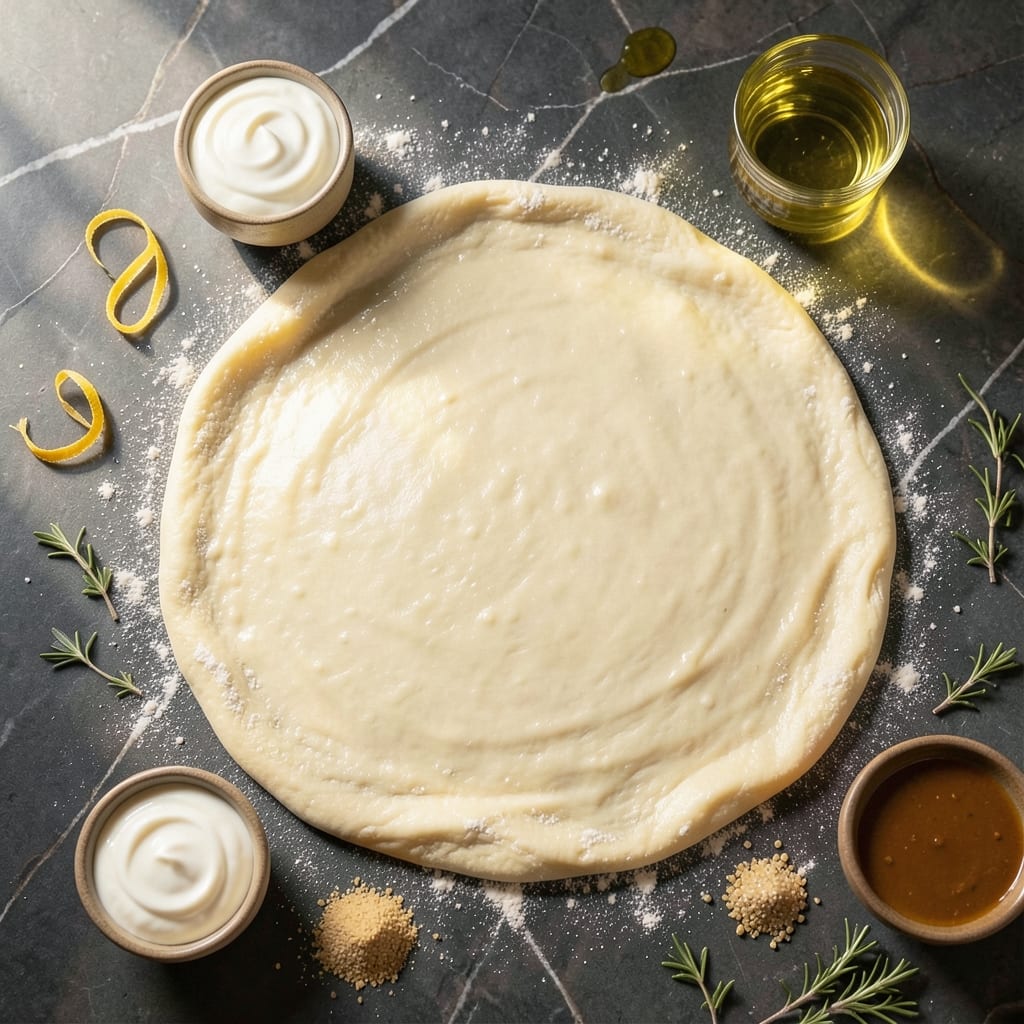
This pizza dough recipe redefines homemade crust with a no-knead method that saves time without sacrificing quality. The addition of Greek yogurt introduces a subtle tang while ensuring a tender, chewy texture that rivals traditional versions.
What makes this approach special is its simplicity. With just a few basic ingredients and 5 minutes of active preparation, you can create a dough that rises beautifully and bakes into a golden, flavorful crust.
The yogurt enhances the dough’s structure, making it easier to handle and roll out. The result is a crust that’s crisp on the outside yet soft and airy inside, perfect for any pizza night.
No special equipment or advanced techniques are required. This method delivers consistent, professional results every time.
Ingredients for Pizza Dough Recipe Using Greek Yogurt
Minimal effort, maximum flavor. Just a handful of pantry staples plus Greek yogurt.
| Ingredient | Amount | Notes |
|---|---|---|
| All-Purpose Flour 🌾 | 3 ½ cups | Plus extra for dusting |
| Plain Greek Yogurt 🥛 | 1 cup | Full-fat for best texture |
| Warm Water 💧 | ½ cup | About 110°F |
| Active Dry Yeast 🍃 | 2 ¼ tsp | One packet, proofed |
| Granulated Sugar 🍚 | 1 tsp | Feeds the yeast |
| Olive Oil 🫒 | 2 tbsp | Extra-virgin preferred |
| Salt 🧂 | 1 ½ tsp | Fine sea salt |
| Baking Powder 🥄 | 1 tsp | Ensures rise |
| Garlic Powder 🧄 | 1 tsp | Optional for flavor |
| Dried Oregano 🌿 | 1 tsp | Optional for flavor |
The Greek yogurt is non-negotiable here—full-fat Fage or Chobani gives the best structure and that signature tang. Most grocery stores carry it, but Costco has the best bulk prices. All-purpose flour works perfectly (I use King Arthur), though bread flour will give a slightly chewier crust. The yeast must be fresh—check the expiration date, as old yeast won’t activate properly.
No Greek yogurt? Plain skyr works in a pinch, but avoid flavored varieties. The flour can be swapped for whole wheat at half the amount (keep the rest all-purpose). Short on yeast? Instant yeast can be used without proofing—just mix it directly into the dry ingredients. The olive oil adds richness, but any neutral oil works too.
The dough keeps in the fridge for up to 3 days (it’ll develop more flavor). For longer storage, freeze for 1 month—thaw overnight before using. Bring to room temperature before rolling for best results.
Why You’ll Love This Recipe
- No-Knead Magic: I mix the flour, yogurt, and yeast, and it comes together without the usual arm workout—honestly, it’s almost too easy.
- Tangy Depth: The Greek yogurt adds this subtle richness that makes the crust taste like it came from a wood-fired oven.
- Endless Toppings: I’ve used this dough for everything from margherita to breakfast pizza with eggs and cheese.
- Budget Stretch: A cup of yogurt and basic pantry staples make enough dough for two large pizzas, saving me a trip to the store.
Step-by-Step Instructions for Pizza Dough Using Greek Yogurt
Here is the method. Tested, reliable, and designed for perfect texture every time.
Step 1: Activate the Yeast and Prepare Wet Ingredients
In a large mixing bowl, combine the 0.5 cup Warm Water, 2.25 tsp Active Dry Yeast, and 1 tsp Granulated Sugar. Stir gently and let it sit for 5-7 minutes until the mixture becomes frothy and doubles in volume.
This foaming confirms the yeast is active and ready to leaven your dough. Once activated, add the 1 cup Plain Greek Yogurt and 2 tbsp Olive Oil, whisking until the mixture is smooth and fully combined. The yogurt adds tang and tenderness to the crust.
Step 2: Combine Dry Ingredients and Form the Dough
In a separate bowl, whisk together the 3.5 cups All-Purpose Flour, 1.5 tsp Salt, 1 tsp Baking Powder, 1 tsp Garlic Powder, and 1 tsp Dried Oregano. These dry ingredients provide structure and flavor.
Gradually add the dry mixture to the wet ingredients, stirring with a wooden spoon until a shaggy dough forms. If the dough feels too sticky, add a small amount of flour, 1 tablespoon at a time, until it comes together. The baking powder ensures a light, airy rise.
Step 3: Knead and First Rise
Turn the dough out onto a lightly floured surface and knead for 3-4 minutes until smooth and elastic. The dough should spring back when poked lightly with a finger.
Place the dough in a lightly oiled bowl, cover it with a damp kitchen towel, and let it rise in a warm, draft-free place for 1-2 hours or until doubled in size. This first rise develops the gluten and enhances the flavor.
Step 4: Shape and Second Rise
Once the dough has doubled, punch it down to release the air and divide it into 4 equal portions for individual pizzas. Roll each portion into a ball, then flatten and stretch it into a ¼-inch thick round on a floured surface.
Transfer the shaped dough to a parchment-lined baking sheet, cover loosely, and let it rest for 15-20 minutes. This second rise relaxes the gluten, making it easier to stretch and preventing it from shrinking during baking.
Preheat your oven to 475°F during this time to ensure it reaches the optimal temperature for a crisp, golden crust.
Pro Tips For Making Pizza Dough Recipe Using Greek Yogurt
- Proof the Yeast: Always dissolve the yeast in warm water with sugar first and wait 5-10 minutes until foamy—I learned this the hard way after wasting flour on dough that never rose.
- Use Full-Fat Yogurt: Skip the low-fat versions; full-fat Greek yogurt adds tenderness and richness that makes a real difference in the dough’s texture.
- Don’t Overwork It: Resist the urge to knead too much—just combine until it comes together, or the dough gets tough and loses that soft, chewy finish.
- Rest Before Rolling: Let the dough sit for at least 30 minutes after mixing (yes, even if you’re impatient like me)—it relaxes the gluten and makes rolling out far easier.
Creative Variations of This pizza dough recipe using greek yogurt
Garlic Herb Infusion
Swap the garlic powder for 3 minced fresh garlic cloves and add 1 tbsp fresh rosemary to the dry mix. This gives the crust a bold, aromatic depth that pairs perfectly with white pizza or roasted vegetable toppings. 🌿
Spicy Kick Variation
Add 1 tsp red pepper flakes and ½ tsp cayenne to the dry ingredients for a subtle heat. The Greek yogurt balances the spice, creating a crust that complements pepperoni or buffalo chicken pizzas beautifully.
Whole Wheat Boost
Replace 1.5 cups of all-purpose flour with whole wheat flour. The yogurt keeps the dough tender despite the denser flour. This version adds nutty flavor and extra fiber while still rising well.
Cheesy Crust Twist
Fold ½ cup shredded cheddar into the dough during the final kneading stage. The cheese melts into the crust, creating a golden, crispy edge with gooey pockets. I love this with BBQ chicken pizza.
Flatbread Style
Roll the dough thinner (⅛ inch) and bake at 500°F for 8-10 minutes. The Greek yogurt creates a cracker-like texture perfect for flatbread pizzas or dipping in hummus. 🔥
Sweet Dessert Dough
Reduce salt to ½ tsp and add 2 tbsp honey to the wet ingredients. The yogurt’s tang pairs wonderfully with cinnamon sugar or Nutella toppings for a dessert pizza.
Nutrition Facts
Frequently Asked Questions
Why use Greek yogurt in pizza dough?
Greek yogurt adds a subtle tang while making the crust extra tender. Its acidity also helps activate the yeast for a better rise.
Can I use low-fat yogurt instead?
Full-fat works best for texture, but low-fat can be substituted in a pinch. The dough may be slightly less tender and rise a bit less.
How long can I store the dough?
Keep it in the fridge for up to 3 days in an airtight container. For longer storage, freeze for 1 month.
What if my dough doesn’t rise?
Check that your yeast was fresh and the water was 110°F. If it’s too cold or hot, the yeast won’t activate properly.

- Potato Candy Recipe 1933: Vintage Peanut Butter Roll Delight - October 30, 2026
- Potato Chip Cookie Recipe With Pecans: Buttery Crunch Meets Nutty Richness - October 30, 2026
- Potato Patty Recipe No Egg: Crispy Edges Without the Binder - October 30, 2026