
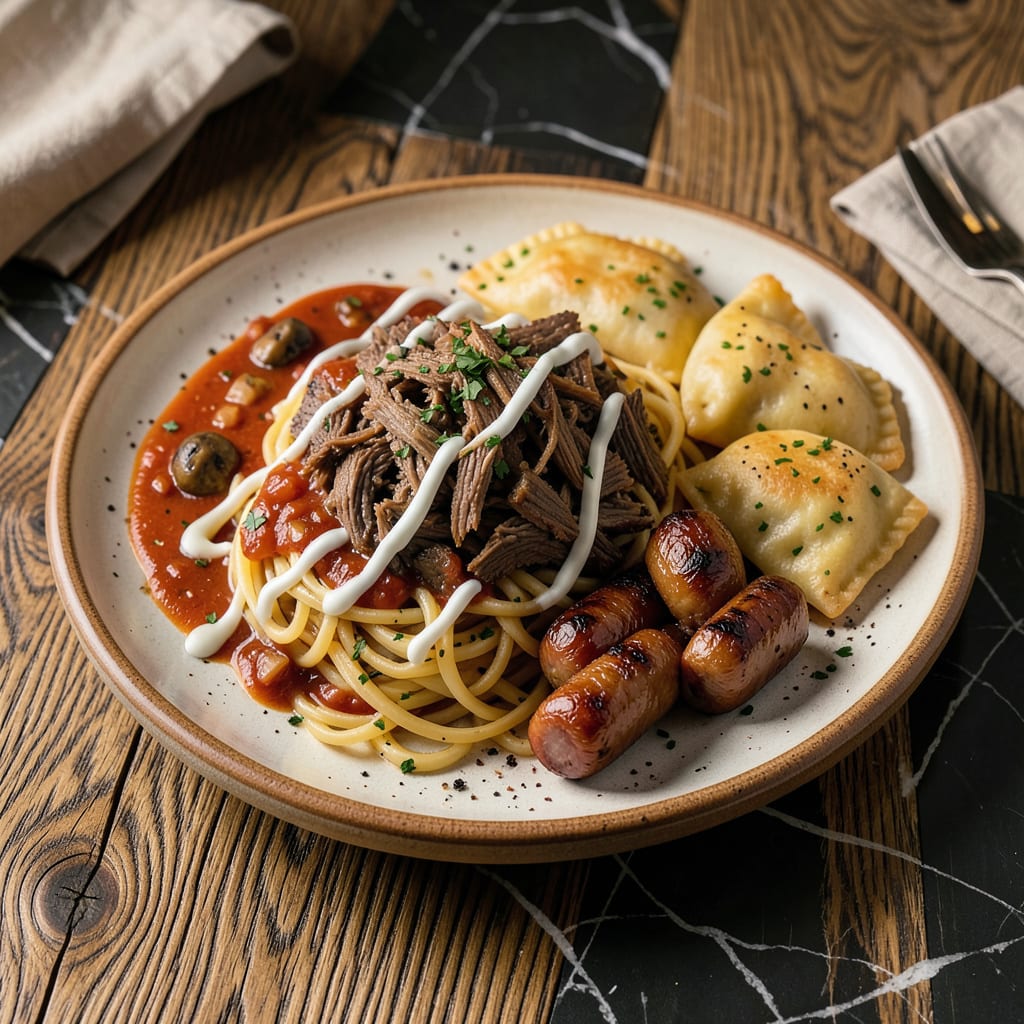
A Pulaski recipe is a hearty Polish-American stew featuring smoked sausage, tender beef, and vegetables in a rich tomato-based broth. Traditionally served with rye bread, it’s a comforting dish with roots in Wisconsin’s Polish immigrant communities.
This dish carries the soul of Polish bigos (hunter’s stew) but adapts to Midwestern ingredients and tastes. 🔥 What makes it special is the way it blends smoky kielbasa with slow-cooked beef, creating layers of flavor that deepen over hours of simmering. I love how it reflects the resourcefulness of immigrant cooks who used local ingredients—like canned tomatoes and cabbage—to recreate a taste of home. The stew’s name even honors Casimir Pulaski, the Polish Revolutionary War hero, tying history directly to your dinner table.
💡 In This Article
- Origins and Cultural Significance of Pulaski Stew
- Step-by-Step Guide to Authentic Pulaski Recipe Techniques
Origins and Cultural Significance of Pulaski Stew
This dish traces its roots to Wisconsin’s Polish immigrant communities in the late 19th century. Settlers from regions like Silesia and Mazovia adapted their traditional bigos (hunter’s stew) using Midwestern ingredients like canned tomatoes and locally produced smoked sausage.
The name honors Casimir Pulaski, the Polish Revolutionary War hero who fought alongside George Washington, creating a direct link between Polish heritage and American history. 🔥
What makes Pulaski stew unique is its evolution from a rustic peasant dish to a community centerpiece. Polish immigrants in cities like Milwaukee and Chicago transformed it into a hearty, affordable meal for large gatherings.
Church fundraisers and fraternal organization meetings often featured massive pots of this stew, where the smoky aroma of kielbasa mingled with the tang of sauerkraut, creating an unforgettable sensory experience that became synonymous with Polish-American identity.
The stew’s cultural significance extends beyond its ingredients. It represents the resourcefulness of immigrants who substituted hard-to-find European ingredients with local alternatives. Where traditional bigos used wild game and dried mushrooms, Pulaski stew incorporated beef chuck and canned tomatoes—ingredients readily available in American grocery stores.
This adaptation process created a distinctly new dish while maintaining its Old World soul.
Regional variations tell fascinating stories of migration patterns. In northern Wisconsin, you’ll find versions with more potatoes and less sauerkraut, reflecting Scandinavian influences from neighboring communities. Meanwhile, Chicago’s Pulaski Day parades often feature stews with a higher ratio of smoked sausage to beef, catering to urban tastes and quicker cooking times for large crowds.
These differences map the journey of Polish immigrants across the Midwest. ✨
The dish’s preparation method also carries cultural weight. The long simmering time—often 4-6 hours—mirrors the slow, deliberate pace of traditional Polish cooking. This wasn’t just about tenderizing tough cuts of meat; it was about creating time for families to gather, for stories to be shared, and for community bonds to strengthen.
The stew’s rich, complex flavors develop gradually, much like the relationships it helped nurture in new immigrant communities.
Today, Pulaski stew remains a living tradition. Many Polish-American families still prepare it for holidays like Pulaski Day (observed in October) or Christmas Eve. The dish’s ability to feed large groups economically made it a staple during the Great Depression, and that practicality continues to resonate.
When you taste a properly made Pulaski stew, you’re experiencing over a century of adaptation, resilience, and cultural preservation in every spoonful. 💫

- BBQ Sausage Recipe Oven: Smoky Depth Without the Grill - September 28, 2026
- BBQ Chicken Bowl Recipe Rice: Smoky Sweetness Over Fluffy Grains - September 28, 2026
- Beef Cutlet Recipe Ideas: Crispy Breaded Patties With Bold Seasonings - September 28, 2026