
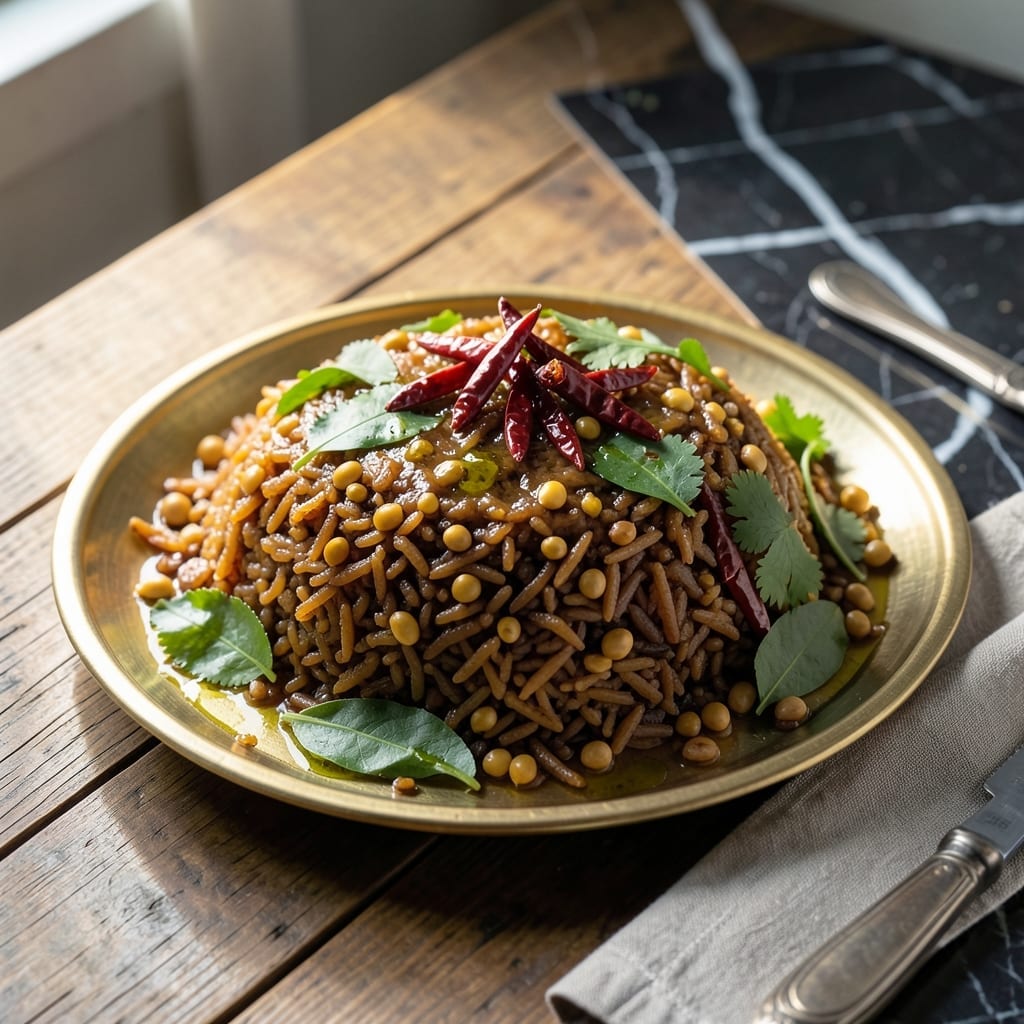
This tangy Andhra-style tamarind rice brings bold South Indian flavors to your table with minimal effort. I tested this recipe multiple times to perfect the balance of sour, spicy, and savory notes that define authentic pulihora.
The dish combines steamed rice with a tempering of mustard seeds, curry leaves, and turmeric, all tied together with a tangy tamarind paste. Each bite delivers layers of flavor that improve as the rice sits and the ingredients meld.
What results is a vibrant, aromatic dish that’s both comforting and exciting. The tempering process is key—it infuses the rice with warmth and depth that makes this dish truly special.
Perfect for lunchboxes or as a light meal, this pulihora stays fresh for hours without losing its distinct taste. Here’s how to make it at home.
Ingredients for Pulihora Recipe Vismai Food
These everyday ingredients create a vibrant, tangy South Indian rice dish with layers of flavor.
| Ingredient | Amount | Notes |
|---|---|---|
| Raw Rice 🍚 | 1 ½ cups | Short-grain or sona masoori preferred |
| Tamarind Paste 🍋 | 2 tbsp | Thick, seedless variety |
| Mustard Seeds 🌿 | 1 tsp | Yellow or black variety |
| Chana Dal 🌾 | 1 tbsp | Split Bengal gram, rinsed |
| Urad Dal 🌾 | 1 tbsp | Split black gram, rinsed |
| Dried Red Chilies 🌶️ | 3 whole | Broken into pieces |
| Curry Leaves 🍃 | ¼ cup | Fresh or dried |
| Turmeric Powder 🌼 | ½ tsp | For vibrant color |
| Asafoetida 🌿 | ¼ tsp | Hing, optional but traditional |
| Peanuts 🥜 | 2 tbsp | Raw or roasted, unsalted |
| Green Chilies 🌶️ | 2 whole | Slit lengthwise |
| Ginger 🌿 | 1 whole | Fresh, grated or minced |
| Salt 🧂 | 1 tsp | Adjust to taste |
| Sugar 🍚 | 1 tsp | Balances tamarind sourness |
| Vegetable Oil 🫒 | 3 tbsp | For tempering |
The rice should be short-grain for the right texture—sona masoori is traditional and easy to find at Indian grocery stores. Tamarind paste comes in blocks or jars; look for thick, seedless variety. Mustard seeds are non-negotiable for authentic tempering. Patel Brothers or local Indian markets will have all the dals and curry leaves you need.
No tamarind paste? Lemon juice plus a pinch of sugar works in a pinch. Out of curry leaves? Skip them, but add extra asafoetida for depth. Dried curry leaves (from Burlap & Barrel) are a great pantry staple. For heat, adjust red chilies to taste—remove seeds for milder flavor. Peanuts add crunch, but cashews work too.
This keeps well at room temperature for 4-5 hours (perfect for lunchboxes). Store in the fridge for up to 3 days—reheat gently to preserve texture. The flavors actually improve as it sits, so make it ahead if possible.
Why You’ll Love This Recipe
- One Pot Wonder: I love that everything—rice, tamarind, dals—cooks together with minimal supervision. Honestly, it’s the easiest tangy rice I make all week.
- Tangy Kick: That perfect balance of sour tamarind and nutty chana dal hits different every single time. The mustard seeds crackling? Pure satisfaction.
- Festive Favorite: It’s my go-to for potlucks and temple events, but I’ll be real—it’s also my lazy Sunday lunch. (Yes, even on a Tuesday night)
- Budget Stretch: A handful of rice, a little tamarind, and pantry staples feed my whole family. Leftovers? They taste even better the next day.
Step-by-Step Instructions for Tangy Andhra-Style Tamarind Rice
Here’s the method to achieve perfectly balanced flavors with every grain of rice.
Step 1: Prepare and Cook the Rice
Rinse the 1.5 cups raw rice thoroughly until the water runs clear. This removes excess starch and prevents the grains from sticking together. I use a fine-mesh strainer for this step to ensure proper drainage.
Cook the rice with a 1:2 rice-to-water ratio until just tender but not mushy. The grains should be separate and firm enough to hold their shape when mixed later. Spread the cooked rice on a large plate to cool completely—this prevents it from turning mushy when combined with the tamarind mixture.
Step 2: Soak and Prepare the Tamarind
Soak the 2 tbsp tamarind paste in ½ cup warm water for 10 minutes. Mash it with your fingers to dissolve completely, then strain through a fine sieve to remove any fibers. The resulting extract should be thick and deeply colored.
Add the 1 tsp salt and 1 tsp sugar to the tamarind extract. The sugar balances the tamarind’s sharp sourness, while the salt enhances all the flavors. Stir well and set aside—this mixture will be the base for your pulihora.
Step 3: Temper the Spices
Heat the 3 tbsp vegetable oil in a deep pan over medium heat. Add the 1 tsp mustard seeds and let them pop for 20-30 seconds until they splutter actively. This releases their nutty aroma and signals they’re ready.
Immediately add the 1 tbsp chana dal, 1 tbsp urad dal, 2 tbsp peanuts, 3 whole dried red chilies, and 0.25 tsp asafoetida. Sauté for 2-3 minutes until the dals turn light golden brown and the peanuts are slightly puffed.
Step 4: Build the Flavor Base
Add the 0.25 cup curry leaves, 2 whole green chilies (slit lengthwise), and 1 whole ginger (grated). Sauté for 1-2 minutes until the curry leaves become crisp and the ginger releases its fragrance. Be careful not to burn the curry leaves—they should turn dark green, not black.
Pour in the prepared tamarind extract and 0.5 tsp turmeric powder. Stir well and let it simmer for 3-4 minutes on low heat until the mixture thickens slightly and the raw smell of tamarind disappears.
Step 5: Combine and Finish
Add the cooled rice to the tamarind-spice mixture. Gently fold everything together with a spatula, being careful not to break the rice grains. Every grain should be evenly coated with the tangy mixture and vibrant yellow from the turmeric.
Cover and let it sit for 10-15 minutes to allow the flavors to meld completely. Serve warm or at room temperature, garnished with a few extra curry leaves if desired. The final dish should have a perfect balance of sour, spicy, and savory notes.
Pro Tips For Making Pulihora Recipe Vismai Food
- Toast the Dals First: Fry the chana dal and urad dal in oil until golden brown before adding mustard seeds—this deepens their nutty flavor and prevents a raw taste in the pulihora.
- Use Aged Rice: Cook with rice that’s at least a day old or parboiled; fresh raw rice turns mushy when mixed with tamarind paste, ruining the texture.
- Balance the Tamarind: Soak the tamarind paste in warm water for 10 minutes and strain it—this removes fibers and gives a smoother, more even sourness.
- Temper on Low: After adding turmeric and curry leaves to the tempering, keep the heat low to avoid burning the mustard seeds, which can make the pulihora bitter.
Perfect Pairings for This Recipe
Traditional Accompaniments
This dish pairs beautifully with plain yogurt to cool the palate—the tang of the yogurt complements the tamarind perfectly. I also love serving it with mango pickle for an extra punch of spice and sourness. 💛
Beverage Pairings
A cold glass of sweet lassi balances the spices beautifully, while masala chai enhances the warm, aromatic notes. For a non-traditional twist, try iced hibiscus tea—its tartness mirrors the tamarind.
Side Dish Ideas
Cucumber raita adds a refreshing contrast with its creamy texture. I make mine with ½ cup yogurt, ½ cucumber (diced), and a pinch of cumin powder. It’s light and cooling against the bold flavors.
Protein Additions
For a heartier meal, serve with boiled eggs or grilled fish. The protein soaks up the tangy sauce beautifully. I often add hard-boiled eggs directly into the rice for a one-bowl meal.
Fresh Garnishes
Top with cilantro leaves or sev (crispy chickpea noodles) for texture. I sprinkle 2 tbsp sev on top just before serving—it adds a delightful crunch that contrasts with the soft rice. ✨
Dessert Pairing
End with sweet boondi or rice kheer to balance the meal’s tanginess. The sweetness provides a perfect finish, and I love how it ties the whole South Indian dining experience together.
Nutrition Facts
Frequently Asked Questions
Can I use lemon juice instead of tamarind?
Yes, substitute 3 tbsp lemon juice plus 1 tsp sugar for the tamarind paste. The flavor will be brighter but less complex than traditional tamarind.
How do I store leftovers?
Keep in an airtight container at room temperature for 4-5 hours or refrigerate for up to 3 days. Reheat gently to preserve texture.
What rice works best?
Sona masoori or other short-grain rice gives the authentic texture. Avoid long-grain varieties as they won’t absorb flavors as well.
Why did my rice turn mushy?
Likely overcooked or mixed while hot. Cook rice just until tender, then cool completely before combining with the tamarind mixture.

- Mary Berry’s Boiled Fruit Cake Recipe: Moist Center and Spiced Crust Magic - November 5, 2026
- Atlantic Salmon Recipe: Honey-Dill Pan-Seared With Crispy Skin - November 5, 2026
- Blaze Pizza Copycat Dough Recipe: Chewy, Airy Crust That Mimics the Original - November 5, 2026