
This pie crust delivers flaky results without the traditional chilling step. The secret lies in using cold ingredients straight from the fridge and working quickly to prevent gluten development.
With just a few basic pantry staples, you can achieve professional-quality pastry in under 30 minutes. The method relies on precise technique rather than resting time, making it perfect for spontaneous baking.
What emerges is a golden, tender crust with distinct layers that shatter at the slightest touch. The absence of refrigeration doesn’t compromise texture—it simply streamlines the process.
Ideal for both sweet and savory pies, this approach proves that exceptional pastry doesn’t require hours of preparation. The results speak for themselves.
Ingredients for Quick Pie Crust Recipe (no Refrigeration)
Seven simple ingredients create professional flaky pastry without chilling time.
| Ingredient | Amount | Notes |
|---|---|---|
| All-Purpose Flour 🌾 | 2 ½ cups | Spoon and level method |
| Unsalted Butter 🧈 | 1 cup | Cold, cubed from fridge |
| Ice Water 💧 | ½ cup | Plus 1 tbsp as needed |
| Granulated Sugar 🍚 | 1 tsp | Optional for sweet pies |
| Fine Sea Salt 🧂 | 1 tsp | Diamond Crystal preferred |
| White Vinegar 🍋 | 1 tbsp | Or apple cider vinegar |
| Vegetable Shortening 🧈 | ¼ cup | Cold, optional for extra flakiness |
The butter must be ice cold—Land O’Lakes or Kerrygold are reliable for consistent fat content. Use all-purpose flour with 10-12% protein (King Arthur or Gold Medal) for optimal gluten development without toughness. For the water, ice cold is non-negotiable—it prevents premature melting of the fat. The vinegar tenderizes the gluten, but its absence won’t ruin the crust.
No all-purpose flour? Pastry flour at a 1:1 ratio works, but avoid bread flour—too much protein. Replace butter with cold coconut oil for a dairy-free version, though flavor will differ. The vinegar can be lemon juice at the same amount. For extra richness, swap 1 tbsp butter for cream cheese—adds tenderness without compromising flakiness.
Dough can rest in the fridge for 24 hours if you change your mind about chilling. Freeze shaped crusts for 1 month—wrap tightly in plastic. Baked crusts keep at room temperature for 2 days in an airtight container. The fat will separate if left unrefrigerated too long, so work quickly.
Why You’ll Love This Recipe
- No Chill Needed: I can mix this crust and roll it out immediately—no waiting for butter to firm up in the fridge.
- Buttery Crisp: The cold butter and flour create that flaky, melt-in-your-mouth texture I crave in a pie crust.
- Last-Minute Dessert: I’ve used this for everything from apple pies to quiches, even when I forgot to plan ahead.
- Budget Friendly: All-purpose flour and basic pantry staples mean I can make this without a special grocery trip.
Step-by-Step Instructions for Quick Pie Crust
This streamlined method delivers exceptional results without the traditional chilling step.
Step 1: Combine Dry Ingredients and Cold Fats
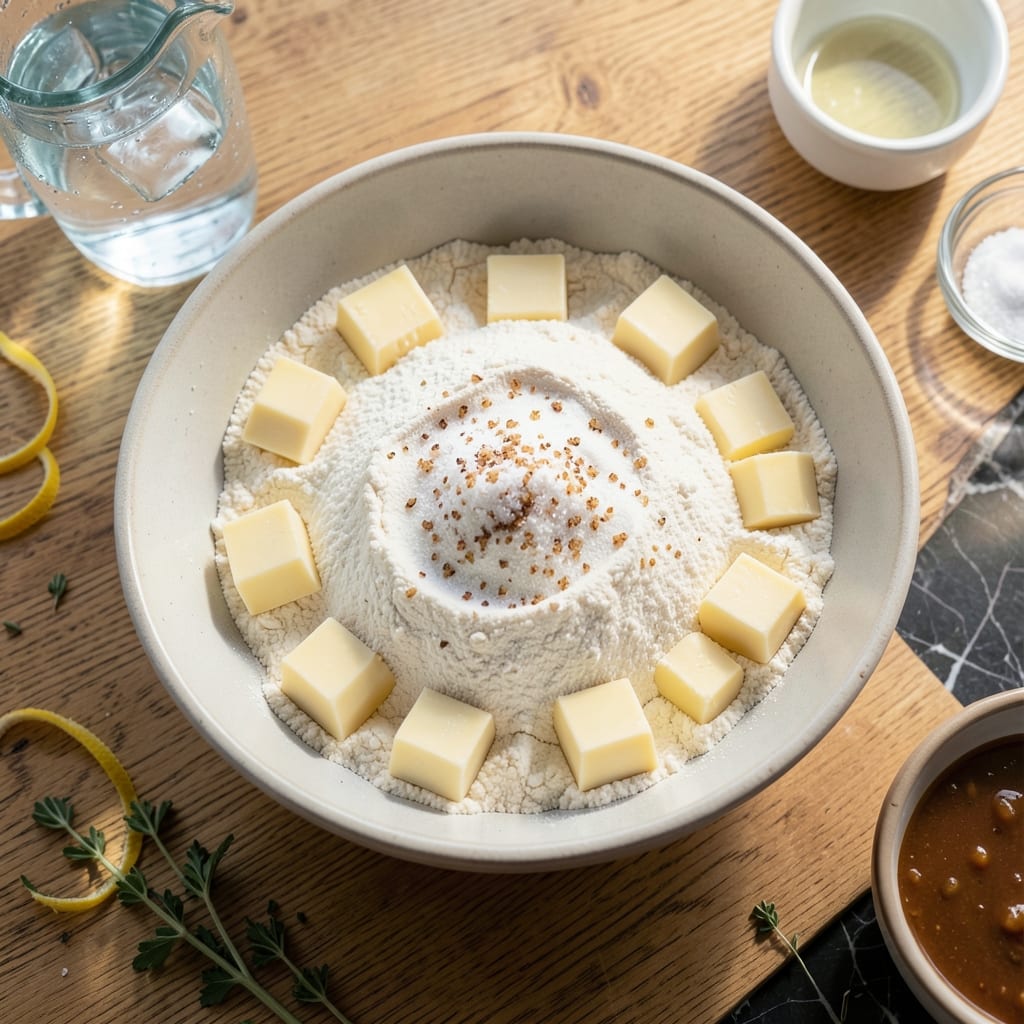
In a large mixing bowl, whisk together the 2.5 cups All-Purpose Flour, 1 tsp Granulated Sugar, and 1 tsp Fine Sea Salt until evenly distributed. This creates the structural foundation for your crust while the sugar adds subtle sweetness for balanced flavor in both sweet and savory applications.
Add the 1 cup Unsalted Butter (cold, cubed) and 0.25 cup Vegetable Shortening to the flour mixture. The combination of butter for flavor and shortening for extra flakiness creates the perfect texture. Work quickly to maintain the cold temperature of the fats.
Step 2: Cut in Fats Until Pea-Sized Crumbs Form
Using a pastry blender or your fingertips, cut the cold fats into the flour mixture until the texture resembles coarse crumbs with pea-sized pieces visible. This step should take no more than 2-3 minutes of active work.
Watch for the fats to remain distinct rather than blending completely into the flour. You’ll see the mixture transform from loose flour to a crumbly, sandy texture with visible fat pieces. These visible fat pockets create the flaky layers in the finished crust.
Step 3: Add Liquid Ingredients and Form Dough
Create a well in the center of the mixture. Add the 0.5 cup Ice Water and 1 tbsp White Vinegar to the well. The vinegar tenderizes the gluten while the ice water keeps everything cold, which is crucial for flakiness.
Using a fork, gradually incorporate the liquid into the flour mixture until it just begins to come together. The dough will look shaggy and dry in spots—this is correct. Switch to using your hands only if necessary, handling the dough as little as possible to prevent gluten development.
Step 4: Gather and Shape the Dough
Turn the dough out onto a lightly floured surface. Gently press it together into a cohesive mass without kneading. If the dough feels too dry, add up to 1 tbsp additional Ice Water from the reserved amount, but avoid overmoistening.
Divide the dough into two equal portions and shape each into a 1-inch thick disc. The dough should hold together when pressed but still appear slightly rough. Smooth edges indicate overworking, which would compromise the flaky texture.
Step 5: Roll and Use Immediately
On a well-floured surface, roll one disc to the desired thickness for your pie. The dough should roll out smoothly without cracking. If cracks appear, press them together gently with your fingers.
Transfer the rolled dough to your pie dish and proceed with your recipe. This no-chill method works because the vinegar relaxes the gluten, allowing immediate use. The crust will maintain its shape and develop beautiful flaky layers during baking without the traditional resting period.
Pro Tips For Making Quick Pie Crust Recipe (No Refrigeration)
- Chill the Butter: Cut the butter into small cubes and place in the freezer for 10 minutes before mixing—this keeps it cold enough to create flaky layers without refrigerating the dough.
- Use Ice Water: Measure your water, then add ice cubes to it for 2-3 minutes to get it truly cold before mixing, which prevents the butter from melting prematurely.
- Skip Overworking: I learned this the hard way—mix just until the dough comes together, or the crust will turn out tough instead of tender.
- Roll It Thin: For a quick, no-rest crust, roll it out to about 1/8-inch thickness right away—any thicker and it won’t bake through properly in a hurry.
Flavor Customization for This Dish
Sweet Crust Variations
For desserts, I add 1 extra tbsp granulated sugar to the flour mixture. A pinch of cinnamon or vanilla extract (about ½ tsp) adds warmth to apple or pumpkin pies. The sugar helps caramelize the crust edges beautifully. 💛
Savory Herb Infusion
For quiches or pot pies, I mix in 1 tsp dried herbs like thyme or rosemary. Fresh herbs work too—add 1 tbsp finely chopped to the water. The herbs distribute evenly when added with the dry ingredients.
Cheese Lovers Option
Incorporate ½ cup finely grated Parmesan or cheddar for a cheesy depth. This works especially well for savory galettes. The cheese should be cold to maintain the dough’s temperature.
Spiced Crust Twist
For pumpkin or pecan pies, I stir in ¼ tsp each of nutmeg and allspice. These warm spices complement the filling without overpowering it. The spices blend best with the flour.
Citrus Zest Boost
Add 1 tsp lemon or orange zest to brighten fruit-filled pies. The zest’s oils release during baking, adding a fresh aroma. I prefer organic citrus for the cleanest flavor.
Mix the zest with the sugar before combining with flour for even distribution.
Nutrition Facts
Frequently Asked Questions
Why does this method skip refrigeration?
The vinegar in the recipe relaxes the gluten, allowing the dough to be rolled out immediately without toughening. Cold ingredients and quick handling prevent the fat from melting prematurely.
Can I use warm water instead of ice water?
No, warm water will melt the fat, ruining the flaky texture. Always use ice-cold water and work quickly to keep the dough cold throughout the process.
What if my dough cracks while rolling?
Press the cracks together gently with your fingers. If the dough is too dry, add 1 tsp more ice water and knead lightly. Avoid overworking to maintain flakiness.
How do I prevent a soggy bottom crust?
Blind bake the crust at 375°F for 10-12 minutes before adding fillings. For extra crispiness, brush the bottom with a thin layer of egg white before baking.

- Pina Colada Dip Recipe Red Lobster: Tropical Creaminess With Toasted Coconut - October 12, 2026
- Pickled Sweet Cherry Peppers Recipe Canning: Tangy Heat for Pantry Staples - October 12, 2026
- Peppercorn Sauce Recipe Vegan: Rich Umami Depth Without Cream - October 12, 2026