
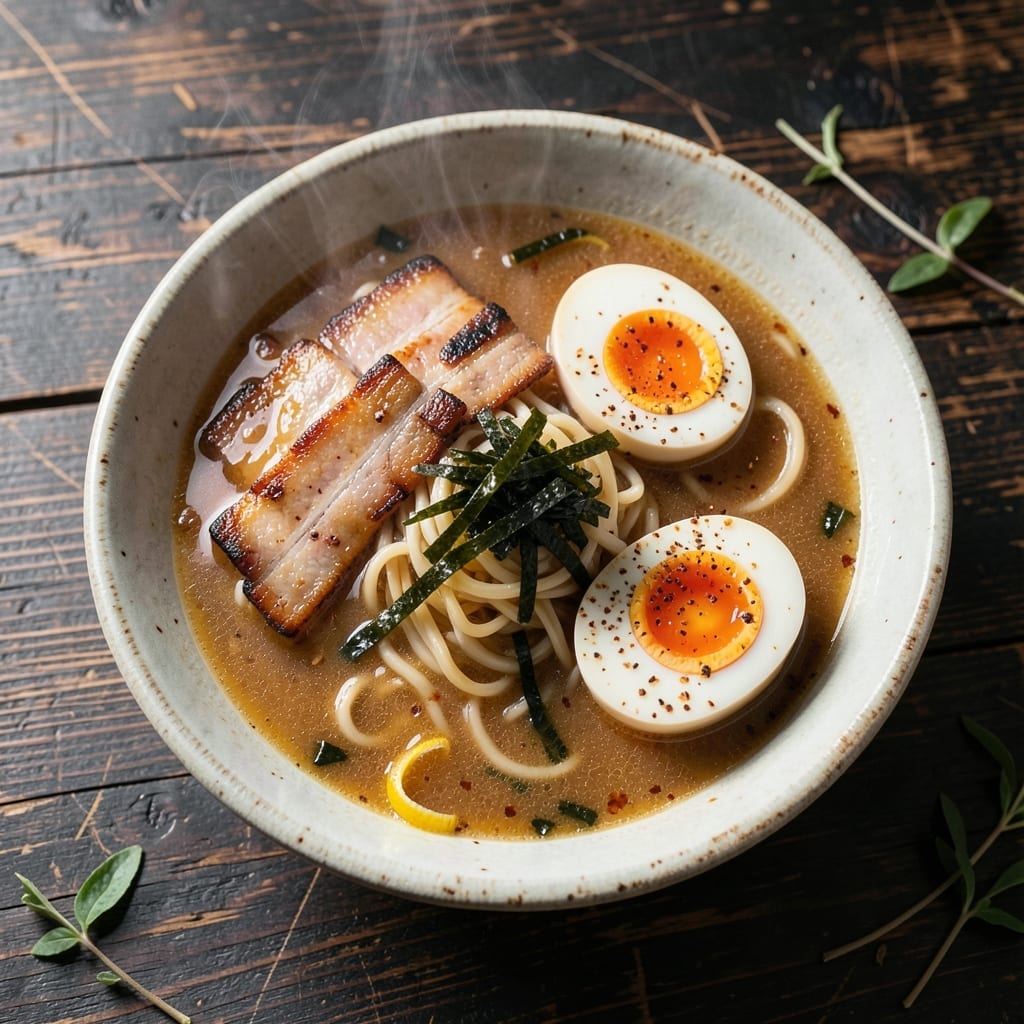
This Tokyo-style ramen delivers the authentic experience you’d find in a Japanese noodle shop. The rich, umami-packed broth is built from traditional ingredients like kombu, katsuobushi, and chicken bones, simmered for hours to develop deep flavor.
Fresh ramen noodles, with their signature springy texture, are the heart of the dish. Cooked just before serving, they absorb the aromatic broth while maintaining the perfect bite that defines great ramen.
Toppings like chashu pork, soft-boiled eggs, and nori seaweed complete the bowl. Each element is carefully prepared to honor the authentic roots of this beloved Japanese staple.
This recipe stays true to tradition while guiding you through each step with precision. The result is a bowl of ramen that rivals what you’d find in Tokyo.
Ingredients for Ramen Recipe Authentic
Authentic Tokyo ramen starts with these traditional ingredients for that perfect umami-packed bowl.
| Ingredient | Amount | Notes |
|---|---|---|
| Chicken Bones 🍗 | 2 lb | For rich, deep broth flavor |
| Kombu Seaweed 🌊 | 1 piece | Dried, about 4×6 inches |
| Katsuobushi 🐟 | 1 cup | Dried bonito flakes |
| Fresh Ramen Noodles 🍜 | 4 whole | Or 1 lb dried ramen noodles |
| Chashu Pork 🥩 | ½ lb | Thinly sliced, pre-cooked |
| Soft-Boiled Eggs 🥚 | 4 whole | Marinated in soy sauce |
| Nori Seaweed Sheets 🌊 | 4 sheets | Cut into strips for garnish |
| Soy Sauce 🫕 | ½ cup | Japanese-style preferred |
| Miso Paste 🥣 | ½ cup | White or red miso |
| Sesame Oil 🫒 | 2 tbsp | Toasted for aroma |
| Garlic Cloves 🧄 | 6 cloves | Minced for depth |
| Fresh Ginger 🌿 | 2 tbsp | Grated, skin removed |
| Green Onions 🧅 | 4 whole | Thinly sliced for topping |
| Bok Choy 🥬 | 4 whole | Baby bok choy preferred |
| Corn 🌽 | 1 cup | Fresh or canned, drained |
The broth base is everything here. Kombu and katsuobushi are non-negotiable for that authentic depth—find them at Asian markets or the international aisle. Chicken bones (necks, backs, or wings) give the richest collagen. I get mine from local butchers who save them for stock. The miso should be fermented and unpasteurized for maximum flavor impact.
No katsuobushi? Shiitake mushrooms add a similar umami punch to the broth. Fresh ramen noodles are ideal, but dried works in a pinch—just follow package instructions. Chashu pork can be swapped for thinly sliced beef or tofu if you’re not into pork. The soy sauce should be Japanese-style (like Kikkoman) for the right balance of salt and sweetness.
Broth freezes beautifully for up to 3 months—portion it into containers for easy ramen nights. Fresh noodles cook in 2-3 minutes, so have everything else ready. Leftovers? Store components separately and assemble fresh to avoid soggy noodles.
Why You’ll Love This Recipe
- One Pot Magic: I toss the chicken bones, kombu, and katsuobushi into a single pot and let the broth build itself—minimal cleanup, maximum flavor.
- Umami Bomb: That first sip of broth hits different. The kombu and katsuobushi create a depth that makes store-bought ramen taste flat.
- Impresses Every Time: I’ve served this to picky eaters and ramen snobs alike—everyone goes quiet after the first bite.
- Leftovers? Yes Please: The broth actually tastes better the next day. I stash extra in the freezer for lazy nights when I crave that authentic taste.
Step-by-Step Instructions for Authentic Ramen
Master the Tokyo-style process with these traditional techniques for perfect results every time.
Step 1: Craft the Dashi Broth Base
Begin by combining the 2 lb Chicken Bones with 1 piece Kombu Seaweed and 1 cup Katsuobushi in a large pot. Add enough cold water to cover everything by 2 inches. I bring this to a gentle simmer over medium heat—never a rolling boil, as that makes the broth cloudy.
Simmer for 1 hour until the liquid turns a light golden color and smells deeply umami-rich. Skim off any foam that rises to the surface with a fine-mesh strainer. This slow extraction process is what gives authentic ramen its complex, layered flavor foundation.
Strain the broth through a cheesecloth-lined colander into a clean pot, pressing gently on the solids to extract every last drop of flavor. Discard the spent chicken bones, kombu seaweed, and katsuobushi—their work is done.
Step 2: Build the Miso-Tare Flavor Base
In a bowl, whisk together the 0.5 cup Miso Paste with 0.5 cup Soy Sauce until smooth. I add 2 tbsp Sesame Oil, 6 cloves minced Garlic Cloves, and 2 tbsp Fresh Ginger to this paste, creating what’s called the tare—the concentrated flavor bomb that will season your broth.
Heat 2 tablespoons of the prepared dashi in a small saucepan over medium-low heat. Add ¼ cup of your tare mixture and whisk until fully dissolved into the liquid. This tempering step prevents the miso from clumping when added to the full broth.
Pour this mixture back into your strained dashi and whisk thoroughly. The broth should now have a rich, reddish-brown hue and an intoxicating aroma. Keep it warm on low heat while you prepare the toppings.
Step 3: Prepare the Toppings and Noodles
Thinly slice the 4 whole Green Onions and cut the 4 sheets Nori Seaweed Sheets into strips. Trim the 4 whole Bok Choy and separate the leaves. Slice the 0.5 lb Chashu Pork into thin pieces if not pre-sliced. Peel and halve the 4 whole Soft-Boiled Eggs lengthwise.
Bring a separate pot of water to a boil for the 4 whole Fresh Ramen Noodles. Cook them according to package directions, typically 2-3 minutes for fresh noodles, until they float to the surface and are springy to the bite. Drain immediately and divide among four serving bowls.
Add ¼ cup Corn to each bowl of noodles. This sweet contrast balances the rich, savory broth beautifully in authentic ramen.
Step 4: Assemble and Serve
Ladle 2 cups of the hot miso broth over each portion of noodles. The liquid should just cover the noodles—authentic ramen isn’t soupy but richly coated. Arrange the toppings artfully: place 2-3 slices Chashu Pork on one side, 1 Soft-Boiled Egg half on the other.
Scatter green onions and nori strips over the top, then add a few bok choy leaves. The final touch is a drizzle of sesame oil over the entire bowl, which adds a glossy finish and nutty aroma.
Serve immediately with chopsticks and a spoon. The noodles should be springy, the broth deeply flavorful, and each topping should complement the others perfectly—just like in a Tokyo ramen shop.
Pro Tips For Making Ramen Recipe Authentic
- Simmer Low, Skim Often: Keep the chicken bone broth at a gentle simmer—never a boil—to avoid cloudiness, and skim the foam every 15 minutes for a clean, rich stock.
- Bloom the Katsuobushi: Add the katsuobushi to the broth off the heat and let it steep for 10 minutes before straining; boiling it directly makes the broth bitter.
- Soak Kombu Properly: Wipe the kombu with a damp cloth instead of rinsing to preserve umami, and let it soak in cold water for 30 minutes before heating.
- Blanch the Noodles: Fresh ramen noodles only need 60-90 seconds in boiling water—any longer and they turn mushy; shock them in cold water immediately to stop cooking.
Storing and Reheating This ramen recipe authentic
Broth Storage
The dashi-miso broth keeps beautifully in the fridge for 4-5 days in airtight containers. I use glass jars to preserve the rich flavors. Let it cool completely before refrigerating to maintain freshness. 💡
Freezing Broth
For longer storage, freeze the broth in quart-sized freezer bags for up to 3 months. Lay flat to save space and thaw overnight in the fridge. Avoid freezing with noodles—they turn mushy.
Noodle Handling
Fresh ramen noodles cook in 2-3 minutes and don’t reheat well. Store uncooked noodles in the fridge for 2-3 days or freeze for 1 month. Cook from frozen by boiling 1 minute longer than usual.
Reheating Broth
Gently warm broth on medium-low heat until steaming, about 5-7 minutes. Stir occasionally to prevent scorching. Microwave in 1-minute intervals if short on time, stirring between each.
Toppings Storage
Store chashu pork in its juices for 4 days. Soft-boiled eggs peel better when chilled first. Keep nori in a sealed bag with a damp towel to retain crispness. 🌟
Assembly Tip
Always reheat components separately. Add hot broth to freshly cooked noodles and toppings to preserve texture. This keeps the dish as close to ramen shop quality as possible.
Nutrition Facts
Frequently Asked Questions
Can I use store-bought chicken broth instead of making dashi?
You can, but the flavor won’t be as deep. For best results, mix 4 cups of quality chicken broth with 1 piece kombu and ½ cup katsuobushi, simmered for 30 minutes.
Why is my broth cloudy instead of clear?
This happens if you boil the dashi too hard. Always keep it at a gentle simmer and skim foam regularly. Straining through cheesecloth also helps achieve that classic clear appearance.
How do I get the perfect soft-boiled egg?
Boil eggs for exactly 6 minutes in simmering water, then transfer to ice water for 5 minutes. This gives you a runny yolk with a firm white every time.
Can I make this vegetarian?
Replace chicken bones with shiitake mushrooms and use vegetable broth. The kombu and katsuobushi can be swapped for more mushrooms or seaweed.

- Peach Syrup Recipe for Ice Cream: Sweet and Silky Drizzle for Scoops - October 6, 2026
- Pav Bhaji Recipe Food Lab: Mumbai Street Food Magic at Home - October 6, 2026
- Peach Jelly Recipe Without Pectin: Naturally Set Sweet Spread - October 6, 2026