
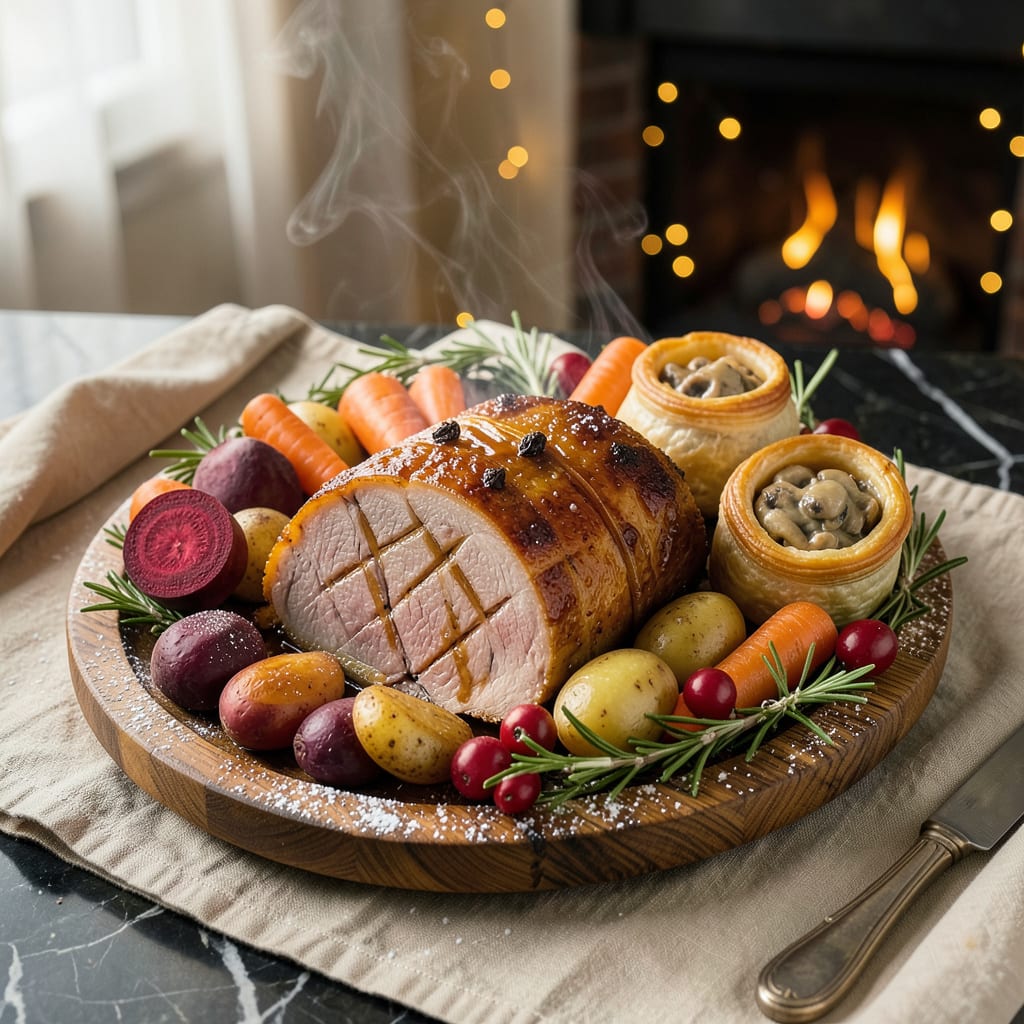
A perfect Christmas dinner balances tradition and creativity: start with a showstopping roast (prime rib or honey-glazed ham), pair with rich sides like garlic mashed potatoes and roasted Brussels sprouts, and finish with a decadent dessert like peppermint chocolate mousse or classic Yule log.
The magic of a memorable holiday meal lies in how each component works together. I’ve found that pairing bold flavors with contrasting textures—like crispy roasted vegetables against creamy potatoes—creates a dining experience that feels both comforting and exciting. The key is balancing rich, savory dishes with lighter elements to prevent the meal from feeling too heavy. 🔥
What elevates this menu from good to extraordinary is thoughtful timing and presentation. A well-planned sequence ensures everything arrives at the table hot and beautiful, while strategic garnishes (like fresh herbs or edible flowers) add that final touch of holiday elegance. The best Christmas dinners I’ve created always include one unexpected element—whether it’s a unique spice blend or an unconventional dessert—that sparks conversation and creates lasting memories. ✨
💡 In This Article
- Designing a Balanced Christmas Dinner Menu
- Timing and Prep Tips for Stress-Free Christmas Cooking
Designing a Balanced Christmas Dinner Menu
The secret to a harmonious holiday meal lies in contrasting textures and complementary flavors. Rich, fatty meats like prime rib (with its marbled 25-30% fat content) need bright, acidic sides to cut through the richness. That’s why cranberry sauce with its pH of 2.5-3.0 works so well—it cleanses the palate between bites.
The science here involves how fat molecules coat your tongue, while acidic compounds break them down. 🔥
Texture plays an equally important role. Creamy mashed potatoes (with 1:2 butter-to-potato ratio) contrast beautifully with crispy roasted Brussels sprouts. The Maillard reaction that occurs at 300-350°F creates those caramelized edges on vegetables, adding depth to their naturally bitter notes.
I’ve found that roasting sprouts with 1 tablespoon maple syrup per pound enhances this effect while balancing bitterness. ✨
Traditional Christmas ingredients carry cultural significance that enhances the dining experience. Chestnuts, used since Roman times, contain 45% complex carbohydrates that provide sustained energy—perfect for long celebrations. Cinnamon and nutmeg in desserts aren’t just flavorful; they contain compounds that stimulate warmth receptors in your mouth, creating that “cozy” holiday feeling.
The 1-2% essential oils in these spices release aromas that trigger nostalgic memories. 💫
For dietary balance, consider these swaps without sacrificing tradition:
- Gluten-free: Use cornstarch slurry (1:1 ratio with water) instead of flour for gravy thickening
- Vegetarian centerpiece: Portobello mushrooms roasted at 425°F for 20 minutes develop umami-rich crust
- Lower-sodium: Brine turkey in ¼ cup salt per gallon instead of traditional 1 cup
The cooking timeline matters as much as the ingredients. Protein dishes typically need 3-5 hours of active cooking, while most sides can be prepared 1-2 days ahead and reheated. I always schedule oven use by temperature—high-heat items first (425°F), then medium (350°F), finishing with low-and-slow dishes (275°F).
This prevents flavor transfer and ensures everything finishes simultaneously. ⚡
Remember that presentation elevates the experience. The visual contrast of deep red cranberries against creamy white potatoes, or the golden-brown crust on a ham glaze, stimulates appetite before the first bite. Studies show we perceive food as 15-20% more flavorful when it’s beautifully plated.
A sprinkle of fresh herbs or edible gold leaf adds that final touch of holiday magic. 🌟

- BBQ Sausage Recipe Oven: Smoky Depth Without the Grill - September 28, 2026
- BBQ Chicken Bowl Recipe Rice: Smoky Sweetness Over Fluffy Grains - September 28, 2026
- Beef Cutlet Recipe Ideas: Crispy Breaded Patties With Bold Seasonings - September 28, 2026