
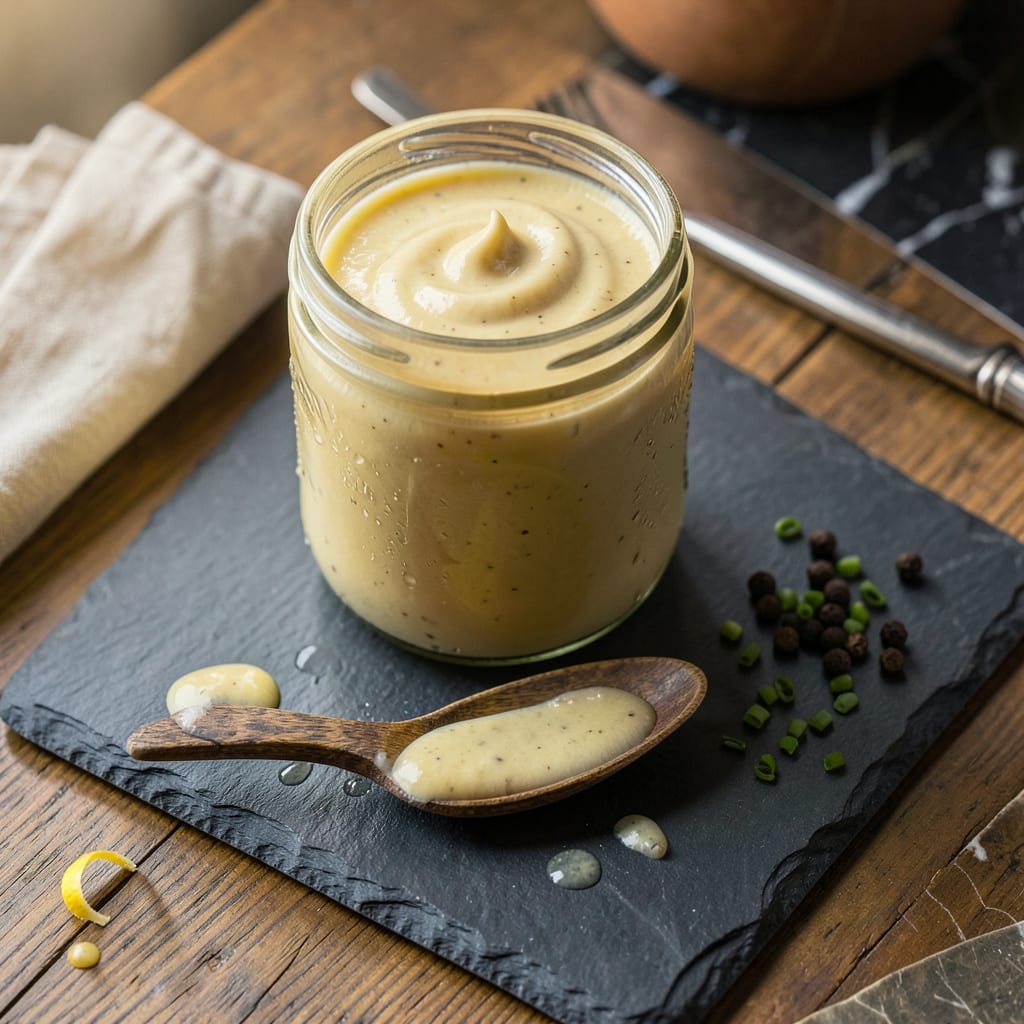
Arby’s Horsey Sauce is a creamy blend of mayonnaise and prepared horseradish with a touch of mustard, lemon juice, and spices. Whisk 1 cup mayo with 2-3 tablespoons horseradish, 1 teaspoon mustard, 1 teaspoon lemon juice, and salt to taste for an instant copycat version.
This sauce delivers that perfect balance of creamy richness and bold, tangy heat that makes Arby’s sandwiches so iconic. 🔥 The secret lies in how the horseradish’s sharpness cuts through the mayo’s smoothness, creating a flavor profile that’s both zesty and satisfying. I love how versatile it is—works just as well as a dip for fries as it does drizzled over roast beef. The beauty is in its simplicity: just a handful of pantry staples transform into something restaurant-quality in minutes.
💡 In This Article
- How Horseradish Creates Horsey Sauce’s Signature Kick
- 5 Ways to Use Homemade Horsey Sauce Beyond Arby’s Sandwiches
How Horseradish Creates Horsey Sauce’s Signature Kick
The fiery punch in Horsey Sauce comes from allyl isothiocyanate, the compound released when horseradish cells are crushed. This volatile oil triggers the same nasal receptors as mustard gas (but safely!), creating that instant sinus-clearing sensation. The heat intensifies when fresh—grated horseradish loses 50% of its potency within 1-2 hours as the compounds evaporate.
Prepared horseradish (like in Arby’s sauce) stabilizes this reaction through vinegar preservation, locking in consistent heat levels. 🔥
Mayonnaise’s fat content (70-80% oil) acts as a delivery system for these spicy compounds. The oil molecules encapsulate the allyl isothiocyanate, allowing it to disperse evenly across your taste buds rather than hitting all at once. This creates a smoother, more sustained heat compared to water-based sauces.
For comparison, cocktail sauce (which uses ketchup) delivers a sharper, more acidic burn because its vinegar base doesn’t have this fat-buffering effect.
Temperature dramatically affects the experience. Serving Horsey Sauce at 50-55°F (straight from the fridge) mutes the heat slightly, while room temperature (68-72°F) makes the horseradish compounds more volatile and potent. This is why Arby’s serves their sauce chilled—it balances the kick with the creamy base.
The mustard and lemon juice aren’t just for flavor; their acids help stabilize the emulsion and prevent the sauce from separating. ✨
Freshness matters more than you’d think. Store-bought prepared horseradish typically contains 5-7% actual horseradish root, with the rest being vinegar and stabilizers. For maximum heat, seek out “fresh-grated” varieties with higher root content (look for 10%+ on the label).
The difference is noticeable—fresh-grated will make your sauce taste brighter and hotter, while standard prepared gives that classic Arby’s mellow burn.
Here’s what most copycat recipes miss: the resting period. Letting the sauce sit for 30-60 minutes after mixing allows the flavors to meld. During this time, the horseradish compounds fully integrate with the mayo’s fat molecules, creating that signature creamy heat. Skip this step, and you’ll get a harsher, more separated flavor profile.
The salt isn’t just for seasoning—it helps break down the horseradish fibers further, releasing even more of those pungent oils. 🌟
For those sensitive to heat, the sauce’s spiciness can be adjusted by:
- Reducing horseradish: Start with 1 tablespoon per cup of mayo, then add more to taste
- Adding sweetness: 1 teaspoon honey or sugar balances the heat without muting the flavor
- Using Greek yogurt: Replace 25% of the mayo for tangier, less intense version

- BBQ Sausage Recipe Oven: Smoky Depth Without the Grill - September 28, 2026
- BBQ Chicken Bowl Recipe Rice: Smoky Sweetness Over Fluffy Grains - September 28, 2026
- Beef Cutlet Recipe Ideas: Crispy Breaded Patties With Bold Seasonings - September 28, 2026