
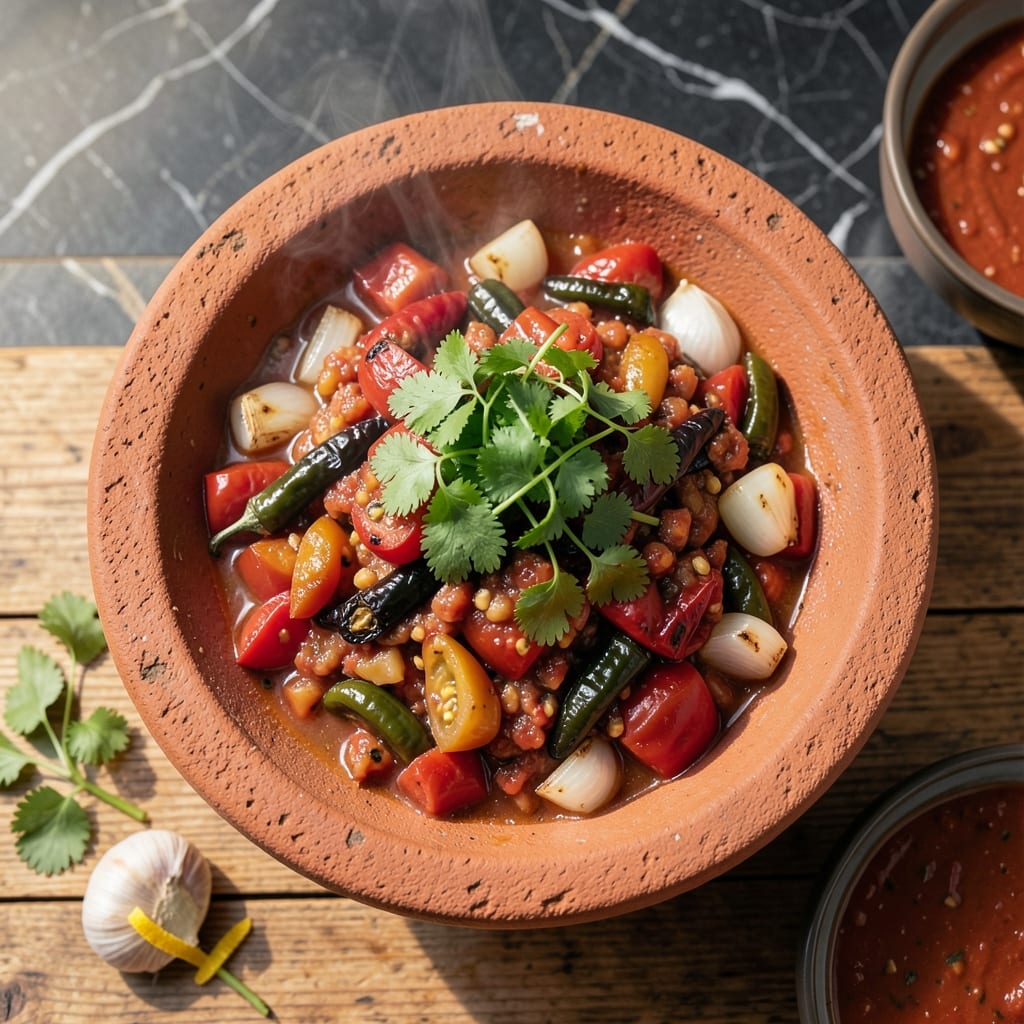
This authentic salsa brings the vibrant flavors of Mexico to your kitchen with just a few fresh ingredients. The combination of ripe tomatoes, fiery chiles, and bright lime creates a restaurant-quality condiment that elevates any dish.
I developed this recipe after countless taste tests to capture the true essence of traditional Mexican salsa. The key lies in charring the vegetables first, which adds a smoky depth that defines its character.
What you get is a perfectly balanced sauce with bold flavors—spicy, tangy, and fresh all at once. It works as a dip, topping, or marinade base for countless meals.
Make a batch today and experience the difference fresh, homemade salsa makes. The process takes 20 minutes from start to finish.
Ingredients for Recipe for Authentic Mexican Salsa
Fresh vegetables, bold spices, and a touch of lime bring this vibrant condiment to life.
| Ingredient | Amount | Notes |
|---|---|---|
| Ripe Tomatoes 🍅 | 2 lb | Roma or vine-ripened preferred |
| Jalapeño Peppers 🌶️ | 4 whole | Seeds removed for milder heat |
| Serrano Peppers 🌶️ | 2 whole | Adjust quantity for spice level |
| White Onion 🧅 | ½ whole | Quartered for charring |
| Garlic Cloves 🧄 | 4 cloves | Peeled, left whole |
| Fresh Cilantro 🌿 | ½ cup | Chopped, stems included |
| Fresh Lime Juice 🍋 | ¼ cup | About 2-3 limes |
| Sea Salt 🧂 | 1 ½ tsp | Adjust to taste |
| Olive Oil 🫒 | 2 tbsp | For charring vegetables |
The tomatoes are the backbone here. Roma tomatoes have the right meat-to-seed ratio and char beautifully, but any ripe tomato works (heirlooms add extra sweetness). Farmers markets or Trader Joe’s usually have the best selection. For the chiles, jalapeños give consistent heat—look for firm, glossy skins. Serranos pack more punch, so start with less if you’re heat-sensitive.
No serranos? Substitute with half a habanero (careful with the heat!) or add an extra jalapeño. Fresh cilantro is non-negotiable for that bright finish, but flat-leaf parsley at 1:1 ratio works in a pinch. Out of limes? Lemon juice in equal amounts, though the flavor shifts slightly. The olive oil can be any neutral oil, but extra-virgin adds a nice depth.
This salsa tastes best fresh but keeps 5-6 days in the fridge. For longer storage, freeze in ice cube trays—3 months max. The flavors actually deepen after a day, so make it ahead if you can (worth the wait).
Why You’ll Love This Recipe
- Throw It Together: Honestly, it’s just chop, blend, and done—no fancy techniques, just fresh tomatoes, peppers, and garlic.
- Fiery Freshness: The mix of jalapeño and serrano gives that signature kick, while the garlic and onion add layers of bold, bright flavor.
- Endless Uses: I use this on tacos, eggs, even as a dip—it’s my go-to for turning simple meals into something special.
- Budget Stretch: Five cheap ingredients make a big batch, and it keeps well in the fridge for days. I’ll be real: it’s saved me from last-minute grocery runs.
Step-by-Step Instructions for Authentic Mexican Salsa
Here’s the traditional charring method that unlocks the deepest, smokiest flavors in your salsa.
Step 1: Char the Vegetables for Depth of Flavor
Heat a cast-iron skillet or comal over medium-high heat until very hot. Add the 2 lb ripe tomatoes, 4 whole jalapeño peppers, 2 whole serrano peppers, 0.5 whole white onion (quartered), and 4 cloves garlic cloves (peeled) to the dry pan.
Char for 8-10 minutes, turning occasionally with tongs, until all vegetables are evenly blackened in spots and deeply blistered. The tomatoes should soften completely, while the peppers and onion develop dark, almost burnt patches. This charring is non-negotiable for authentic flavor.
Drizzle the 2 tbsp olive oil over the vegetables during charring to prevent sticking and enhance browning. Don’t rush this step—under-charred vegetables mean bland salsa.
Step 2: Steam and Peel for Smooth Texture
Transfer the charred vegetables to a bowl and cover tightly with plastic wrap or a clean kitchen towel. Let them steam for 10 minutes—this makes peeling easier and continues the cooking process.
After steaming, peel the tomatoes, jalapeños, and serranos. The skins should slip off effortlessly with your fingers or a paring knife. Don’t stress about removing every last bit of skin from the peppers and onion—some charred bits add to the rustic texture and smoky flavor.
Leave the garlic cloves whole for now; their skins will have loosened during charring and can be easily removed later. Reserve any accumulated juices from the bowl—this liquid gold will go back into your salsa.
Step 3: Blend with Fresh Elements
Add the peeled tomatoes, peppers, onion, and garlic to a blender or food processor. Include the 0.5 cup fresh cilantro (chopped, stems and all) and the 1.5 tsp sea salt.
Pulse 8-10 times for a chunky salsa or blend for 20-30 seconds for a smooth consistency. I prefer a slightly rustic texture, so I pulse until the largest pieces are about ¼-inch in size.
Pour in the reserved juices from the charred vegetables and the 0.25 cup fresh lime juice. Give it one final pulse to incorporate. Taste and adjust the salt if needed—the lime juice will brighten all the flavors.
Step 4: Rest and Serve for Maximum Flavor
Transfer the salsa to a serving bowl and let it rest at room temperature for 15-20 minutes. This resting period allows the flavors to meld and mellow slightly—the raw lime juice will soften its sharpness, and the smoky char will distribute evenly.
The salsa should be vibrant and aromatic, with a balance of heat from the serranos, brightness from the lime, and depth from the charred vegetables. If it seems too thick, stir in a tablespoon of water to reach your desired consistency.
Serve with tortilla chips, over tacos, or as a condiment for grilled meats. For the most authentic experience, enjoy it fresh—the flavors peak within the first 2 hours of making.
Pro Tips For Making Recipe For Authentic Mexican Salsa
- Char the Veggies: Roast tomatoes, peppers, onion, and garlic on a dry skillet over medium-high until blackened in spots—this adds the smoky depth authentic salsa needs. I learned this the hard way when my first few batches tasted flat.
- Seed the Peppers: Remove seeds and white ribs from jalapeños and serranos unless you want a salsa that burns more than it flavors. Sounds obvious, but I’ve ruined a batch by skipping this in a rush.
- Skip the Water Bath: Don’t rinse the charred veggies under water to clean them—you’ll wash away flavor. Just scrape off the blackened skin with a knife or your fingers.
- Use a Molcajete: Crush the ingredients in a molcajete instead of a blender for a chunkier, more rustic texture. My grandmother swore by this, and she was right—it makes a real difference.
Essential Equipment for This Recipe
Charring Surface
For authentic charring, I recommend a cast-iron skillet or comal—both distribute heat evenly and can handle the medium-high heat required. A Lodge 12-inch skillet is my go-to for its durability and even heating. Avoid non-stick pans, as they can’t reach the necessary temperatures. 🔥
Blending Tools
A high-quality blender or food processor is essential for the right texture. I use my Vitamix 5200 for ultra-smooth salsa, but a standard blender works too. For chunkier versions, pulse in 1-second bursts to control the consistency.
Peeling Assist
A paring knife and a large mixing bowl are all you need for peeling charred vegetables. The bowl catches all the juices, which are packed with flavor. I keep a Wüsthof 3.5-inch paring knife in my drawer for this exact task.
Resting Vessel
Use a wide, shallow bowl for resting your salsa—this allows flavors to meld evenly. I prefer a glass or ceramic bowl because they don’t retain odors and are easy to clean. A 1.5-quart capacity is ideal for this recipe.
Let it sit at room temperature for the full 15-20 minutes to let the flavors develop fully.
Serving Essentials
For serving, a wooden spoon and a molcajete (stone mortar) add a rustic touch. The molcajete keeps the salsa cool and looks beautiful on the table. If you don’t have one, any sturdy bowl works just fine. 💛
Nutrition Facts
Frequently Asked Questions
Can I make this without charring the vegetables?
Charring is key for authentic flavor, but you can roast at 400°F for 20-25 minutes instead. The smoky depth won’t be as strong though.
How do I reduce the heat level?
Remove all seeds and white membranes from peppers, or swap serranos for milder jalapeños. For zero heat, use only tomatoes and skip chiles entirely.
Why does my salsa taste bitter?
Underripe tomatoes or over-charred skins cause bitterness. Use only fully ripe tomatoes and peel completely after charring for best results.
Can I can this salsa for long-term storage?
This fresh version isn’t safe for canning. For shelf-stable salsa, use a tested canning recipe with added vinegar and proper processing.

- Peach Syrup Recipe for Ice Cream: Sweet and Silky Drizzle for Scoops - October 6, 2026
- Pav Bhaji Recipe Food Lab: Mumbai Street Food Magic at Home - October 6, 2026
- Peach Jelly Recipe Without Pectin: Naturally Set Sweet Spread - October 6, 2026