
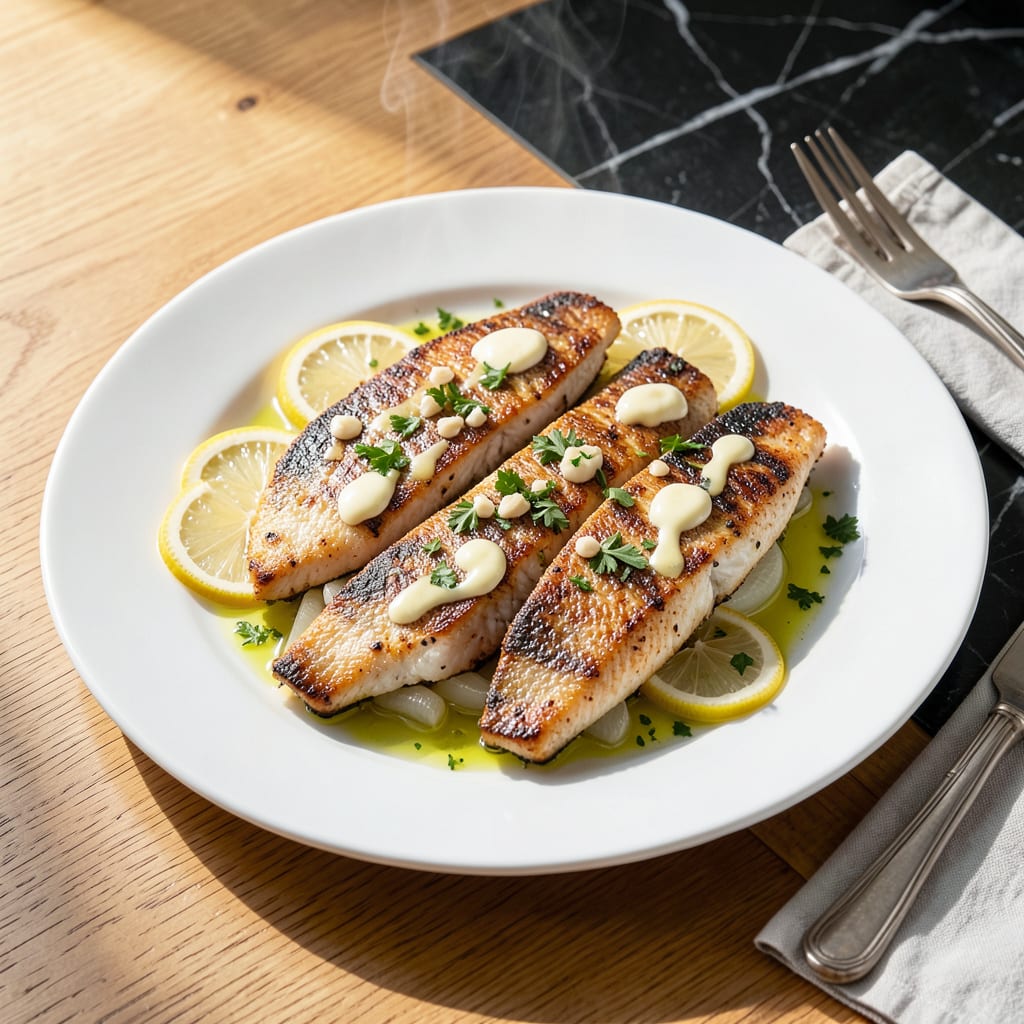
This baked red snapper delivers flaky, tender white meat with minimal effort and maximum flavor. The lemon-garlic butter infuses every bite with bright, aromatic richness.
A simple yet proven technique ensures the fish stays moist while developing a golden, lightly crisp exterior. Ready in under 30 minutes, it pairs perfectly with roasted vegetables or rice.
Ingredients for Recipe for Baked Red Snapper
Eleven quality ingredients for tender, flaky snapper with bright lemon-garlic butter infusion.
| Ingredient | Amount | Notes |
|---|---|---|
| Red Snapper Fillets 🐟 | 4 whole | Skin-on, about 6 oz each |
| Unsalted Butter 🧈 | ½ cup | Melted for lemon-garlic butter |
| Garlic Cloves 🧄 | 4 cloves | Minced finely for butter |
| Fresh Lemon 🍋 | 1 whole | Zest and juice separated |
| Fresh Parsley 🌿 | ¼ cup | Chopped, for garnish |
| Extra-Virgin Olive Oil 🫒 | 2 tbsp | For drizzling fish |
| Kosher Salt 🧂 | 1 tsp | Diamond Crystal preferred |
| Freshly Ground Black Pepper 🌶️ | ½ tsp | To taste |
| Dried Thyme 🍃 | ½ tsp | Optional for depth |
| Lemon Slices 🍋 | 4 slices | Thin, for topping |
| White Wine 🍷 | ¼ cup | Dry variety for deglazing |
| Shallot 🧅 | 1 whole | Minced, for butter |
The snapper quality is paramount—wild-caught from a reputable fishmonger ensures the best texture and flavor. Look for fillets with vibrant pink flesh that springs back when pressed. Whole Foods and local seafood markets typically carry premium red snapper. If buying pre-packaged, check the date and avoid any with a fishy odor. The butter should be high-fat European style for optimal richness in the compound butter.
No shallots? Red onion at half the quantity works, though the flavor is slightly more pungent. White wine can be replaced with dry vermouth or chicken stock. For a non-alcoholic option, use additional lemon juice and a splash of water. Dried parsley isn’t ideal, but 1 tbsp of fresh dill offers a nice alternative. The thyme can be omitted if you’re short on herbs.
Prepare the compound butter 1 day ahead—it keeps well refrigerated. Leftover cooked snapper stays fresh for 2-3 days in the fridge, though it’s best served immediately. The raw fillets can be stored in the coldest part of your fridge for 1-2 days before cooking.
Why You’ll Love This Recipe
- One Pan Wonder: I love that I just toss the snapper with melted butter, garlic, and lemon on a single sheet pan—no messy cleanup.
- Buttery Garlic Bliss: That first bite with crispy skin, rich butter, and bright lemon? I make it just to savor that moment.
- Weeknight Hero: Honestly, it’s my go-to for busy evenings when I need something impressive but unfussy.
- Leftovers Win: The flavors deepen overnight, so I always make extra for next-day lunches that taste even better.
Step-by-Step Instructions for Baked Red Snapper
This method ensures perfectly flaky fish with bright, aromatic lemon-garlic butter every time.
Step 1: Prepare the Lemon-Garlic Butter
In a small saucepan, melt the 0.5 cup unsalted butter over low heat. Add the minced shallot and cook for 2 minutes until translucent and fragrant. Stir in the 4 cloves minced garlic cloves and cook for an additional 1 minute, being careful not to let the garlic brown.
Remove from heat and stir in the zest of 1 whole fresh lemon, 1 teaspoon kosher salt, 0.5 teaspoon freshly ground black pepper, and 0.5 teaspoon dried thyme. The butter should be infused with aroma but not overheated—this preserves the delicate flavors that will complement the fish.
Step 2: Season and Prep the Fillets
Pat the 4 whole red snapper fillets completely dry with paper towels. This step is critical—moisture prevents proper browning and crisping of the skin. Place the fillets skin-side down on a clean work surface.
Drizzle the 2 tablespoons extra-virgin olive oil over the flesh side of each fillet, then season evenly with a pinch of kosher salt and freshly ground black pepper. The oil helps the seasoning adhere and creates a light barrier to lock in moisture during baking.
Step 3: Bake Until Flaky and Tender
Preheat your oven to 400°F. Place the fillets skin-side down on a parchment-lined baking sheet. Spoon the lemon-garlic butter mixture evenly over each fillet, allowing some to pool around the edges. Top each fillet with a thin lemon slice for added brightness.
Bake for 12-15 minutes until the fish reaches an internal temperature of 145°F and the flesh flakes easily when tested with a fork. The edges should appear opaque, and the butter will have melted into a fragrant, golden sauce. Avoid overbaking—red snapper continues cooking slightly after removal from the oven.
Step 4: Deglaze and Finish
Carefully transfer the fillets to a serving platter, leaving the buttery juices on the baking sheet. Place the sheet on the stovetop over medium heat and add the 0.25 cup white wine. Use a wooden spoon to scrape up any browned bits, creating a light, flavorful pan sauce.
Simmer for 2-3 minutes until the liquid reduces slightly and the alcohol smell dissipates. Pour this sauce over the fillets, then garnish with the 0.25 cup chopped fresh parsley for a pop of color and freshness.
Step 5: Serve Immediately
Serve the red snapper hot, with the lemon-garlic pan sauce spooned over the top. Each fillet should have a glossy, golden exterior with moist, flaky white meat that separates effortlessly at the touch of a fork.
The combination of rich butter, aromatic garlic, and bright citrus creates a harmonious balance that highlights the natural sweetness of the fish. Pair with simple sides like steamed asparagus or crusty bread to soak up the delicious sauce.
Pro Tips For Making Recipe For Baked Red Snapper
- Pat Fillets Dry: Use paper towels to thoroughly dry the snapper fillets before seasoning—moisture is the enemy of that perfect golden crust.
- Room Temp Butter: Let the unsalted butter soften for 10-15 minutes before mixing with garlic and parsley; it’ll blend smoothly into the fish instead of clumping.
- Skip Overcrowding: Leave at least an inch between fillets on the baking sheet, or they’ll steam instead of bake evenly.
- Zest the Lemon: Grate the lemon zest directly over the fish before baking—it adds way more bright flavor than juice alone, and I learned this the hard way after wasting too many lemons.
Pro Cooking Tips for Perfect Results
Prevent Overcooking
Use an instant-read thermometer to check doneness—the fish is perfect at 145°F internal temperature. I pull mine at 140°F since it continues cooking while resting. Overcooked snapper becomes dry and rubbery, so err on the side of underdone.
Skin Crisis Solution
For crispier skin, place fillets directly on a preheated cast-iron skillet in the oven. The hot surface creates a beautiful golden crust. If the skin sticks, don’t force it—use a thin metal spatula to release it gently. 🌡️
Butter Distribution
Spoon the lemon-garlic butter over the fillets just before baking, not after. This allows the flavors to penetrate the fish as it cooks. If you add it post-bake, the butter will just sit on top and slide off when serving.
Rest Before Serving
Let the snapper rest for 5 minutes after baking. This allows the juices to redistribute, ensuring every bite is moist and flavorful. Skipping this step results in dry fish as the juices escape onto the plate.
Wine Deglazing
When deglazing, use a dry white wine like Sauvignon Blanc. The acidity cuts through the richness of the butter, creating a balanced sauce. If you don’t drink alcohol, substitute with chicken stock plus 1 tsp lemon juice. 🍷
Even Baking Trick
Rotate your baking sheet halfway through cooking if your oven has hot spots. This ensures even browning and cooking, especially important for thicker fillets. I always set a timer for 6 minutes to remind myself.
Nutrition Facts
Frequently Asked Questions
What oven temperature works best?
Preheat to 400°F for even cooking and a golden finish. This temperature ensures the fish cooks through without drying out while allowing the butter to melt into a rich sauce.
How do I know when it’s done?
The fish is ready when it reaches an internal temperature of 145°F and flakes easily with a fork. Pull it at 140°F to account for carryover cooking.
Can I use frozen fillets?
Thaw them overnight in the fridge before baking. Pat them extra dry to remove moisture, which helps achieve better browning and texture. Never bake from frozen.
What pairs well with this dish?
Simple sides like roasted asparagus, steamed rice, or crusty bread work perfectly. They soak up the delicious lemon-garlic butter sauce without overpowering the fish.

- BBQ Sausage Recipe Oven: Smoky Depth Without the Grill - September 28, 2026
- BBQ Chicken Bowl Recipe Rice: Smoky Sweetness Over Fluffy Grains - September 28, 2026
- Beef Cutlet Recipe Ideas: Crispy Breaded Patties With Bold Seasonings - September 28, 2026