
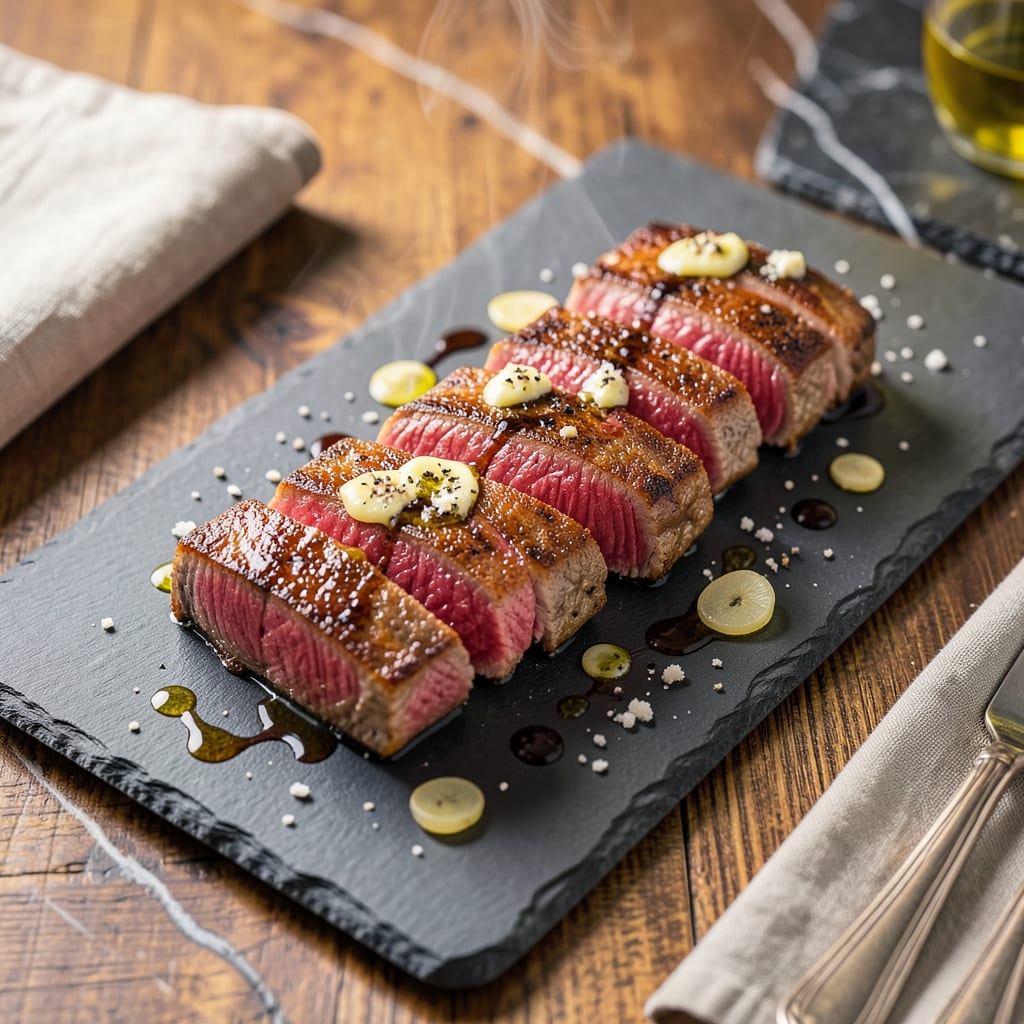
Achieving perfectly seared tuna steak at home is simpler than you think. This method delivers a buttery crust outside while keeping the center tender and rare, just like your favorite steakhouse.
With just a few ingredients and proper technique, you’ll master restaurant-quality results. The key is high heat, minimal handling, and knowing exactly when to pull it from the pan.
Ingredients for The Best Tuna Steak
High-quality tuna plus a handful of bold flavors. That is all you need here.
| Ingredient | Amount | Notes |
|---|---|---|
| Sushi-Grade Ahi Tuna Steaks 🐟 | 4 pieces | 1-inch thick, skinless |
| Kosher Salt 🧂 | 2 tsp | Diamond Crystal preferred |
| Freshly Ground Black Pepper 🌶️ | 1 tsp | Coarse grind ideal |
| Olive Oil 🫒 | 3 tbsp | High smoke point variety |
| Unsalted Butter 🧈 | 2 tbsp | European-style preferred |
| Garlic Cloves 🧄 | 2 cloves | Minced or smashed |
| Fresh Thyme Sprigs 🌿 | 4 sprigs | Leaves stripped, optional |
| Lemon 🍋 | 1 whole | For zest and juice |
| Soy Sauce 🥢 | 2 tbsp | Low-sodium recommended |
| Sesame Oil 🫒 | 1 tsp | Toasted variety for depth |
| Green Onions 🧅 | ¼ cup | Thinly sliced for garnish |
| Sesame Seeds 🌾 | 1 tsp | Toasted for garnish |
The tuna is non-negotiable—sushi-grade only. Look for bright red, firm flesh at Whole Foods or a trusted fishmonger (ask when it came in and if it’s been previously frozen). Ahi is ideal, but yellowfin works too. For thickness, aim for 1 to 1.5 inches—thinner sears too fast, thicker won’t cook through. Pat it bone-dry before seasoning; wet fish steams instead of sears.
No fresh thyme? Dried thyme at one-third the amount works, but fresh adds that bright note. Out of soy sauce? Tamari or coconut aminos are solid swaps. If you’re avoiding dairy, olive oil alone still gives a good crust, but you’ll miss that buttery richness. The lemon can be subbed with lime, and if you’re feeling fancy, a splash of yuzu juice takes this over the top.
Tuna is best served immediately—it loses that perfect rare center fast. Leftovers? Rarely happen, but if they do, slice thin and toss into salads within 24 hours. Don’t freeze; it ruins the texture. Keep your sesame seeds in the freezer to extend shelf life for 6 months.
Why You’ll Love This Recipe
- 10-Minute Luxury: I can sear these tuna steaks faster than it takes to order takeout. Honestly, just salt, pepper, and a hot pan—dinner’s done.
- Buttery Perfection: The combo of olive oil and butter gives that crispy crust while keeping the center melt-in-your-mouth tender.
- Date Night Ready: Fancy enough for a special occasion but simple enough for a Tuesday. My go-to when I want to impress without stress.
- Zero Leftovers: Here’s what sold me—everyone at my table cleans their plate. No sad tuna sitting in the fridge the next day.
Step-by-Step Instructions for Seared Tuna Steak
Here’s how I achieve restaurant-quality sear with a buttery crust every single time.
Step 1: Prep and Season the Tuna Steaks
Pat the 4 pieces sushi-grade ahi tuna steaks completely dry with paper towels. Any moisture will prevent proper searing, so be thorough. Season both sides evenly with the 2 tsp kosher salt and 1 tsp freshly ground black pepper, pressing gently to adhere.
This aggressive seasoning forms the flavor foundation. I use Diamond Crystal kosher salt because its coarse texture adheres better to the meat’s surface. Let the seasoned steaks sit at room temperature for 10-15 minutes while you prep the pan.
The tuna should lose its chill but not sit out longer than 20 minutes total. This ensures even cooking from edge to center without overcooking the exterior before the interior warms.
Step 2: Sear the Tuna to Crusty Perfection
Heat 2 tbsp of the 3 tbsp olive oil in a heavy skillet (cast iron works best) over high heat until it shimmers but doesn’t smoke. Add the 4 pieces sushi-grade ahi tuna steaks and sear undisturbed for 1-2 minutes per side for medium-rare.
You’ll know it’s ready to flip when the edges turn opaque and the bottom develops a deep golden crust. Don’t move the steaks around—this prevents a proper crust from forming. The high smoke point of the olive oil is crucial here to prevent burning.
In the last 30 seconds of searing, add the 2 tbsp unsalted butter, 2 cloves garlic cloves, and 4 sprigs fresh thyme sprigs to the pan. Baste the tuna with the foaming butter continuously for maximum flavor infusion.
Step 3: Create the Finishing Sauce
Transfer the tuna to a plate and tent with foil. Reduce heat to medium and add the 2 tbsp soy sauce and 1 tsp sesame oil to the pan. Stir to combine with the browned bits, letting it simmer for 30 seconds.
The sauce should thicken slightly and become glossy. I always use low-sodium soy sauce to control the saltiness—this way the seasoning on the tuna remains perfectly balanced. The toasted sesame oil adds a nutty depth that complements the buttery richness.
Squeeze in juice from half the 1 whole lemon and stir to incorporate. This brightness cuts through the richness and enhances the tuna’s natural sweetness.
Step 4: Slice and Garnish for Serving
Slice the tuna against the grain into ½-inch thick pieces. This shortens the muscle fibers for the most tender bite. Arrange on serving plates and spoon the pan sauce over the top.
Garnish with the 0.25 cup green onions and 1 tsp sesame seeds. The green onions add a fresh, sharp contrast while the sesame seeds provide a satisfying crunch and visual appeal. I always toast my sesame seeds first for extra nuttiness.
Serve immediately while the exterior is still crisp and the interior warm. The center should be pink and translucent for perfect medium-rare. Any leftovers (unlikely) taste great cold the next day in salads or wraps.
Pro Tips For Making The Best Tuna Steak
- Dry the Surface: Pat the tuna steaks completely dry with paper towels before seasoning—I learned this the hard way after my first few steaks steamed instead of seared.
- Sear 1-2 Minutes Max: High heat, 1-2 minutes per side for rare center. Sounds fast, but ahi cooks through quickly and turns chewy if overdone.
- Use Room Temp Tuna: Pull the steaks out of the fridge 20 minutes before cooking—cold tuna seizes up and won’t develop that perfect crust.
- Baste with Butter: Tilt the pan and spoon melted butter over the steaks for the last 30 seconds. It adds a rich finish that olive oil alone can’t.
Essential Equipment for This Recipe
Premium Cookware
Invest in a heavy cast iron skillet, like Lodge, for even heat distribution and superior searing. It retains heat better than stainless steel, ensuring a consistent crust. I’ve used mine for years with perfect results every time. 🔥
High Smoke Point Oil
Use avocado oil or refined coconut oil if you want an alternative to olive oil. These can handle 500°F+ without smoking, which is crucial for that perfect sear on your tuna.
Instant-Read Thermometer
A ThermoWorks Thermapen is my go-to for accuracy. For tuna, aim for an internal temp of 110-120°F for rare to medium-rare. This ensures the center stays tender while the crust forms beautifully.
Tongs for Handling
Use 12-inch locking tongs to flip the steaks without piercing them. Piercing releases juices, which can dry out the fish. I prefer OXO’s stainless steel tongs for their grip and durability.
Resting Rack
A wire cooling rack placed over a plate keeps the crust crisp while resting. This prevents the bottom from steaming in its own juices. Rest for 5 minutes before slicing.
Sharp Slicing Knife
A 8-inch chef’s knife or slicing knife ensures clean cuts through the crust. I recommend Wüsthof or Shun for precision. Slice against the grain for the most tender bite.
Nutrition Facts
Frequently Asked Questions
What thickness works best for searing?
Aim for 1 to 1.5 inches thick steaks. Thinner cuts overcook too fast while thicker ones won’t sear evenly through. This size gives you a perfect crust with a rare center.
Can I use regular tuna instead of sushi-grade?
No, always use sushi-grade for raw or rare preparations. Regular tuna may contain parasites or bacteria. Look for bright red, firm flesh at trusted fishmongers.
How do I know when it’s done?
Sear for 1-2 minutes per side for medium-rare. The center should stay pink and translucent. Use an instant-read thermometer for 110-120°F internally.
What if I don’t have a cast iron skillet?
A heavy stainless steel pan works too. Just preheat it well and ensure it’s very hot before adding the oil. Avoid nonstick as it won’t get hot enough.

- BBQ Sausage Recipe Oven: Smoky Depth Without the Grill - September 28, 2026
- BBQ Chicken Bowl Recipe Rice: Smoky Sweetness Over Fluffy Grains - September 28, 2026
- Beef Cutlet Recipe Ideas: Crispy Breaded Patties With Bold Seasonings - September 28, 2026