
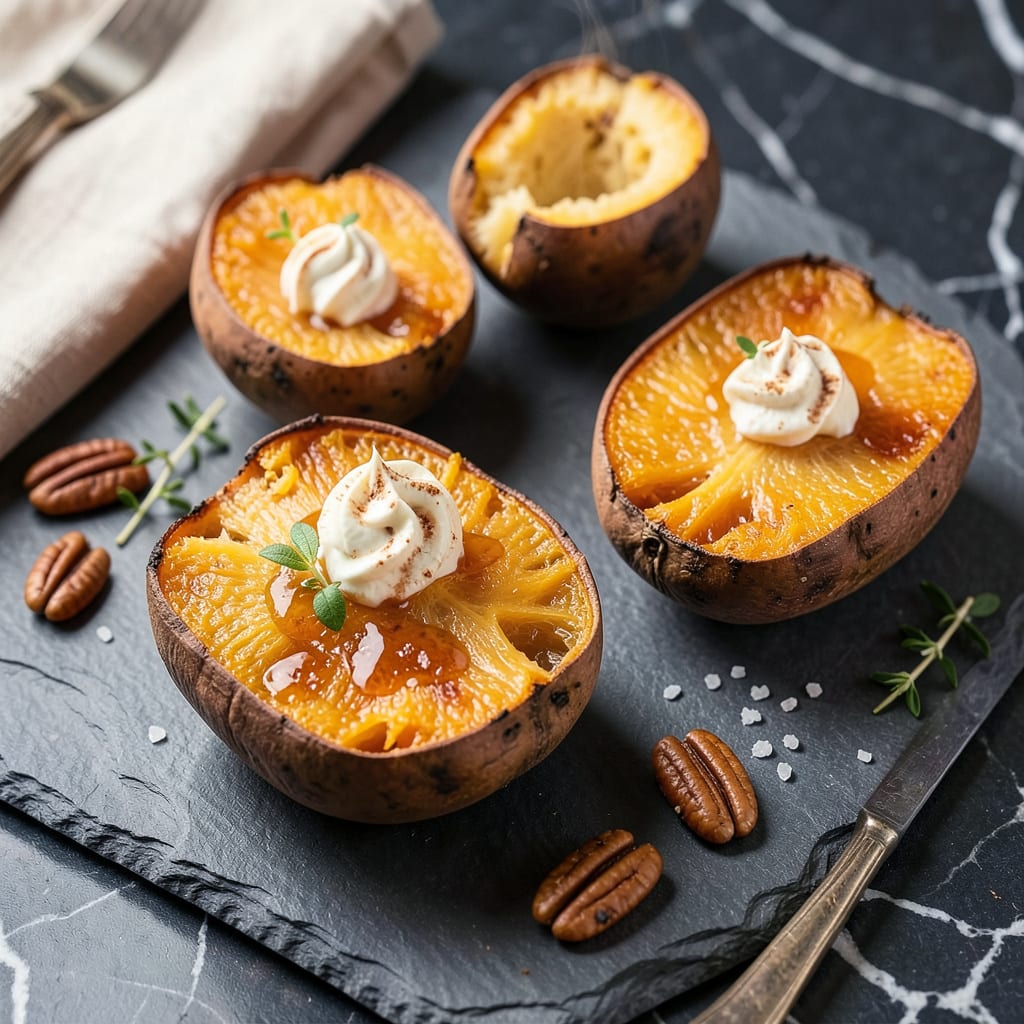
Preheat oven to 425°F, scrub sweet potatoes, prick with a fork, and bake for 45-60 minutes until tender. Optional: rub with olive oil and salt before baking for extra flavor.
This method transforms ordinary sweet potatoes into caramelized, tender delights by leveraging the oven’s dry heat. 🔥 The high temperature triggers the Maillard reaction, turning natural sugars into rich, complex flavors while maintaining a fluffy interior. I’ve found that pricking the skin prevents steam buildup, avoiding those messy kitchen explosions. For even better results, choose uniformly sized potatoes—they’ll cook more consistently, ensuring no underdone centers or over-browned skins.
💡 In This Article
- Why Baking Temperature and Time Matter for Sweet Potatoes
- Toppings and Serving Ideas for Baked Sweet Potatoes
Why Baking Temperature and Time Matter for Sweet Potatoes
The ideal 425°F oven temperature isn’t arbitrary—it’s the sweet spot where sweet potatoes transform. At this heat, the starches in the potato break down into simple sugars through a process called gelatinization. This creates that signature tender, almost custard-like interior.
Lower temperatures (like 350°F) take longer and often result in a drier, mealier texture because the starch conversion happens too slowly.
Here’s where the magic happens: the Maillard reaction kicks in at temperatures above 300°F. This chemical process between amino acids and reducing sugars gives baked sweet potatoes their deep, caramelized flavor and golden-brown skin. 🔥 A 425°F oven ensures this reaction occurs efficiently while cooking the potato through in 45-60 minutes.
Larger potatoes (over 12 oz) may need the full hour, while smaller ones (8 oz) could be done in 45 minutes.
Pricking the skin serves a critical purpose beyond preventing explosions. Those tiny holes allow steam to escape gradually, which prevents the potato from becoming waterlogged. Without them, moisture builds up inside, creating a soggy interior instead of that perfect fluffy texture.
The fork holes also help heat penetrate more evenly, reducing the risk of uneven cooking where the center remains hard while the edges over-soften.
Adding olive oil and salt before baking isn’t just for flavor—it creates a micro-thin barrier that helps conduct heat more evenly. The oil’s fat molecules interact with the potato’s surface starches, promoting better browning. Salt draws out surface moisture initially, which then evaporates in the oven, leaving behind a crispier skin.
This technique works particularly well with orange-fleshed varieties like Beauregard or Jewel, which have higher sugar content.
For consistently perfect results, place potatoes directly on the oven rack rather than a baking sheet. This allows hot air to circulate completely around each potato, ensuring even cooking and better caramelization. The metal rack also conducts heat more efficiently than a glass or ceramic dish.
If you must use a pan, choose a wire rack set inside a sheet tray to maintain that all-important airflow.
Timing becomes more predictable when you select potatoes of similar size. A 1-pound sweet potato typically needs about 1 hour, while a ½-pound one might finish in 45 minutes. The doneness test is simple: insert a thin knife—it should slide in effortlessly with no resistance.
Overbaking by even 10 minutes can turn those beautiful caramelized sugars bitter, so keep an eye on them toward the end.
What most people don’t realize is that sweet potatoes continue cooking slightly after you remove them from the oven. This carryover cooking means you should pull them out when they’re just shy of perfect doneness. Let them rest for 5-10 minutes before serving—the interior will finish setting up, and the flavors will meld beautifully. ✨

- BBQ Sausage Recipe Oven: Smoky Depth Without the Grill - September 28, 2026
- BBQ Chicken Bowl Recipe Rice: Smoky Sweetness Over Fluffy Grains - September 28, 2026
- Beef Cutlet Recipe Ideas: Crispy Breaded Patties With Bold Seasonings - September 28, 2026