
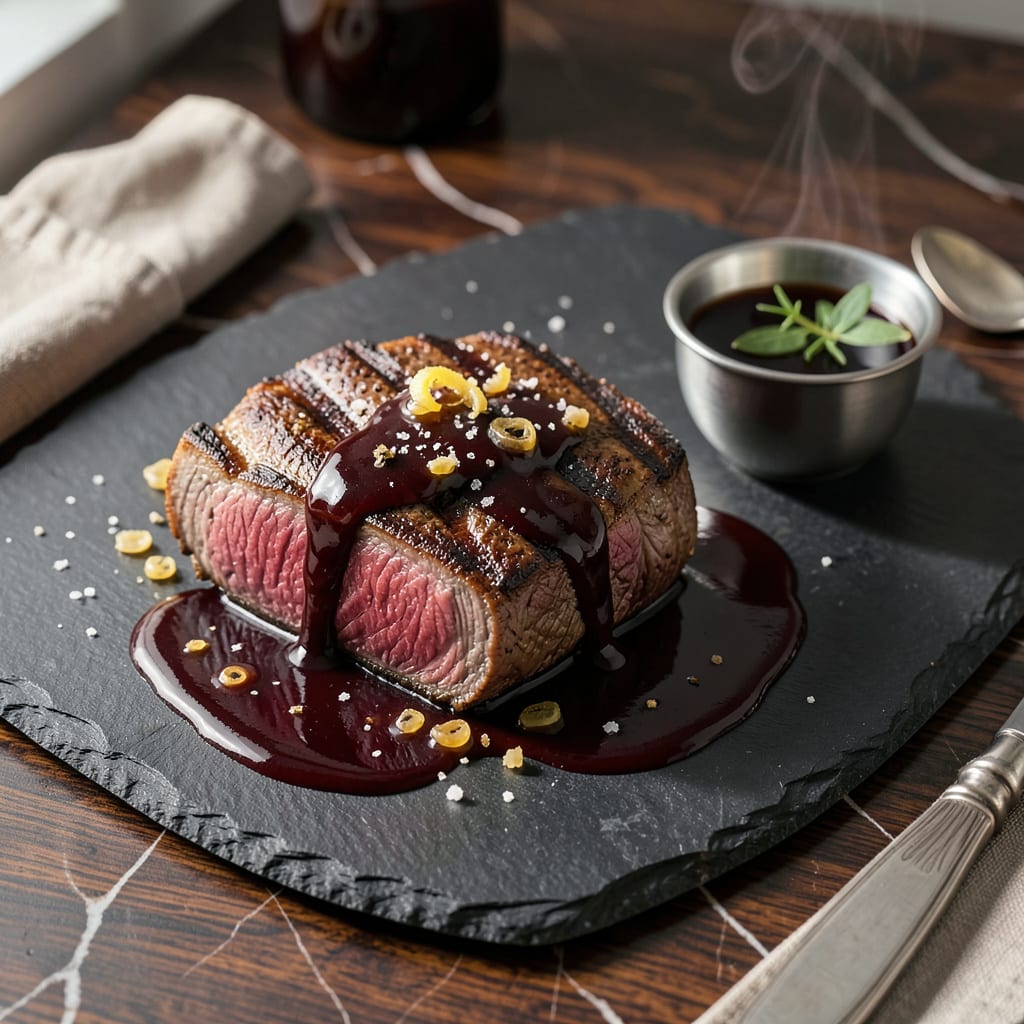
Bordelaise sauce is a rich French classic made with dry red wine, bone marrow, shallots, beef stock, and herbs. Reduce wine and stock by half, whisk in cold butter for a velvety finish, then strain for smooth texture.
This sauce represents the essence of French reduction techniques, where patience transforms simple ingredients into something extraordinary. The dry red wine isn’t just for flavor—it’s the backbone that develops complexity as it reduces, while the bone marrow adds a luxurious depth you can’t replicate with butter alone. 🔥
What sets bordelaise apart is its balance of acidity and richness. The shallots mellow during cooking, adding subtle sweetness without overpowering, while the final butter emulsion creates that signature silky mouthfeel. I’ve found the straining step crucial—it removes any graininess from the reduced stock, ensuring that perfect restaurant-quality texture. ✨
💡 In This Article
- Authentic Bordelaise Sauce Ingredients and Their Roles
- Step-by-Step Technique for Perfect Bordelaise Sauce
Authentic Bordelaise Sauce Ingredients and Their Roles
The dry red wine isn’t just about flavor—it’s the chemical foundation. As the wine reduces by 75-80%, alcohol evaporates while phenolic compounds concentrate, creating that signature depth. A full-bodied Cabernet Sauvignon or Merlot works best because their tannins break down into complex flavor molecules during reduction.
White wine lacks these tannins, which is why it can’t replicate the same rich, slightly astringent backbone.
Bone marrow contributes 15-20% fat content that emulsifies during cooking, adding unmatched richness. Unlike butter (which is 80% fat), marrow contains collagen that melts into gelatin at 160°F, giving the sauce body without heaviness. Shallots (not onions) are key because their 1% pyruvic acid content caramelizes faster, creating sweet, aromatic compounds without bitterness.
The difference is noticeable—shallots add delicate complexity where onions would overpower.
The beef stock reduction is where the magic happens. As it simmers for 20-25 minutes, glutamates from the bones intensify through the Maillard reaction, creating that deep umami foundation. Herbs like thyme and bay leaf add terpenes that bloom in fat, while black peppercorns release piperine—a compound that actually enhances flavor perception.
This is why fresh herbs matter more than you’d think.
Cold butter isn’t just for texture—it’s a temperature control mechanism. When you whisk in 1-2 tablespoons per 1/2 cup liquid at 140°F, the butter’s milk solids act as natural emulsifiers. The final straining through a fine-mesh sieve removes any coagulated proteins, ensuring that velvety consistency.
What most home cooks miss is that this step also aerates the sauce slightly, enhancing its mouthfeel. ✨
Here’s what’s actually happening during reduction: Water evaporates first (212°F), then alcohol (173°F), leaving behind concentrated flavor compounds. The shallots’ sulfur compounds transform into sweet thiosulfinates, while the wine’s malic acid softens into lactic acid.
This chemical dance is why proper timing matters—reduce too fast and you’ll burn the sugars; too slow and you lose volatile aromatics.
Consider these ingredient ratios for balance:
- Wine-to-stock ratio: 1:1 by volume ensures proper acidity without overwhelming
- Marrow quantity: 2-3 tablespoons per cup of liquid—enough for richness without greasiness
- Butter finish: 10-15% of total volume creates emulsion without breaking
The science behind the butter finish involves creating a temporary emulsion where fat droplets are suspended in the water-based reduction. This only works if your reduction is hot enough to melt the butter but not so hot it breaks the emulsion (160-180°F is ideal).
The straining step then removes any destabilized fat globules, guaranteeing that restaurant-quality sheen. 💫

- BBQ Sausage Recipe Oven: Smoky Depth Without the Grill - September 28, 2026
- BBQ Chicken Bowl Recipe Rice: Smoky Sweetness Over Fluffy Grains - September 28, 2026
- Beef Cutlet Recipe Ideas: Crispy Breaded Patties With Bold Seasonings - September 28, 2026