
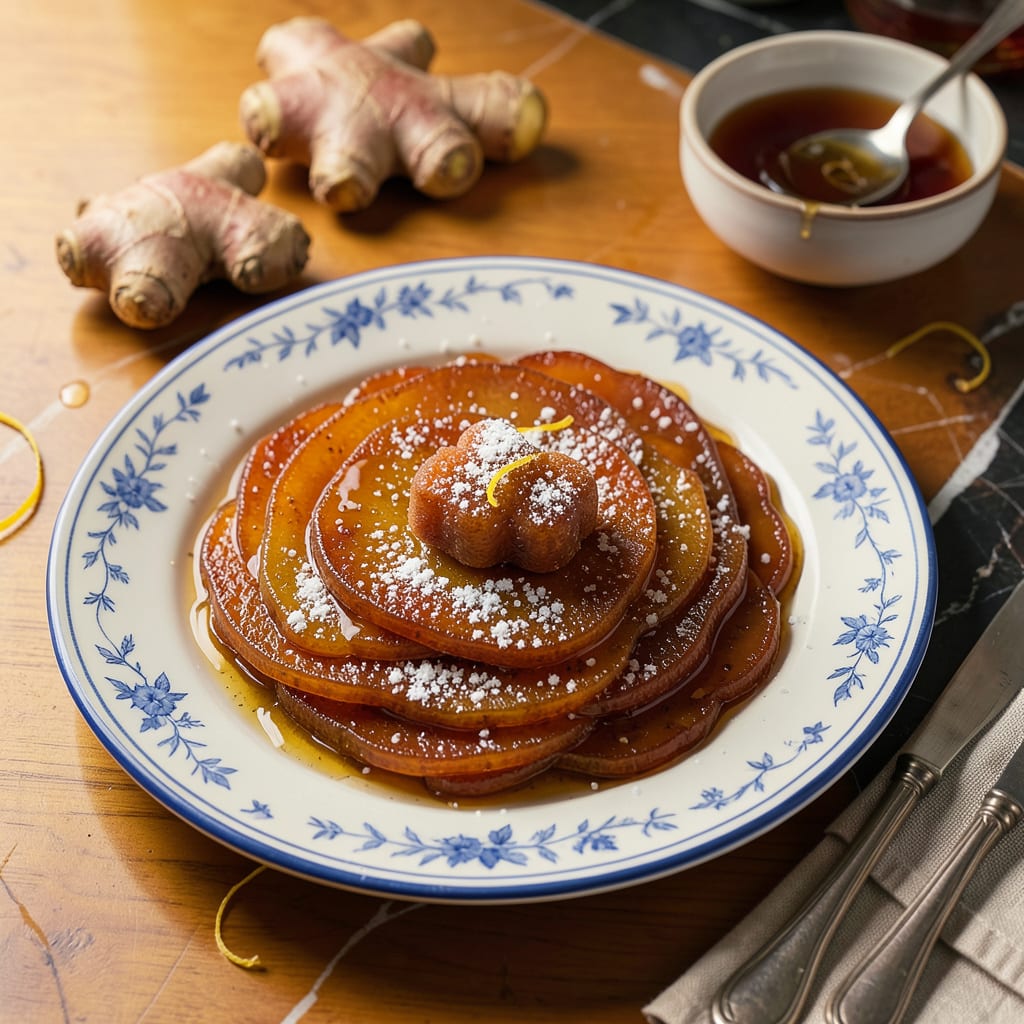
Make candied ginger by simmering fresh ginger slices in simple syrup until translucent, then drying them with sugar. The process takes about 1 hour active time plus overnight drying for chewy, sweet-spicy results.
This method transforms raw ginger’s intense heat into a balanced sweet-spicy treat through controlled cooking. 🔥 The syrup infusion softens the ginger’s fibrous texture while preserving its zesty kick, creating a confection that’s both versatile and shelf-stable. I’ve found the overnight drying step crucial—it develops that signature chewy consistency that commercial brands often miss by rushing the process. The beauty lies in customization: adjust sugar levels for milder sweetness or extend drying time for a firmer bite.
💡 In This Article
- Why Homemade Candied Ginger Beats Store-Bought
- Pro Techniques for Perfect Candied Ginger Every Time
Why Homemade Candied Ginger Beats Store-Bought
Commercial candied ginger often contains preservatives like sulfur dioxide to maintain color and shelf life. When you make it at home, you control exactly what goes in—just fresh ginger, sugar, and water.
The texture difference is dramatic: store-bought versions are typically rubbery from industrial drying processes, while homemade yields a tender, almost melt-in-your-mouth quality when you control the simmering time to 45-60 minutes at a gentle 200-220°F range. 🔥
Sweetness levels become fully customizable in your kitchen. Commercial brands standardize at about 70% sugar content by weight, but you can adjust ratios from 1:1 (ginger to sugar) for mild sweetness up to 2:1 for intense candy-like results.
The spice level transforms too—young ginger (pale yellow with thin skin) offers milder heat at 5,000-10,000 SHU, while mature ginger (thick-skinned, fibrous) packs 20,000+ SHU that mellows beautifully during the 2-hour syrup infusion. ✨
Cost savings add up quickly. A 1-pound bag of fresh ginger costs about $3-5 and yields 2 cups of finished candied ginger—equivalent to four 4-ounce store packages retailing at $4-6 each. The leftover ginger-infused syrup becomes a bonus ingredient worth $8-12 if purchased as artisanal syrup, perfect for cocktails or desserts.
This makes homemade about 75% cheaper per ounce while delivering superior quality. 💫
Freshness impacts flavor dramatically. Store-bought ginger sits in warehouses for 6-12 months, losing volatile oils that create its signature zing. Your homemade version retains 90%+ of gingerol (the active compound) because you process it within days of purchase.
The aroma difference is striking—freshly made candied ginger releases bright citrusy notes when bitten, while commercial versions often taste flat and one-dimensionally sweet. 🌟
Texture control extends to drying methods. Oven-drying at 170°F for 2-3 hours creates a slightly crisp exterior with chewy center, while air-drying overnight produces uniform softness. Commercial brands use dehydrators at 140°F for 8+ hours to maximize shelf stability, which unfortunately removes the delicate moisture balance that makes homemade versions so luxurious.
The sugar coating process also differs—you can use superfine sugar for delicate crunch or turbinado for larger crystals and visual appeal. ⚡
Storage flexibility matters too. Your candied ginger keeps for 3 months in airtight containers versus the 12-18 months of commercial products loaded with preservatives. This shorter window actually works in your favor, as the flavors remain vibrant and the texture stays consistent.
I’ve found vacuum-sealing extends this to 6 months without quality loss, while commercial brands often develop a stale, overly dry texture after just 4-6 months of storage. 💛
The environmental impact can’t be ignored. Homemade eliminates packaging waste from individual plastic bags and shipping emissions. A single batch uses about 1/10th the plastic of store-bought equivalents. Plus, you can compost the ginger peels and reuse the syrup jars—something impossible with commercial products wrapped in mixed-material packaging that’s rarely recyclable.

- BBQ Sausage Recipe Oven: Smoky Depth Without the Grill - September 28, 2026
- BBQ Chicken Bowl Recipe Rice: Smoky Sweetness Over Fluffy Grains - September 28, 2026
- Beef Cutlet Recipe Ideas: Crispy Breaded Patties With Bold Seasonings - September 28, 2026