
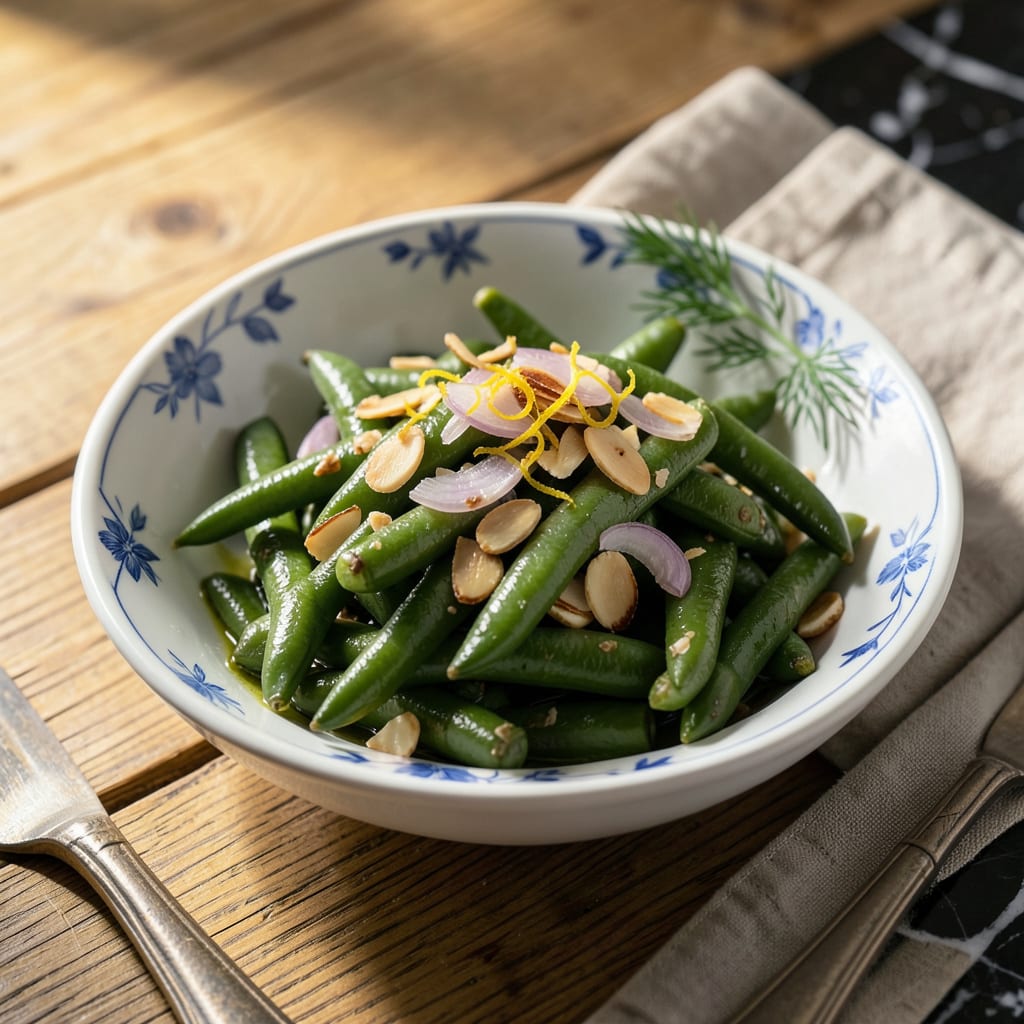
Transform canned green beans by sautéing with garlic, butter, and a splash of lemon juice for 5-7 minutes. Add bacon, onions, or herbs like thyme for extra flavor. Simmer with broth for a richer taste.
Canned green beans often get a bad rap for being mushy or bland, but they’re actually a blank canvas for bold flavors. 🔥 The key is balancing textures and tastes—high-heat sautéing caramelizes aromatics while a splash of acidity brightens the dish. I love using this method for busy weeknights because it turns a pantry staple into something restaurant-worthy in under 10 minutes.
What’s great about this approach is how adaptable it is. Swap butter for olive oil for a lighter touch, or add smoked paprika for depth. The broth trick is my secret for making them taste like they’ve simmered all day. It’s all about layering flavors to mask any tinny aftertaste while keeping prep effortless. ✨
💡 In This Article
- Why Canned Green Beans Need Flavor Boosts
- 5 Quick Canned Green Bean Recipes for Any Meal
Why Canned Green Beans Need Flavor Boosts
The canning process fundamentally alters green beans through extreme heat and pressure. At temperatures reaching 240-250°F, the cell walls break down, releasing pectin that creates that familiar soft texture. This also causes water-soluble vitamins like vitamin C to leach into the brine—canned beans retain only about 30% of their original vitamin C compared to fresh.
The high heat also converts natural sugars into more complex compounds, muting the bright, grassy notes you’d expect from fresh beans.
Sodium plays a huge role in the perceived blandness. Most canned varieties contain 300-500mg of sodium per ½ cup serving—that’s about 20% of your daily value in just a small portion. This salt content actually suppresses other flavors by overwhelming your taste buds, creating a one-note salty experience.
The liquid in the can (often water with salt and calcium chloride) further dilutes any remaining natural flavors, which is why draining and rinsing is your first defense against that tinny taste.
Here’s what’s fascinating about the texture: The canning process causes the beans to absorb about 10-15% more water than their fresh weight. This makes them prone to mushiness when reheated, but also creates opportunities.
High-heat cooking methods like sautéing or broiling can drive off excess moisture, concentrating flavors and creating desirable browning through the Maillard reaction. That’s why a quick 5-7 minute sauté transforms them from soggy to satisfyingly tender-crisp.
Nutritionally, canned beans hold some advantages over fresh. The canning process makes certain nutrients like lycopene (in tomato-based varieties) more bioavailable. They also retain most of their fiber (2g per ½ cup) and plant-based protein (1g per ½ cup).
The tradeoff comes in vitamin loss—fresh beans have about 3 times more vitamin K and twice the folate of their canned counterparts. This makes flavor enhancement not just about taste, but about creating a dish that feels nutritionally complete.
The real game-changer is understanding how to work with their altered structure. Their softness becomes an asset when you want them to absorb bold flavors quickly. A splash of acid (like lemon juice or vinegar) doesn’t just add brightness—it actually helps break down remaining cell structures, allowing seasonings to penetrate deeper.
This is why acid-forward dressings or a finish with fresh herbs works so well to revive their natural appeal.
Consider these key factors when upgrading canned beans:
- Salt balance: Rinse thoroughly to remove 40-60% of sodium without losing texture
- Moisture control: Pat dry before cooking to achieve proper browning at 375°F+
- Flavor layering: Start with fat (butter/oil), then aromatics, then acid to build complexity
- Temperature shock: Quick high heat preserves structure better than slow simmering
What most people don’t realize is that canned beans actually have a leg up for certain dishes. Their softness makes them perfect for creamy casseroles or quick stir-fries where you want the vegetables to melt into the sauce. The key is matching your cooking method to their altered physical properties rather than fighting against them.
✨

- BBQ Sausage Recipe Oven: Smoky Depth Without the Grill - September 28, 2026
- BBQ Chicken Bowl Recipe Rice: Smoky Sweetness Over Fluffy Grains - September 28, 2026
- Beef Cutlet Recipe Ideas: Crispy Breaded Patties With Bold Seasonings - September 28, 2026