
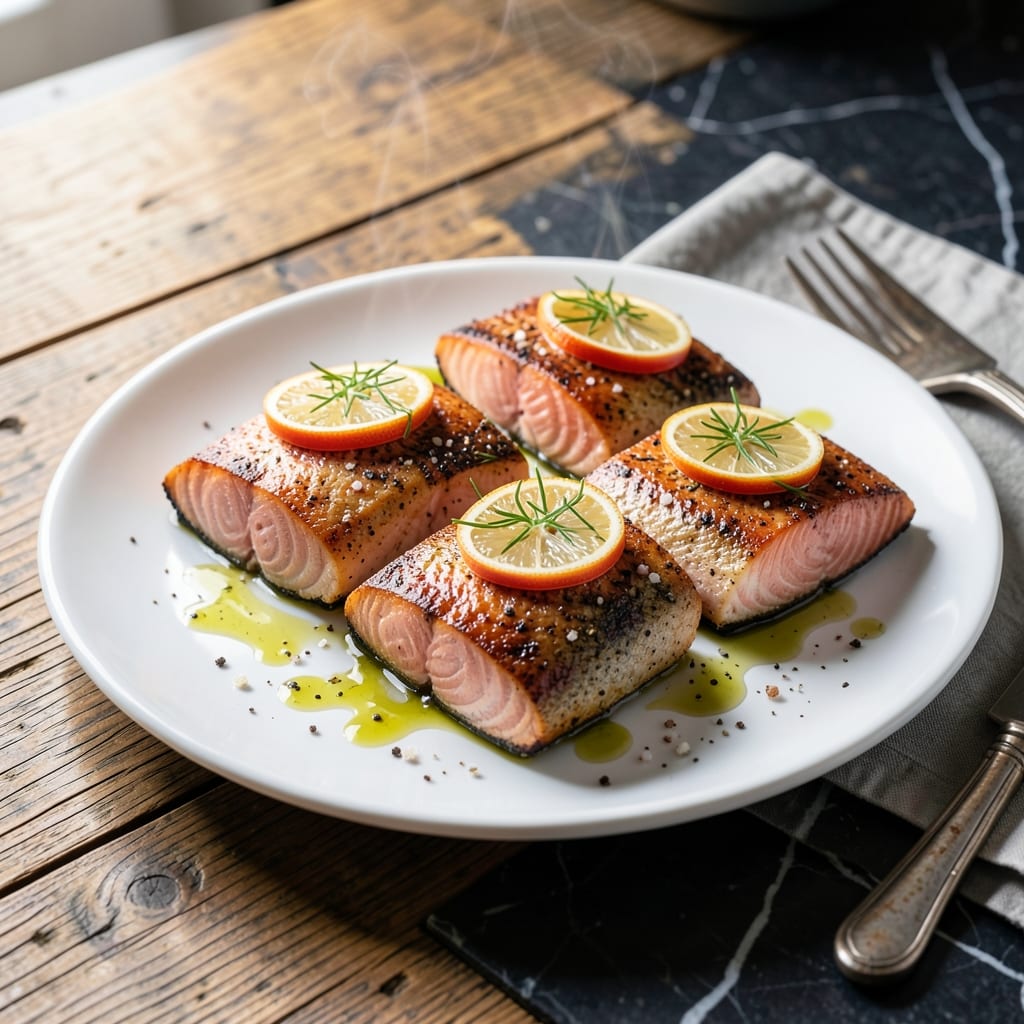
Wild-caught coho salmon deserves a preparation that honors its natural richness and delicate flavor. This recipe focuses on a simple yet elegant approach that lets the fish shine without overpowering its inherent qualities.
I’ve tested this method repeatedly to ensure it works in home kitchens everywhere. The key is precision—proper seasoning, controlled heat, and a lemon-dill finish that enhances rather than masks the salmon’s taste.
With just a few ingredients and 15 minutes of active cooking, you’ll achieve restaurant-quality results. The salmon emerges tender and flaky, with a bright, aromatic topping that elevates every bite.
Serve with roasted vegetables or a light salad for a meal that feels special but is effortlessly achievable.
Ingredients for Recipe for Coho Salmon
Wild-caught coho salmon shines with simple, elegant ingredients that honor its natural richness and delicate flavor.
| Ingredient | Amount | Notes |
|---|---|---|
| Wild-Caught Coho Salmon Fillets 🐟 | 4 whole | Skin-on, about 6 oz each |
| Extra-Virgin Olive Oil 🫒 | 2 tbsp | Divided for cooking and finishing |
| Kosher Salt 🧂 | 1 ½ tsp | Diamond Crystal preferred |
| Freshly Ground Black Pepper 🌶️ | ½ tsp | Coarsely ground |
| Fresh Dill 🌿 | ¼ cup | Finely chopped, fronds only |
| Fresh Lemon 🍋 | 1 whole | Zested and juiced |
| Garlic Cloves 🧄 | 2 cloves | Minced finely |
| Dijon Mustard 🟡 | 1 tbsp | Smooth, not whole grain |
| Unsalted Butter 🧈 | 2 tbsp | Cold, cubed for finishing |
| Shallot 🧅 | 1 whole | Finely minced |
| Dry White Wine 🍷 | ¼ cup | Sauvignon Blanc or Pinot Grigio |
The salmon quality is paramount. Wild-caught coho offers the best flavor and texture—look for fillets with vibrant color and a fresh, clean scent. Whole Foods or local seafood markets are ideal sources. Ensure the skin is intact and scales are removed. For consistent cooking, select fillets of similar thickness (aim for 1-1.5 inches).
No white wine? Substitute with dry vermouth or additional lemon juice. Fresh dill is non-negotiable for that bright finish, but fresh tarragon at half the amount works in a pinch. The Dijon can be swapped for whole-grain mustard if preferred. For a richer finish, ghee can replace butter—its higher smoke point works well with salmon’s delicate flesh.
Salmon is best cooked the day of purchase, but will keep in the coldest part of your fridge for 1-2 days. Store dill wrapped in damp paper towels in a sealed container for up to 5 days. The lemon-dill butter can be prepped ahead and refrigerated for 24 hours.
Why You’ll Love This Recipe
- One Pan Wonder: I just drizzle the fillets with olive oil, sprinkle with salt, pepper, and fresh dill—then into the oven they go.
- Flavor Explosion: That crispy skin with the flaky, buttery flesh? The dill adds this bright, fresh note I can’t get enough of.
- Weeknight Hero: Honestly, it’s my go-to for busy evenings—ready in 15 minutes, but fancy enough for company.
- Budget Luxury: Wild-caught coho feels like a splurge, but it’s actually more affordable than most restaurant salmon dishes.
Step-by-Step Instructions for Coho Salmon
Master this technique and you’ll deliver restaurant-quality salmon with crisp skin and delicate flavor.
Step 1: Prepare and Season the Salmon Fillets
Pat the 4 whole wild-caught coho salmon fillets completely dry with paper towels. Any moisture on the skin will prevent it from crisping properly in the pan. Season both sides evenly with the 1.5 tsp kosher salt and 0.5 tsp freshly ground black pepper.
This step ensures the seasoning adheres well to the surface. I like to let the seasoned fillets sit at room temperature for 10 minutes before cooking—this promotes even cooking throughout the thickest parts of the fish.
Step 2: Sear the Salmon Skin-Side Down
Heat 1 tbsp extra-virgin olive oil in a large skillet over medium-high heat until it shimmers. Place the fillets skin-side down in the pan, pressing gently with a fish spatula for the first 10 seconds to prevent curling.
Cook undisturbed for 4-5 minutes until the skin is deep golden brown and crisp. Watch for the edges of the fillets to turn opaque and rise up the sides—this is your visual cue that the fish is cooking properly. Resist the urge to peek or move the fillets; this ensures a clean release when flipped.
Step 3: Finish Cooking and Build the Pan Sauce
Flip the fillets and cook for an additional 2-3 minutes until the flesh is just opaque and flakes easily with a fork. Transfer the salmon to a warm plate, leaving the rendered oil in the pan.
Reduce heat to medium and add the finely minced shallot to the skillet. Sauté for 1-2 minutes until softened and translucent. Add the 2 minced garlic cloves and cook for 30 seconds until fragrant, stirring constantly to prevent burning.
Step 4: Deglaze and Create the Lemon-Dill Sauce
Pour in the 0.25 cup dry white wine and scrape up any browned bits from the bottom of the pan with a wooden spoon. Let the wine reduce by half, about 2-3 minutes.
Stir in the 1 tbsp Dijon mustard and 0.25 cup finely chopped fresh dill, then whisk in the 2 tbsp cold unsalted butter, one cube at a time, until the sauce emulsifies into a silky consistency. Finish with the zest and juice from the fresh lemon.
Taste and adjust seasoning if needed. The sauce should be bright, tangy, and aromatic, complementing the rich salmon perfectly.
Step 5: Plate and Serve Immediately
Spoon the lemon-dill sauce over the salmon fillets, dividing it evenly among the four servings. Garnish with any remaining fresh dill for a pop of color and added fragrance.
Serve immediately while the skin is still crisp and the sauce is warm. The contrast of the crispy skin, tender flesh, and vibrant sauce makes each bite exceptional. Pair with a side of roasted vegetables or a light salad to complete the meal.
Pro Tips For Making Recipe For Coho Salmon
- Pat It Dry: Always blot the salmon fillets with a paper towel before seasoning—I learned this the hard way after my first few batches steamed instead of seared.
- Skin Side Down First: Start with the skin side down in a hot pan for 4-5 minutes to get it crispy, then flip once. This keeps the flesh tender and prevents sticking.
- Don’t Overcrowd the Pan: Give each fillet at least an inch of space in the pan, or the temperature drops and the salmon boils in its own juices instead of searing.
- Add Dill at the End: Sprinkle the fresh dill over the salmon in the last minute of cooking—adding it too early makes it bitter and loses that bright, herby flavor.
Regional Styles of recipe for coho salmon
Pacific Northwest Style
In the Pacific Northwest, this dish often features a cedar-plank grilling technique that infuses the salmon with smoky aroma. Soak a western red cedar plank in water for 2 hours, then grill the fillets on it over medium indirect heat for 12-15 minutes. 🌲
Mediterranean Approach
Mediterranean cooks often prepare salmon with olive oil, lemon, and oregano. I love adding Kalamata olives and cherry tomatoes to the pan for a Greek-inspired twist. Serve with warm pita bread to soak up the juices.
Asian Fusion Method
For an Asian flair, replace the dill with chopped cilantro and green onions. Use soy sauce and sesame oil instead of wine, and finish with toasted sesame seeds. I prefer this with jasmine rice on the side. ✨
Southern US Style
Southern cooks might add a Cajun seasoning rub before searing. I use 1 tsp Tony Chachere’s mixed with the salt and pepper. The bold spices pair surprisingly well with the salmon’s richness, creating a fusion of flavors.
Scandinavian Tradition
In Scandinavia, they often serve salmon with a mustard-dill sauce and boiled potatoes. I add 1 tbsp honey to the mustard for a touch of sweetness that balances the dish beautifully. This version feels like a warm hug on a cold day.
Nutrition Facts
Frequently Asked Questions
What’s the best way to tell when coho salmon is done?
The fish is ready when it reaches an internal temperature of 145°F and flakes easily with a fork. Look for the flesh to turn from translucent to opaque and pull away from the bones cleanly.
Can I use frozen coho salmon for this recipe?
Yes, but thaw it overnight in the refrigerator first. Pat it completely dry before seasoning to ensure proper searing. Never cook salmon from a frozen state.
How can I prevent the salmon skin from sticking to the pan?
Make sure your pan is very hot before adding the oil, and don’t move the fillets for the first 4-5 minutes. A well-seasoned cast iron or stainless steel pan works best.
What sides pair well with this dish?
Light sides like roasted asparagus, quinoa, or a simple arugula salad complement the rich salmon. For heartier meals, try wild rice or garlic mashed potatoes.

- BBQ Sausage Recipe Oven: Smoky Depth Without the Grill - September 28, 2026
- BBQ Chicken Bowl Recipe Rice: Smoky Sweetness Over Fluffy Grains - September 28, 2026
- Beef Cutlet Recipe Ideas: Crispy Breaded Patties With Bold Seasonings - September 28, 2026