
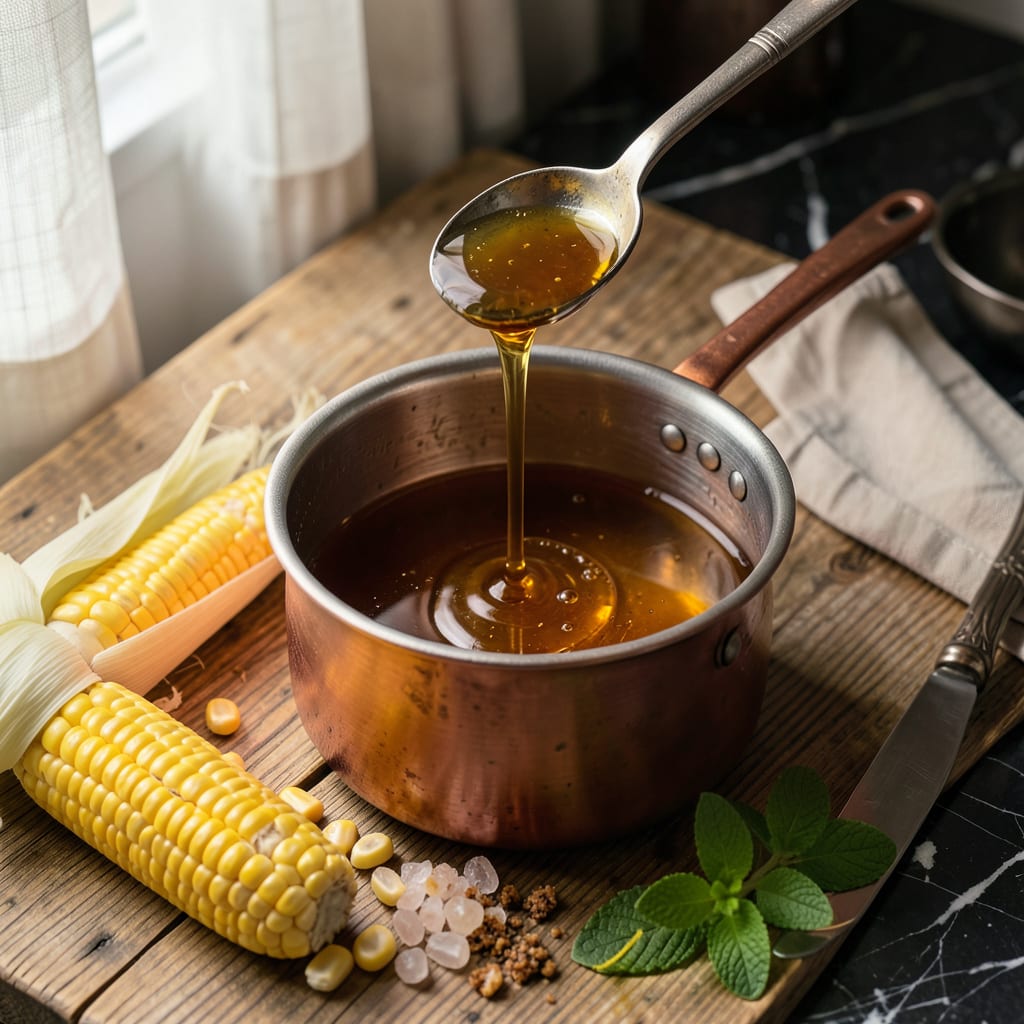
Make homemade corn syrup by boiling 2 cups sugar with ¾ cup water and ¼ teaspoon cream of tartar until thickened (about 5-7 minutes). Cool before using as a 1:1 substitute for store-bought versions in recipes.
This three-ingredient method transforms basic granulated sugar into a golden syrup with the same viscosity and moisture-retaining properties as commercial corn syrup. 🔥 The science lies in controlled heat breaking down sucrose molecules while the cream of tartar prevents unwanted sugar crystallization. I’ve found this works particularly well in recipes where you need that classic sticky texture without the processed aftertaste of store-bought syrups.
What makes this approach so practical is its versatility across different cooking applications. From creating glossy glazes to keeping baked goods moist, this homemade version delivers consistent results. The 230-240°F temperature range is critical—it ensures proper inversion of sugars while maintaining that signature syrupy consistency you’d expect from traditional corn syrup.
💡 In This Article
- How Sugar Transforms Into Corn Syrup Substitute
- Best Uses for Homemade Corn Syrup in Recipes
How Sugar Transforms Into Corn Syrup Substitute
The magic happens when heat breaks down sucrose (table sugar) into its simpler components: glucose and fructose. This process, called inversion, creates a syrup that resists crystallization and mimics commercial corn syrup’s properties. The cream of tartar acts as an acid catalyst, accelerating this breakdown while preventing sugar crystals from reforming.
Without it, you’d end up with grainy sugar clusters instead of smooth syrup.
Temperature control is everything. The ideal range of 230-240°F ensures complete inversion while maintaining the right viscosity. Below 225°F, the syrup stays too thin; above 245°F, it becomes too thick and risks burning. A candy thermometer is your best friend here—what looks like a gentle simmer can actually be 10-15°F higher than you think.
The transformation becomes visible as bubbles change from large and foamy to small and tight.
What you’re creating is essentially an invert sugar syrup, which has three key advantages over regular sugar solutions: it’s more soluble, retains moisture better, and stays liquid at room temperature. This explains why commercial corn syrup is so popular in baking—it keeps cookies soft and prevents frosting from developing that dreaded sugar crust.
Your homemade version will have slightly more caramel notes due to the Maillard reaction at these temperatures.
The cream of tartar does double duty. Beyond preventing crystallization, its slight acidity (pH ~3) helps stabilize the inverted sugars. Commercial corn syrup achieves similar stability through enzymatic processing, but your stovetop method gets 80% of the way there with just ¼ teaspoon of this pantry staple.
The result is a syrup that will keep its consistency for up to 2 months when refrigerated in an airtight container.
You’ll notice the color deepens from clear to golden amber during cooking—that’s the Maillard reaction creating new flavor compounds. Unlike commercial corn syrup which is flavor-neutral, your homemade version will have subtle caramel undertones. This actually works to your advantage in recipes like pecan pie or caramel sauces, adding depth without overpowering other flavors.
Here’s what’s actually happening at the molecular level: the heat energy breaks the glycosidic bonds between glucose and fructose molecules in sucrose. The cream of tartar (potassium bitartrate) donates hydrogen ions that help stabilize these now-separate sugar molecules.
This creates a syrup with about 70% sugar concentration—the same as light corn syrup—giving you that perfect balance between sweetness and pourability. ✨

- BBQ Sausage Recipe Oven: Smoky Depth Without the Grill - September 28, 2026
- BBQ Chicken Bowl Recipe Rice: Smoky Sweetness Over Fluffy Grains - September 28, 2026
- Beef Cutlet Recipe Ideas: Crispy Breaded Patties With Bold Seasonings - September 28, 2026