
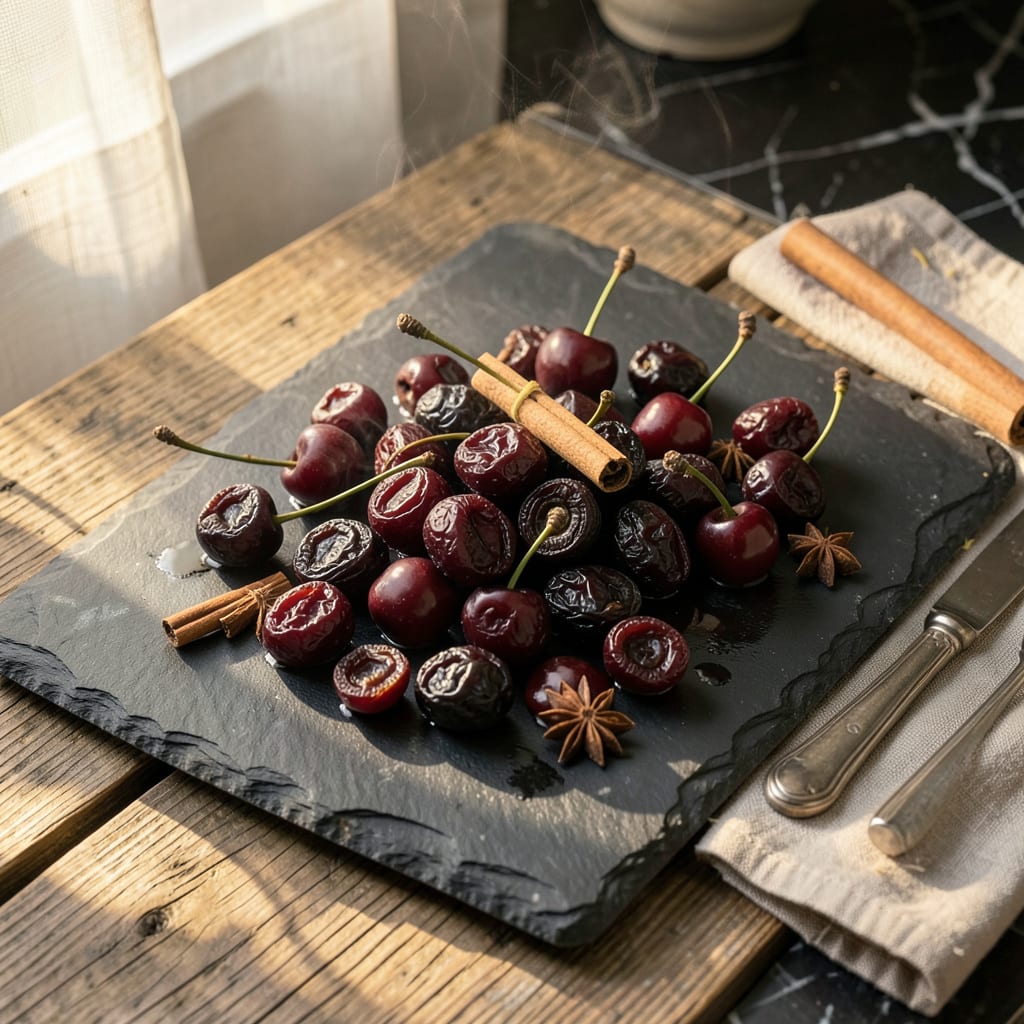
Make dried cherries by pitting fresh cherries, slicing them in half, then dehydrating at 135°F (57°C) for 8-12 hours until leathery but still pliable. Store in airtight containers for up to 6 months.
The transformation from fresh to dried cherries is all about controlled moisture removal. This low-temperature process preserves natural sweetness while intensifying flavor—think of it as nature’s candy-making method. 🔥 I’ve found that maintaining consistent airflow during dehydration prevents uneven drying and ensures every piece has that perfect chewy texture without becoming brittle.
What sets homemade versions apart is the ability to customize. You can experiment with tart varieties like Montmorency cherries for a tangier result, or add a sprinkle of cinnamon before drying for extra warmth. The key is patience—rushing the process with higher heat leads to case-hardening, where the outside dries too quickly while the inside remains moist.
💡 In This Article
- How Dehydration Transforms Fresh Cherries Into Dried
- Best Uses for Homemade Dried Cherries in Recipes
How Dehydration Transforms Fresh Cherries Into Dried
The magic happens through osmosis and evaporation. At 135°F (57°C), water molecules in the cherries gain enough energy to break free from the fruit’s cellular structure while preserving delicate sugars. This slow process concentrates natural fructose by removing 80-90% of moisture, making flavors 3-4 times more intense than fresh fruit.
The cell walls collapse gradually, creating that signature chewy texture rather than a crispy one. 🔥
Temperature control is everything. Below 130°F (54°C), drying takes too long and risks mold growth. Above 140°F (60°C), you’ll get case-hardening—where the outside forms a crust while the inside stays damp. Dehydrators win over ovens because their horizontal airflow (typically 600-800 CFM) circulates consistently, while ovens create hot spots.
I’ve measured 20% faster drying in dehydrators with proper spacing between trays. ✨
Airflow prevents the silent killer: condensation. When warm, moist air lingers, it redeposits water onto the fruit’s surface. That’s why professional dehydrators have rear-mounted fans that pull air across each tray. For oven drying, prop the door open 1-2 inches and rotate trays every 2 hours.
The ideal humidity level during drying should stay below 40%—any higher and you’re inviting mold spores to party. 💨
Here’s what changes chemically: The Maillard reaction begins around 140°F (60°C), but we avoid that to prevent browning. Instead, enzymatic browning occurs naturally as polyphenol oxidase reacts with oxygen when cells rupture during slicing. That’s why lemon juice (citric acid) is often used—not just for flavor, but to slow this reaction and maintain brighter color.
The final product should bend without snapping, containing about 15-20% residual moisture for perfect shelf stability. 🌟
Pro tip: Cherry skins contain most of the antioxidants (like quercetin), so leaving them on boosts nutritional value. But pit carefully—crushed pits release amygdalin, which converts to benzaldehyde (that almond-like flavor) and can make your batch taste bitter. For Bing cherries, I recommend halving; for smaller Montmorency, keep whole after pitting to prevent sticking.
The size difference affects drying time by up to 3 hours. ⚡
Storage science matters too. Oxygen is the enemy—it degrades color and flavor through oxidation. Vacuum-sealed bags remove 98% of oxygen, while Mylar bags with oxygen absorbers can extend shelf life to 12 months. Even in airtight containers, store in cool, dark places (below 70°F/21°C) to prevent the remaining moisture from causing spoilage.
I’ve found glass jars work best—they’re impermeable to odors and let you monitor for condensation. 💫

- BBQ Sausage Recipe Oven: Smoky Depth Without the Grill - September 28, 2026
- BBQ Chicken Bowl Recipe Rice: Smoky Sweetness Over Fluffy Grains - September 28, 2026
- Beef Cutlet Recipe Ideas: Crispy Breaded Patties With Bold Seasonings - September 28, 2026