
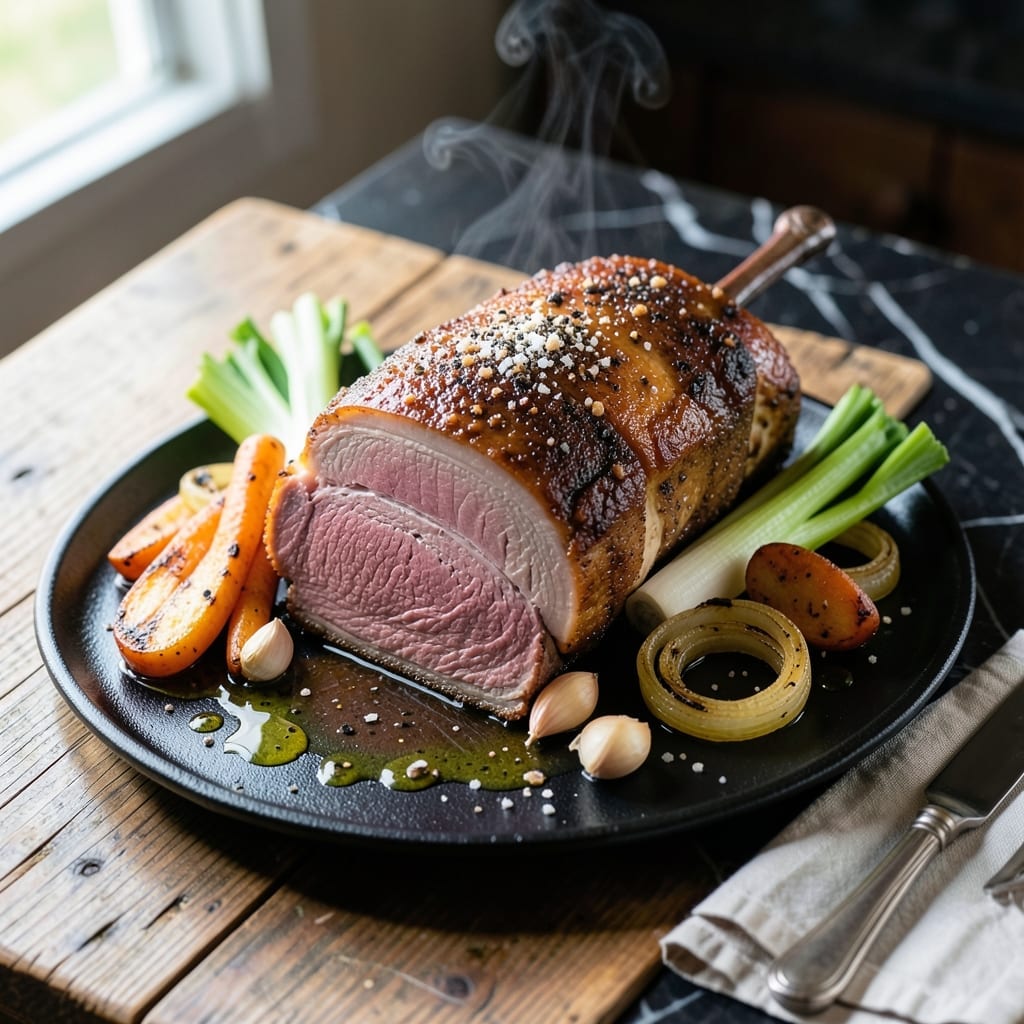
Wild game deserves respect, and this slow-braised method transforms elk into a tender, fall-apart masterpiece. After years of testing tough cuts, I’ve found the perfect balance of time and temperature to coax out its natural richness.
The key is patience. Low heat and a flavorful liquid break down the muscle fibers, while aromatic herbs and vegetables build depth. This approach works reliably, whether you’re using a Dutch oven or slow cooker.
What emerges is meat so tender it nearly dissolves, bathed in a savory sauce that begs for crusty bread. The process is straightforward, but the results taste like a celebration of the hunt.
Perfect for Sunday suppers or special occasions, this dish proves that wild game can be as comforting as any farm-raised roast.
Ingredients for Recipe for Elk Roast
A handful of hearty ingredients transform this wild game into a showstopper Sunday supper.
| Ingredient | Amount | Notes |
|---|---|---|
| Elk Roast 🦌 | 2 ½ lb | Shoulder or rump, trimmed of fat |
| Olive Oil 🫒 | 2 tbsp | Divided for searing and sauce |
| Yellow Onion 🧅 | 1 whole | Large, roughly chopped |
| Carrots 🥕 | 3 whole | Peeled and cut into chunks |
| Celery Stalks 🌿 | 2 whole | Cut into large pieces |
| Garlic Cloves 🧄 | 5 cloves | Smashed, peeled |
| Red Wine 🍷 | 2 cups | Dry, full-bodied preferred |
| Beef Stock 🥩 | 2 cups | Low-sodium for control |
| Tomato Paste 🍅 | 2 tbsp | For umami depth |
| Fresh Rosemary 🌿 | 2 whole | Sprigs, plus extra for garnish |
| Fresh Thyme 🍃 | 4 whole | Sprigs, tied with twine |
| Bay Leaves 🌿 | 2 whole | Dried, for aromatic base |
| Kosher Salt 🧂 | 1 ½ tsp | Diamond Crystal preferred |
| Black Pepper 🌶️ | 1 tsp | Freshly cracked for best flavor |
| All-Purpose Flour 🌾 | 2 tbsp | For thickening the sauce |
The elk is the star here—shoulder or rump cuts work best because they have the marbling to stay moist. I get mine from local butchers or specialty grocers (ask for the leg or shoulder, not the tenderloin—that’s too lean for braising). If your piece has a thick fat cap, trim it down but don’t go overboard; a little fat adds flavor. The wine? Any bold red you’d drink works (I’m partial to Cabernet or Syrah).
No red wine? Substitute extra beef stock plus 1 tbsp balsamic vinegar for acidity. Out of fresh herbs? Dried at one-third the amount (but fresh really shines here). If tomato paste isn’t handy, a splash of ketchup in a pinch works—just cut the salt. The flour for thickening can be swapped for cornstarch (mix 1 tbsp with 1 tbsp cold water first). Elk can be hard to find? Beef chuck roast is the closest substitute.
This tastes even better the next day—4-5 days in the fridge, or freeze for 3 months. The sauce thickens as it cools, so thin with a splash of stock when reheating. Portion leftovers with the sauce for easy meals all week (it’s great over mashed potatoes or polenta).
Why You’ll Love This Recipe
- I’ll be real: leftovers taste even better the next day, and they freeze perfectly for busy weeks.
- One Pot Meal: I love that everything—elk roast, onions, carrots, celery—goes into one pot and does its thing while I do mine.
- Rich and Earthy: The elk soaks up the olive oil and veggie flavors, giving it this deep, savory taste that’s hard to beat.
- Feeds the Freezer: I’ll be real: leftovers taste even better the next day, and they freeze perfectly for busy weeks.
Step-by-Step Instructions for Elk Roast
Here’s how I transform this lean wild game into a fall-apart tender masterpiece with deep, complex flavors.
Step 1: Sear the Elk Roast to Lock in Flavor
Pat the 2.5 lb elk roast completely dry with paper towels. This is crucial—moisture prevents proper browning. Season all sides aggressively with the 1.5 tsp kosher salt and 1 tsp black pepper. Heat 1 tbsp olive oil in a heavy Dutch oven over medium-high heat until shimmering.
Add the roast and sear undisturbed for 3-4 minutes per side until deeply browned. You’ll know it’s ready to flip when it releases easily from the pan. This creates a flavorful crust that will enrich the braising liquid. Transfer the roast to a plate and set aside.
Step 2: Build the Aromatic Foundation
In the same pot, add the remaining 1 tbsp olive oil. Toss in the roughly chopped yellow onion, chunked carrots, and celery stalks. Cook for 5-6 minutes, stirring occasionally, until the vegetables begin to soften and develop some color.
Add the 5 cloves smashed garlic, 2 tbsp tomato paste, 2 sprigs fresh rosemary, 4 sprigs fresh thyme, and 2 bay leaves. Stir constantly for 1-2 minutes until the tomato paste darkens slightly and coats the vegetables. This step builds layers of umami and herbaceous complexity.
Step 3: Deglaze and Braise to Tender Perfection
Pour in the 2 cups red wine, scraping the browned bits from the bottom of the pot with a wooden spoon. Bring to a simmer and cook for 3-4 minutes until the liquid reduces by about half. This concentrates the wine’s flavor and ensures the alcohol cooks off.
Return the elk roast to the pot. Add the 2 cups beef stock—it should come about halfway up the meat. Bring to a gentle simmer, then reduce heat to low. Cover and braise for 2.5-3 hours, turning the roast every 45 minutes, until the meat is fork-tender and nearly falls apart.
Step 4: Thicken the Sauce and Finish
Remove the roast to a cutting board and tent with foil. Skim any excess fat from the braising liquid, then bring it to a boil over medium heat. In a small bowl, whisk the 2 tbsp all-purpose flour with 2 tbsp of the hot liquid to create a slurry. Stir this into the pot and simmer for 3-4 minutes until thickened.
Taste and adjust seasoning if needed. The sauce should coat the back of a spoon and have a rich, velvety texture. Pour the sauce over the roast and let it rest for 10 minutes before slicing. This allows the juices to redistribute, ensuring every bite is moist and flavorful.
Pro Tips For Making Recipe For Elk Roast
- Sear It Hard: Elk roast needs a hot sear—about 2 tablespoons of olive oil in a screaming-hot pan for 3-4 minutes per side. I learned this the hard way after my first few came out gray and dry.
- Rest the Roast: After pulling it from the oven, give it a solid 15 minutes under foil before slicing. My grandmother swore by this, and she was right: it keeps the juices where they belong.
- Skip the Overcrowding: When browning the onion, carrots, and celery, resist the urge to dump them all in at once. Cook in batches if needed—steam is the enemy of flavor here.
- Use a Meat Thermometer: Elk roast is lean and easy to overcook. Pull it at 130°F for medium-rare, even if it looks underdone—it’ll rise to 140°F while resting. Sounds weird, but it works.
Storing and Reheating This Recipe
Refrigerator Storage
Let your elk roast cool completely before transferring to an airtight container with its braising liquid. I use glass containers for easy reheating. Store in the fridge at 40°F or below for up to 4-5 days. The flavors deepen overnight, making leftovers even more delicious. ❄️
Freezer Storage
For longer storage, portion the roast and sauce into freezer-safe containers or heavy-duty bags. Leave 1 inch headspace for expansion. It freezes beautifully for up to 3 months without losing texture or flavor. I recommend labeling with the date for easy tracking.
Stovetop Reheating
This is my preferred method because it preserves the sauce’s velvety texture. Place the roast and liquid in a pot over medium-low heat. Add ¼ cup beef stock if needed to thin the sauce. Heat gently for 10-15 minutes, stirring occasionally. 🔥
Oven Reheating
Preheat oven to 300°F. Place the roast and sauce in an oven-safe dish, cover with foil, and heat for 20-25 minutes. This method works well for larger portions and helps maintain moisture.
Microwave Reheating
For quick meals, microwave individual portions covered with a damp paper towel. Use 50% power in 1-minute intervals, stirring between each, until heated through to 165°F. Add a splash of water if the sauce seems too thick.
Nutrition Facts
Frequently Asked Questions
What’s the best cut for braising?
Shoulder or rump cuts work best—they have enough marbling to stay moist. Avoid lean tenderloin as it can dry out.
Can I use a slow cooker?
Yes! Sear the roast first, then cook on low for 6-8 hours or high for 4-5 hours. The results will be just as tender.
Why is my roast tough?
It likely didn’t cook long enough. Elk needs at least 2.5-3 hours of braising to break down the muscle fibers.
What can I serve with this?
Mashed potatoes, polenta, or crusty bread soak up the rich sauce perfectly. Roasted root vegetables pair well too.

- BBQ Sausage Recipe Oven: Smoky Depth Without the Grill - September 28, 2026
- BBQ Chicken Bowl Recipe Rice: Smoky Sweetness Over Fluffy Grains - September 28, 2026
- Beef Cutlet Recipe Ideas: Crispy Breaded Patties With Bold Seasonings - September 28, 2026