
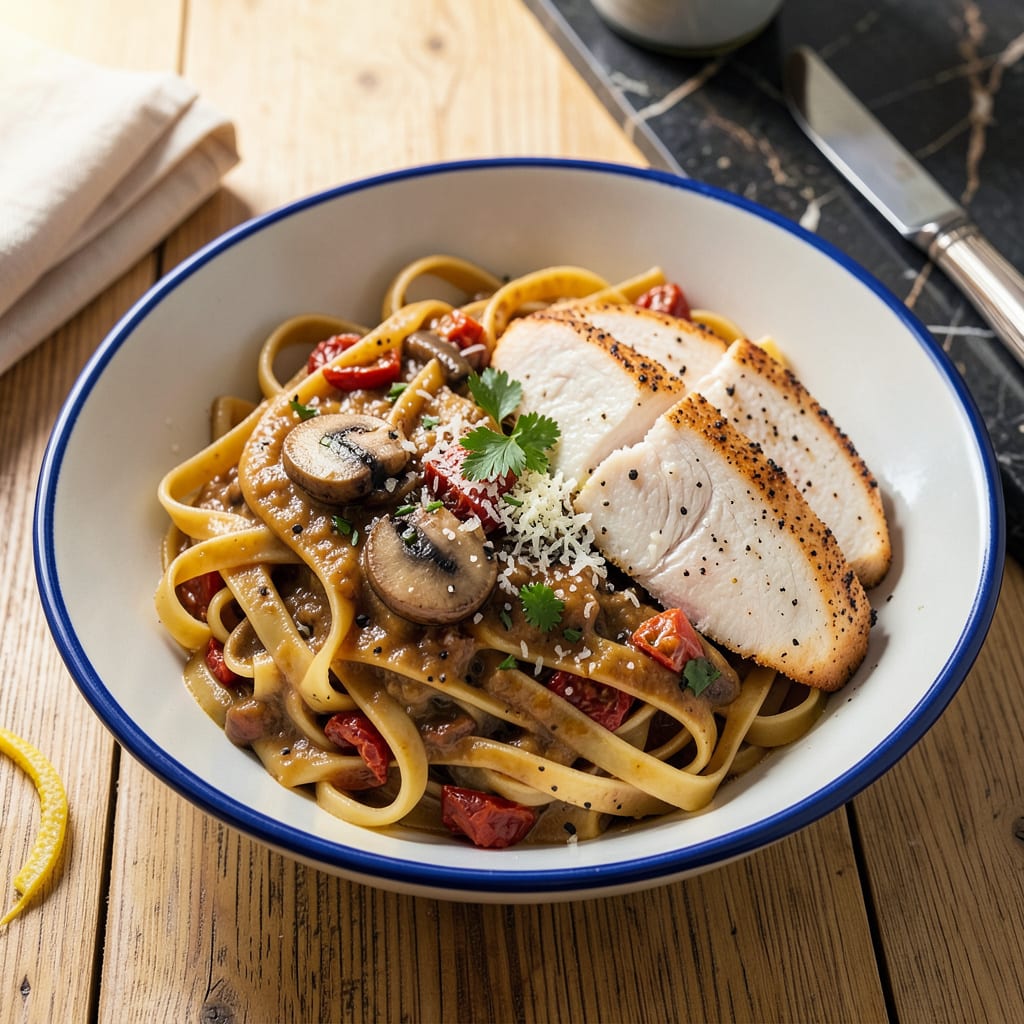
A classic fettuccine sauce combines heavy cream, butter, Parmesan cheese, and garlic for a rich, velvety texture. Simmer gently for 10-15 minutes, stirring constantly to prevent separation. Add nutmeg or white pepper for extra depth.
This sauce succeeds because of its careful balance of dairy fats and aromatic elements. The heavy cream provides a luxurious base, while freshly grated Parmesan adds umami complexity that store-bought versions can’t match. 🔥 I’ve found that the gentle simmering process is crucial—it allows the flavors to meld without breaking the emulsion, which is why constant stirring makes all the difference in achieving that signature silky consistency.
What elevates this from good to extraordinary is the quality of ingredients and technique. Using freshly cracked white pepper instead of black gives a cleaner finish, while freshly grated nutmeg adds warmth without overpowering. ✨ The butter serves as both a flavor enhancer and an emulsifier, helping the sauce cling perfectly to each strand of pasta.
💡 In This Article
- Key Ingredients for Perfect Fettuccine Sauce
- Step-by-Step Technique for Smooth Fettuccine Sauce
Key Ingredients for Perfect Fettuccine Sauce
The magic starts with heavy cream—its 36-40% fat content creates that luxurious mouthfeel. The fat molecules coat your tongue, delivering a velvety sensation while carrying flavor compounds. 🔥 Unlike half-and-half (10-18% fat), heavy cream won’t curdle under gentle heat, making it ideal for sauces that need to simmer without breaking.
Butter plays a dual role here: it adds richness and acts as an emulsifier. The milk solids in butter contain lecithin, which helps bind the fat and water molecules together. I use 2 tablespoons per cup of cream—enough to enhance flavor without making the sauce greasy. European-style butter (82-86% fat) works best because its higher fat content means less water to potentially separate.
Parmesan cheese isn’t just for flavor—it’s a texture game-changer. The aged cheese contains glutamic acid, which boosts umami and helps thicken the sauce naturally. Always grate it fresh (pre-shredded contains anti-caking agents that prevent smooth melting). A good ratio is 1/2 cup freshly grated per cup of cream, giving that perfect balance of sharpness and creaminess.
Garlic transforms when cooked gently in butter. At 320°F, its sulfur compounds break down into sweet, aromatic thiophenes. The key is infusing the butter without browning—1-2 minutes on medium-low heat releases the flavor without bitterness. White pepper and nutmeg add depth: the former provides warmth without visual specks, while nutmeg’s myristicin compound adds subtle complexity.
For dietary adaptations, coconut cream (full-fat) makes an excellent dairy-free substitute, though it adds slight sweetness. Nutritional yeast can mimic Parmesan’s umami at a 1:1 ratio, but lacks the melting properties. Vegan butter works for emulsification, but watch the salt content—many brands are saltier than dairy butter.
The science of ratios matters: too much cheese makes the sauce grainy (protein overload), while too little fat causes separation. I’ve found the 2:1:0.5 ratio (cream:butter:cheese) hits the sweet spot. This balance ensures the sauce coats pasta beautifully without being heavy, with each ingredient playing its specific role in the final texture and flavor profile.
✨

- BBQ Sausage Recipe Oven: Smoky Depth Without the Grill - September 28, 2026
- BBQ Chicken Bowl Recipe Rice: Smoky Sweetness Over Fluffy Grains - September 28, 2026
- Beef Cutlet Recipe Ideas: Crispy Breaded Patties With Bold Seasonings - September 28, 2026