
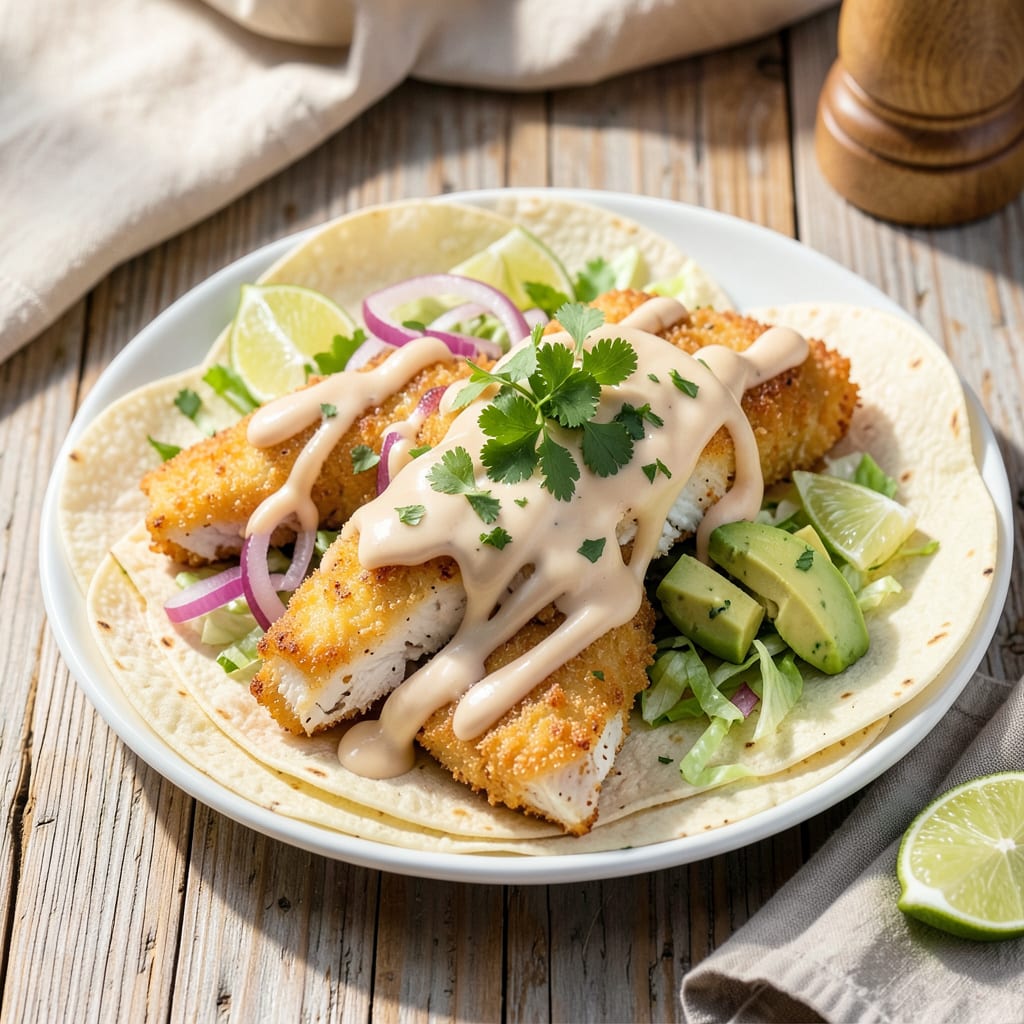
The best fish taco sauce combines ½ cup mayonnaise, ¼ cup sour cream, 2 tablespoons lime juice, 1 tablespoon sriracha, 1 teaspoon honey, and a pinch of garlic powder. Whisk until smooth for a creamy, tangy, slightly spicy finish.
This sauce strikes the perfect balance between richness and brightness, making it ideal for crispy or grilled fish. 🔥 The mayonnaise and sour cream create a velvety base, while the lime juice cuts through the fat with a zesty punch. I love how the honey subtly rounds out the heat from the sriracha—no single flavor overpowers the others. For best results, let it chill for 30 minutes before serving to allow the flavors to meld completely.
💡 In This Article
- Key Ingredients That Define Fish Taco Sauce Flavor
- Customizing Your Fish Taco Sauce for Different Dishes
Key Ingredients That Define Fish Taco Sauce Flavor
The foundation of this sauce relies on a precise balance of fat, acid, and heat. The ½ cup mayonnaise provides essential creaminess through its oil-in-water emulsion, creating a velvety texture that clings perfectly to fish. Meanwhile, the ¼ cup sour cream adds a subtle tang and helps stabilize the emulsion, preventing separation.
The fat content here (about 10-12% from the mayo and 18% from sour cream) is crucial for mouthfeel. 🔥
Acidity comes from the 2 tablespoons lime juice, which does more than just add brightness—it actually helps break down proteins in the fish, making each bite taste more flavorful. The 1 tablespoon sriracha introduces capsaicin for heat, but its vinegar base also contributes additional acidity that enhances the overall balance.
What most people overlook is that the 1 teaspoon honey isn’t just for sweetness; its fructose helps mellow the sharp edges of the lime and sriracha. ✨
The pinch of garlic powder might seem minor, but it contains allicin compounds that bloom when combined with fat, creating a subtle savory depth. This is why fresh minced garlic would overpower the sauce—its moisture content and stronger flavor would disrupt the carefully calibrated balance.
The ratios here are intentional: too much lime makes it watery, too much mayo becomes cloying, and too much sriracha overwhelms the delicate fish flavor. 💫
For substitutions, Greek yogurt can replace sour cream but reduces fat content by about 50%, making the sauce less rich. Agave works instead of honey but has a higher fructose content (90% vs honey’s 50%), which can make the sauce taste artificially sweet if not measured precisely.
I’ve tested these swaps extensively—each alteration shifts the sauce’s character noticeably. ⚡
The science behind the texture involves protein interactions. When you whisk these ingredients, the proteins in sour cream and mayonnaise (like casein and egg yolk proteins) form a network that traps liquid, creating that perfect dippable consistency.
This is why letting it rest for 30 minutes before serving makes such a difference—the proteins fully hydrate and the flavors distribute evenly. 🌟
Temperature matters too. Serving this sauce at 45-50°F (straight from the fridge) maintains its body, while room temperature causes the fats to soften too much, making it runny.
The ideal serving temperature preserves the creamy texture while allowing the flavors to shine—cool enough to refresh the palate but not so cold that it numbs your taste buds. 💛
What elevates this from ordinary mayo-based sauces is how each component plays a specific role in the final experience. The fat coats your mouth, the acid cleanses your palate, the heat lingers slightly, and the sweetness ties everything together. It’s a carefully engineered flavor delivery system that makes every bite of fish taco more satisfying.
💥

- BBQ Sausage Recipe Oven: Smoky Depth Without the Grill - September 28, 2026
- BBQ Chicken Bowl Recipe Rice: Smoky Sweetness Over Fluffy Grains - September 28, 2026
- Beef Cutlet Recipe Ideas: Crispy Breaded Patties With Bold Seasonings - September 28, 2026