
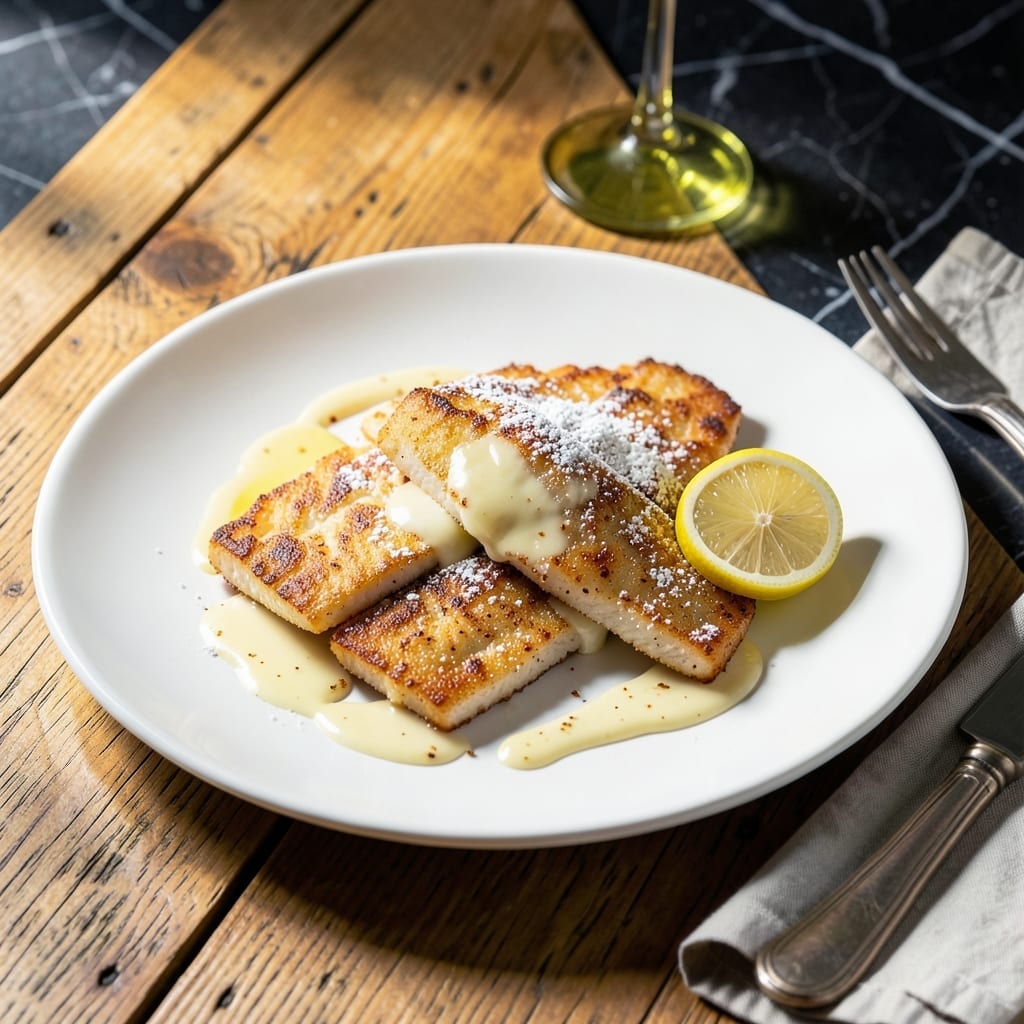
This flounder francese delivers restaurant-quality elegance with a simple pan-searing technique that anyone can master. The delicate fish gets a light, crispy coating that soaks up the bright lemon-butter sauce beautifully.
The secret lies in the breading method and quick cooking time—just 3-4 minutes per side in a hot pan. This ensures the fish stays tender while the exterior turns golden and crisp.
What results is perfectly cooked flounder with a light, airy crust and a luxurious sauce that pools at the edges. The lemon cuts through the richness of the butter, creating a balanced, sophisticated flavor.
Serve immediately with a sprinkle of fresh parsley. The fish is best enjoyed fresh from the pan, with the sauce still bubbling.
Ingredients for Recipe for Flounder Francese
Delicate flounder, bright lemon, and rich butter create this elegant pan-seared dish.
| Ingredient | Amount | Notes |
|---|---|---|
| Flounder Fillets 🐟 | 1 ½ lb | Skinless, about 4 fillets |
| All-Purpose Flour 🌾 | ½ cup | For dredging fish |
| Large Eggs 🥚 | 2 whole | Beaten for egg wash |
| Unsalted Butter 🧈 | ½ cup | Divided for cooking and sauce |
| Olive Oil 🫒 | 2 tbsp | For pan-searing fish |
| Lemon 🍋 | 1 whole | Juiced and zested |
| Garlic Cloves 🧄 | 2 cloves | Minced for sauce |
| Fresh Parsley 🌿 | ¼ cup | Chopped, for garnish |
| Salt 🧂 | 1 tsp | Kosher or sea salt |
| Black Pepper 🌶️ | ½ tsp | Freshly ground preferred |
| Dry White Wine 🍷 | ¼ cup | Optional for deglazing |
| Chicken Broth 🥣 | ¼ cup | Low-sodium preferred |
| Parmesan Cheese 🧀 | ¼ cup | Freshly grated, optional |
The flounder is the star—fresh, skinless fillets from a trusted fishmonger ensure the best texture. Whole Foods or local seafood markets are ideal for sourcing. Look for fillets that are firm, translucent, and smell clean (never fishy). The butter should be high-quality, as it forms the base of the sauce. European-style butters like Plugrá or Kerrygold add extra richness.
No white wine for deglazing? Substitute with extra chicken broth or a splash of lemon juice. Fresh parsley can be swapped for chives or tarragon for a different herbaceous note. If avoiding dairy, olive oil works in place of butter (though the flavor will differ). The flour can be replaced with cornstarch for a gluten-free option—just adjust the texture as needed.
Cook and serve this immediately—the fish loses its crispness if held. Leftovers (if any) keep for 1 day in the fridge, but the texture won’t be the same. The sauce can be reheated gently, but the flounder is best fresh from the pan.
Why You’ll Love This Recipe
- One Pan Wonder: I love that I can go from flour-dredged fillets to golden, buttery perfection in a single skillet—minimal cleanup, maximum flavor.
- That Butter-Lemon Magic: The sizzle of flounder hitting the butter and olive oil, then finished with a squeeze of lemon? Honestly, it’s restaurant-quality at home.
- Weeknight Hero: Between us, this is my go-to for busy evenings—delicate flounder cooks in minutes, so dinner’s ready before the kids start asking.
- Budget-Friendly Luxe: Flounder feels fancy, but it’s surprisingly affordable, and a little butter stretches a long way for a dish that tastes like a splurge.
Step-by-Step Instructions for Flounder Francese
Master the technique for crisp, delicate fillets with a bright lemon-butter sauce.
Step 1: Dredge and Coat the Flounder Fillets
Season the 1.5 lb Flounder Fillets with 1 tsp Salt and 0.5 tsp Black Pepper on both sides. Spread the 0.5 cup All-Purpose Flour on a shallow plate. Lightly dredge each fillet, shaking off the excess—you want a thin, even coating, not a thick crust.
In a separate bowl, beat the 2 whole Large Eggs until well combined. Dip each floured fillet into the egg wash, ensuring both sides are fully coated. This double layer creates a protective barrier that keeps the delicate fish moist while forming a golden crust during cooking.
Step 2: Pan-Sear the Fillets to Golden Perfection
Heat 2 tbsp Olive Oil and 2 tbsp of the 0.5 cup Unsalted Butter in a large skillet over medium-high heat until the butter stops foaming. Add the fillets in a single layer, working in batches if necessary to avoid crowding the pan.
Cook for 2-3 minutes per side until the coating is golden brown and crisp. The fillets should release easily from the pan when ready to flip. Transfer the cooked fillets to a warm plate and cover loosely with foil to keep them warm.
Step 3: Create the Lemon-Butter Sauce
Reduce the heat to medium and add the remaining 6 tbsp Unsalted Butter, the minced 2 cloves Garlic Cloves, and the juice and zest of the 1 whole Lemon to the skillet. Stir for 30 seconds until the garlic becomes fragrant but not browned.
Pour in the 0.25 cup Dry White Wine and 0.25 cup Chicken Broth, scraping up any browned bits from the bottom of the pan. Simmer for 2-3 minutes until the liquid reduces by half and the sauce thickens slightly.
Step 4: Finish and Serve with Fresh Garnish
Return the fillets to the skillet and spoon the sauce over them. Sprinkle the 0.25 cup Parmesan Cheese evenly over the top, if using, and let it melt into the sauce for 1-2 minutes. This adds a subtle richness that complements the bright lemon and garlic flavors.
Transfer the fillets to serving plates and drizzle with the remaining sauce. Garnish with the 0.25 cup Fresh Parsley for a pop of color and freshness. Serve immediately while the coating is still crisp and the sauce is warm.
Pro Tips For Making Recipe For Flounder Francese
- Pat Dry First: I learned this the hard way—wet flounder fillets steam instead of sear. Press them between paper towels until completely dry before dredging.
- Use Room-Temp Eggs: Sounds weird, but it works: cold eggs make the coating clump. Pull them out 30 minutes before cooking for a smoother dredge.
- Skip the Crowding: Resist the urge to cram all fillets in the pan. Cook in batches with about 2 tablespoons of butter-oil mix per fillet, or they’ll steam instead of crisp.
- Finish with Butter: After flipping, add a splash of lemon juice and a pat of butter to the pan. Spoon it over the fish for the last minute—my grandmother swore by this, and she was right.
Serving Suggestions for recipe for flounder francese
Plating Elegance
Arrange fillets on warm plates with the lemon-butter sauce spooned around the base. The golden crust looks stunning against white dishes. I use stoneware plates for rustic presentation that complements the delicate fish. 💛
Fresh Garnish
Sprinkle chopped parsley over each fillet just before serving for vibrant color. A few lemon wheels on the side add visual appeal and extra brightness. The parsley also enhances the fresh herb notes in the sauce.
Side Pairings
Serve with steamed asparagus or roasted potatoes to soak up the sauce. A simple arugula salad with lemon vinaigrette echoes the dish’s citrus notes. I prefer asparagus as it cooks in the same 10-12 minutes as the fish.
Bread Addition
Offer crusty bread on the side to mop up every last drop of sauce. A baguette or ciabatta works perfectly. Toast slices lightly and rub with garlic for extra flavor. This turns the sauce into a second course.
Wine Match
A crisp Pinot Grigio or Sauvignon Blanc pairs beautifully with the lemon-butter sauce. The acidity cuts through the richness while complementing the citrus. I always serve chilled white wine with this dish. 🍷
Family Style
For gatherings, arrange fillets on a platter with sauce poured over the top. Garnish with parsley and lemon slices. Let guests serve themselves with a large spoon for the sauce. This creates a beautiful centerpiece.
Nutrition Facts
Frequently Asked Questions
What’s the best way to keep the coating crispy?
Serve immediately after cooking. The egg-flour coating loses its crispness if held too long. Keep fillets warm on a wire rack in a 200°F oven for up to 10 minutes if needed.
Can I use a different type of fish?
Yes! Try sole, tilapia, or cod. Choose fillets of similar thickness (1/2 inch) for even cooking. Adjust time slightly if fillets are thicker or thinner.
How do I prevent the sauce from breaking?
Keep heat at medium when making the sauce. Remove pan from heat if butter starts to separate, then stir until smooth. Add butter gradually for a stable emulsion.
What if my fish sticks to the pan?
Ensure the pan is hot enough and use 1-2 tbsp more oil. Don’t move fillets until they release naturally after 2-3 minutes. A nonstick skillet helps too.

- BBQ Sausage Recipe Oven: Smoky Depth Without the Grill - September 28, 2026
- BBQ Chicken Bowl Recipe Rice: Smoky Sweetness Over Fluffy Grains - September 28, 2026
- Beef Cutlet Recipe Ideas: Crispy Breaded Patties With Bold Seasonings - September 28, 2026