
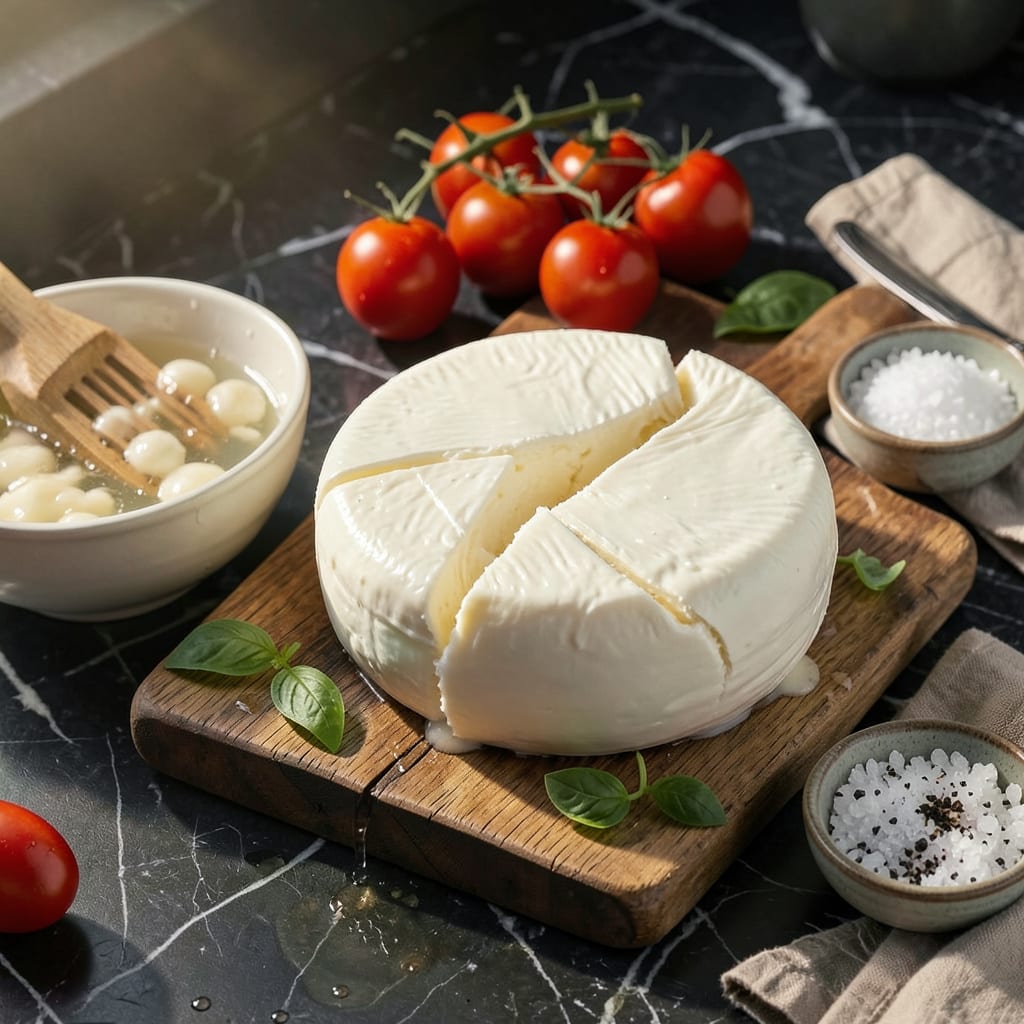
Fresh mozzarella requires just four ingredients: whole milk, rennet, citric acid, and salt. Heat milk to 90°F, add citric acid and rennet, then stretch the curds in hot whey until smooth and elastic. Best enjoyed immediately for peak texture and flavor.
The magic of homemade mozzarella lies in its simplicity and the transformative power of heat. 🔥 When you work the curds in hot whey, the proteins realign into those signature silky strands—this is what gives it that unmistakable melt-in-your-mouth quality. I’ve found that using high-quality whole milk (preferably non-homogenized) makes a noticeable difference in both flavor and texture, while precise temperature control ensures you avoid grainy or rubbery results.
What sets fresh mozzarella apart from store-bought versions is its delicate, milky sweetness and ultra-soft consistency. ✨ Unlike aged cheeses, it’s designed to be consumed within hours, which means you’re getting the purest expression of the milk’s natural flavors. The stretching process isn’t just about texture—it’s also about developing that subtle tanginess that pairs perfectly with tomatoes, basil, or a drizzle of olive oil.
💡 In This Article
- Science Behind Fresh Mozzarella’s Signature Stretch
- Essential Tools and Troubleshooting for Homemade Mozzarella
Science Behind Fresh Mozzarella’s Signature Stretch
The magic happens during the pasta filata process, where heat transforms the curds into that iconic stretchy texture. When you dip the curds into 175-185°F whey, the casein proteins unfurl and realign into parallel strands—like tiny elastic bands. This molecular restructuring is what gives mozzarella its ability to melt smoothly while maintaining structure.
The acidity from citric acid (pH ~5.2) helps break down the milk proteins just enough to create the perfect curd consistency for stretching.
Here’s what’s actually happening at the microscopic level: The whey’s heat causes the protein matrix to partially liquefy, allowing the strands to slide past each other when pulled. 🔥 As you knead and fold, you’re physically aligning these protein chains into a uniform network.
This is why underworked mozzarella feels dense and rubbery, while properly stretched cheese develops that signature silky-smooth mouthfeel that practically dissolves on your tongue.
Freshness plays a crucial role because these protein strands are most pliable immediately after formation. Within 24 hours, the structure begins to tighten as moisture evaporates and proteins rebond. That’s why artisanal mozzarella makers insist on same-day consumption—the texture is at its peak when the protein network is still relaxed and hydrated.
Compare this to aged cheeses where proteins crystallize over time, creating that crumbly texture you find in Parmesan.
The acidity level also affects the final product dramatically. Too little citric acid (1/4 tsp per gallon of milk) results in weak curds that won’t hold their shape, while excessive acid makes the cheese grainy. The ideal balance creates curds that are firm enough to stretch but still tender enough to melt beautifully.
I’ve found that maintaining the whey bath at precisely 180°F gives the perfect working temperature—hot enough to soften the curds but not so hot that the proteins over-coagulate.
What most people don’t realize is that the stretching process also develops flavor. As you work the curds, you’re not just creating texture—you’re concentrating the milk’s natural sweetness and creating microscopic channels that will later carry flavors when the cheese is served.
This is why fresh mozzarella has that clean, milky taste with just a hint of tang, rather than the sharpness of aged varieties.
For comparison, consider how different this is from making cheddar or gouda. Those cheeses rely on pressing to expel whey and create dense textures, while mozzarella’s magic comes from this dynamic stretching process.
The protein alignment created during stretching is what makes mozzarella melt in those beautiful, stretchy strands on pizza rather than pooling like processed cheese. ✨
The moisture content (typically 50-60% in fresh mozzarella) also contributes to its unique properties. This high water content is why it’s best used within days—once the moisture evaporates, the texture becomes more rubbery.
The science explains why vacuum-sealed store-bought versions can’t compare to the just-made experience: those plastic packages trap moisture that should naturally evaporate, altering both texture and flavor.

- BBQ Sausage Recipe Oven: Smoky Depth Without the Grill - September 28, 2026
- BBQ Chicken Bowl Recipe Rice: Smoky Sweetness Over Fluffy Grains - September 28, 2026
- Beef Cutlet Recipe Ideas: Crispy Breaded Patties With Bold Seasonings - September 28, 2026