
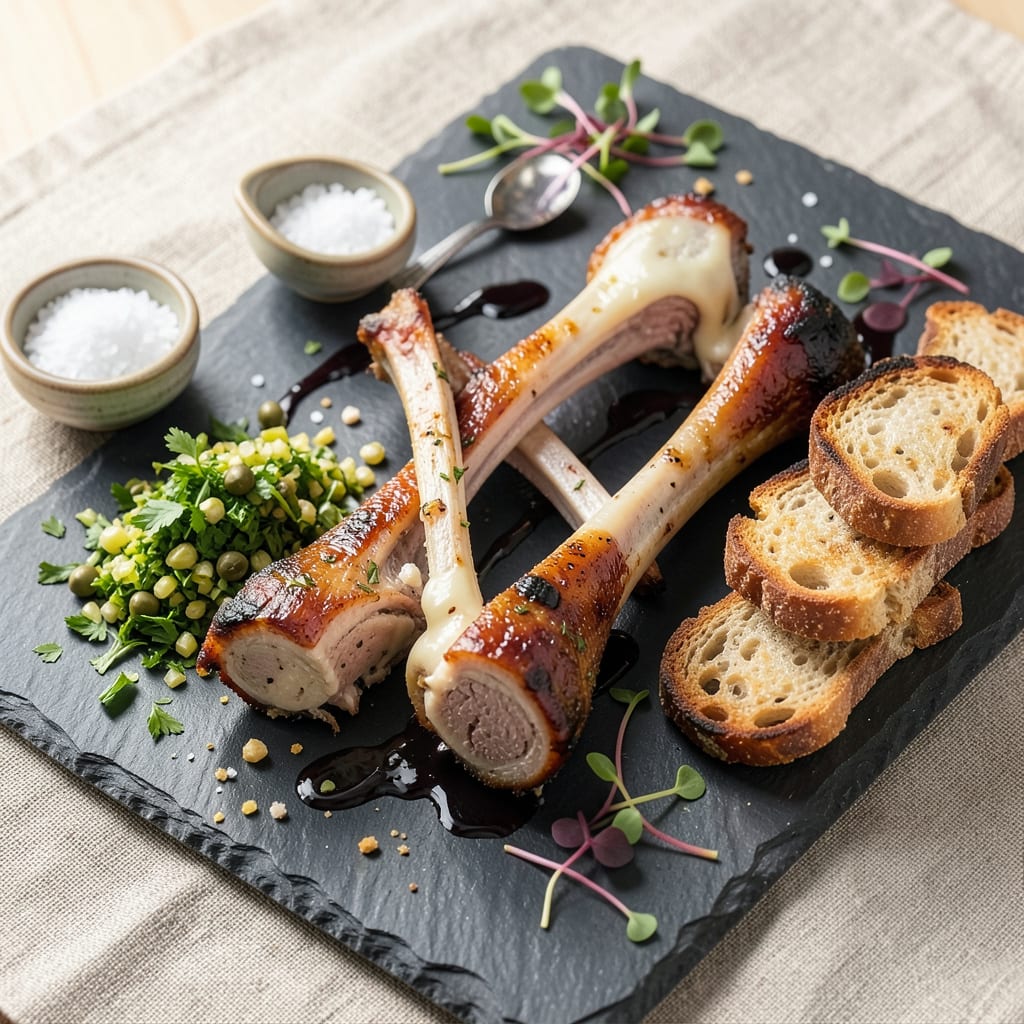
Roast beef or lamb marrow bones at 450°F for 15-20 minutes until the marrow is soft and slightly bubbly. Serve immediately with crusty bread, sea salt, and fresh herbs for dipping. Use a small spoon to scoop out the rich, buttery center.
This method unlocks the marrow’s deep, umami-rich potential by rendering its natural fats at high heat. The short roasting time preserves its delicate, custard-like texture while intensifying flavor—unlike slow-cooking methods that can make it greasy. I always recommend using center-cut bones (about 3 inches long) for even cooking and easier serving. The contrast between the creamy marrow and crispy bread creates a luxurious mouthfeel that’s hard to beat. ✨
💡 In This Article
- Why Bone Marrow Roasting Transforms Flavor and Texture
- Serving and Pairing Ideas for Roasted Bone Marrow
Why Bone Marrow Roasting Transforms Flavor and Texture
Bone marrow is packed with fat cells and collagen that undergo dramatic changes when exposed to heat. At 450°F, the fat cells begin to melt rapidly while collagen breaks down into gelatin, creating that signature creamy yet slightly gelatinous texture.
This temperature is critical—too low and the fat won’t render properly, leaving you with a waxy consistency; too high and the marrow turns oily and loses its delicate structure. 🔥
The science lies in the marrow’s composition: it’s about 96% fat with minimal protein, which means it behaves more like butter than meat during cooking. When heated, the fat emulsifies slightly with the small amount of moisture present, giving it that luxurious, spreadable quality.
The 15-20 minute window is perfect because it allows the heat to penetrate the bone without overcooking the delicate interior. You’ll know it’s done when the surface develops tiny bubbles—this indicates the fats are fully liquefied but haven’t separated.
What most people don’t realize is that bone marrow contains hematopoietic stem cells that contribute to its rich, almost metallic depth of flavor. Roasting concentrates these compounds while caramelizing the natural sugars in the fat. The result is a transformation from raw, neutral-tasting fat to something deeply savory with nutty, buttery notes.
This is why undercooked marrow tastes bland, while properly roasted marrow has that addictive umami punch. ✨
The bone itself acts as a natural insulator, which is why you need that high initial heat. The outer bone heats up quickly, then slowly conducts warmth inward to gently cook the marrow.
This is also why you should never cover the bones during roasting—you want that direct, dry heat to create a slight crust on the marrow’s surface while keeping the center perfectly creamy. The contrast between the crispy edges and silky interior is what makes it so special.
Overcooking is the biggest mistake I see. Beyond 20 minutes, the fat starts to separate and the proteins coagulate too much, turning the texture grainy. The ideal doneness window is narrow: the marrow should jiggle slightly when shaken, like a soft custard.
This is when the fat is fully rendered but still emulsified with the gelatin, giving you that perfect spoonable consistency that clings to bread just right. 💫
Pro tip: The type of bone matters. Beef femur bones (about 3-4 inches in diameter) give you the most marrow per bone, while lamb bones offer a slightly gamier, more intense flavor. The thickness of the bone affects cooking time—thicker bones may need an extra 2-3 minutes to fully render the marrow at the center.
Always check by gently pressing the marrow with a spoon; it should yield like warm butter. ⚡

- BBQ Sausage Recipe Oven: Smoky Depth Without the Grill - September 28, 2026
- BBQ Chicken Bowl Recipe Rice: Smoky Sweetness Over Fluffy Grains - September 28, 2026
- Beef Cutlet Recipe Ideas: Crispy Breaded Patties With Bold Seasonings - September 28, 2026