
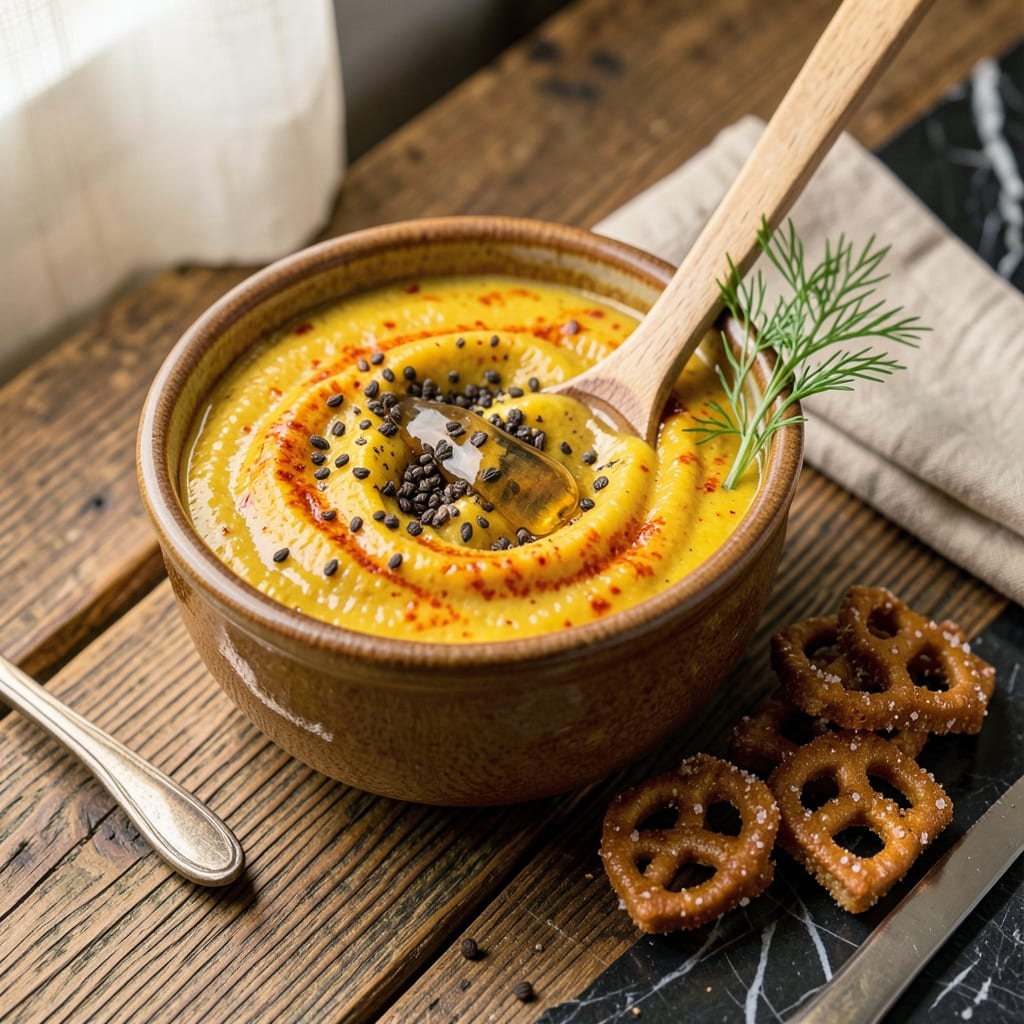
Combine ½ cup ground mustard seeds, ½ cup cold water, ½ cup vinegar, 1 tsp salt, and 1 tsp sugar. Let sit 10 minutes, then adjust heat with cayenne or horseradish. Refrigerate 8+ hours for full flavor development and spiciness.
This simple blend transforms basic ingredients into a fiery condiment through a fascinating chemical process. 🔥 The magic happens when crushed mustard seeds release their pungent oils, which react with cold liquids to create that signature sharpness. I’ve found that the resting period is crucial—it allows the flavors to meld while the heat gradually intensifies, much like how hot peppers develop their burn over time.
What makes this recipe so versatile is how easily you can tweak it to your preference. For milder versions, reduce the resting time or add a touch of honey. If you crave extra kick, a pinch of ground chili flakes or fresh ginger works wonders. The vinegar base not only preserves the mustard but also enhances its tangy brightness, making it perfect for everything from sandwiches to stir-fry glazes. ✨
💡 In This Article
- How Mustard Seeds Create Heat and Flavor Depth
- Customizing Your Hot Mustard: Spice Levels and Variations
How Mustard Seeds Create Heat and Flavor Depth
The fiery kick in hot mustard comes from allyl isothiocyanate, a compound released when mustard seeds are crushed or ground. This chemical reaction is similar to what happens when you chop onions—the cell walls break, releasing pungent oils.
Brown mustard seeds contain 2-3 times more of these compounds than yellow seeds, which is why they create a much sharper, more intense heat profile.
Cold liquids act as the perfect catalyst for this transformation. When you mix ground mustard with cold water or vinegar, it triggers an enzymatic reaction that converts glucosinolates into those spicy isothiocyanates. Warm liquids would actually deactivate these enzymes, resulting in a milder, less complex flavor.
The 10-minute resting period allows this chemical process to fully develop before you adjust the seasoning.
During the 8+ hour refrigeration, two key things happen: the heat intensifies as the compounds continue reacting, and the vinegar’s acidity softens the seeds’ harsh edges. This aging process is crucial—it’s like letting hot sauce ferment to develop depth.
The salt and sugar aren’t just for taste; they help stabilize the emulsion and balance the mustard’s natural bitterness.
Temperature plays a surprising role in the final product. Serving chilled mustard (straight from the fridge) will taste sharper and more aggressive, while room-temperature mustard mellows slightly. This is why British mustard (often served warm) has a different character than Chinese hot mustard (traditionally served cold).
The heat level can vary by 30-40% based solely on serving temperature.
For maximum heat development, use freshly ground seeds—the volatile oils begin degrading within 2-3 hours of grinding. Store-bought mustard powder works in a pinch, but you’ll lose about 50% of the potential heat compared to freshly ground seeds. The difference is noticeable in both the immediate burn and the lingering warmth on your palate.
The vinegar choice dramatically alters the final flavor profile. White vinegar creates a cleaner, sharper heat, while apple cider vinegar adds fruity undertones. Rice vinegar makes a milder version perfect for sushi, and champagne vinegar gives an elegant, sophisticated edge. Each acid source interacts differently with the mustard’s compounds, creating distinct flavor pathways.
What most people don’t realize is that the spiciness isn’t just about heat—it’s about nasal sensation. The allyl isothiocyanate molecules travel up your nasal passages, creating that signature “mustard burn” that’s different from capsaicin’s mouth heat.
This dual sensation is why hot mustard pairs so well with rich, fatty foods—it cuts through the richness while engaging multiple senses. 🌟

- BBQ Sausage Recipe Oven: Smoky Depth Without the Grill - September 28, 2026
- BBQ Chicken Bowl Recipe Rice: Smoky Sweetness Over Fluffy Grains - September 28, 2026
- Beef Cutlet Recipe Ideas: Crispy Breaded Patties With Bold Seasonings - September 28, 2026