
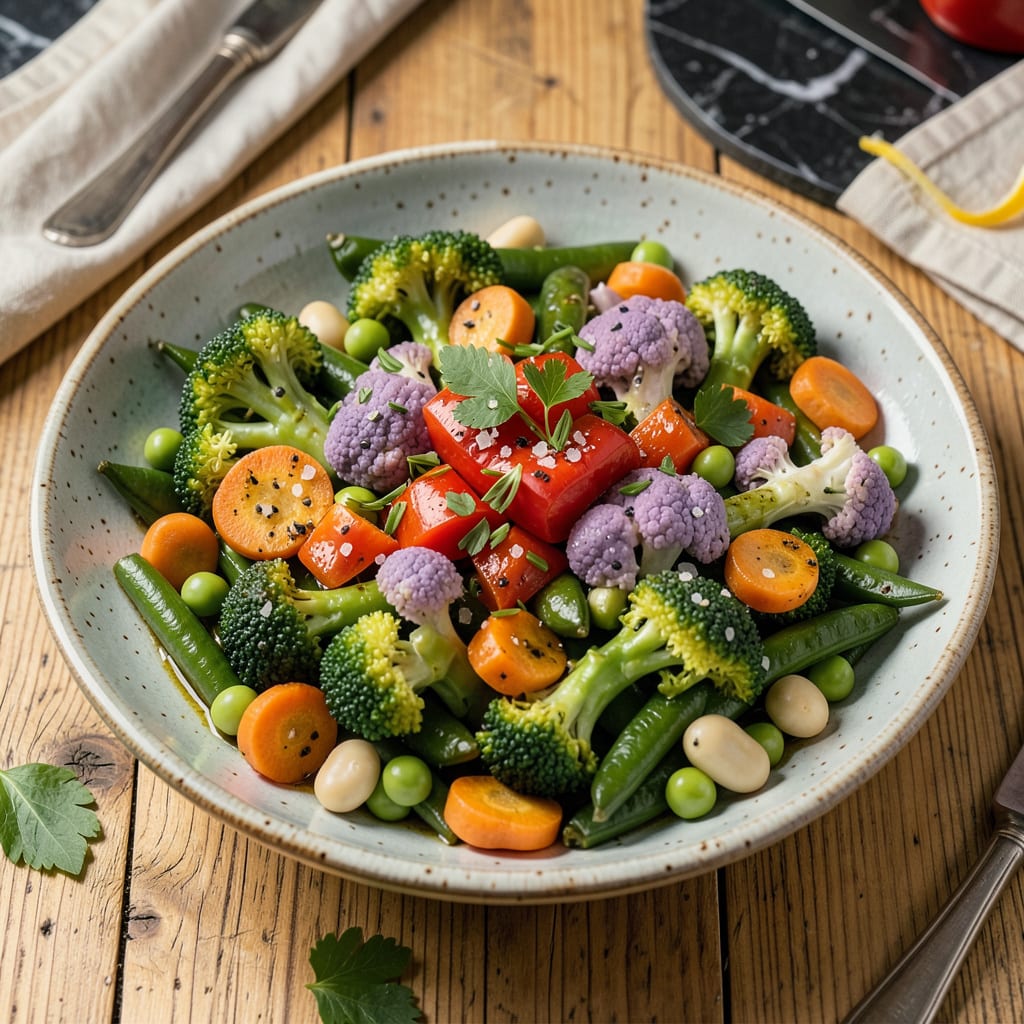
Toss 16 oz frozen mixed vegetables with 2 tbsp olive oil, garlic powder, salt, and pepper. Roast at 425°F for 18-20 minutes or sauté in a pan for 10-12 minutes until tender and lightly browned. Finish with lemon juice or fresh herbs for extra flavor.
This method transforms ordinary frozen veggies into a vibrant, restaurant-quality side with minimal effort. 🔥 The high-heat roasting caramelizes the natural sugars, creating depth of flavor, while sautéing offers a quicker alternative with similar results. I always recommend using a heavy-bottomed pan for even browning and avoiding overcrowding—this ensures each piece gets proper contact with the heat source. A sprinkle of flaky sea salt at the end elevates the dish from simple to spectacular.
💡 In This Article
- Why Frozen Mixed Vegetables Work Perfectly in Quick Recipes
- 5 Flavor Variations for Frozen Mixed Vegetables
Why Frozen Mixed Vegetables Work Perfectly in Quick Recipes
The secret lies in the flash-freezing process that locks in nutrients and preserves texture. Unlike traditional freezing that creates large ice crystals, commercial flash-freezing uses -40°F temperatures to freeze vegetables in minutes. This rapid freezing maintains cell structure, preventing the mushy texture that plagues home-frozen produce. The result?
Vegetables that retain up to 90% of their original nutrients while cooking more evenly than their fresh counterparts. ✨
Pre-cut uniformity is another game-changer. Most frozen mixed vegetables are processed using water-jet cutting systems that ensure consistent ¼-inch pieces. This precision means carrots, green beans, and corn all cook at the same rate—no more fishing out undercooked carrots while your peas turn to mush.
The standardized size also creates better surface area for caramelization when roasted at high temperatures like 425°F, developing those coveted crispy edges. 🔥
Here’s where frozen actually outperforms fresh: convenience without quality loss. Fresh vegetables often sit in transit for days, losing vitamins and developing enzyme activity that degrades texture. Frozen mixes are typically processed within hours of harvest at peak ripeness.
When you roast them, the Maillard reaction (the same browning process that makes steak crusty) works more efficiently because the vegetables’ natural sugars haven’t broken down during storage. 💫
The moisture content in frozen vegetables—about 80-85%—creates steam when heated, which actually helps prevent drying out during cooking. This built-in moisture means you can use less oil than with fresh vegetables while still achieving great texture.
The steam also helps distribute heat evenly through the vegetable pieces, eliminating cold spots that can occur with denser fresh produce. ⚡
For home cooks, this translates to foolproof results every time. The consistent quality means you can rely on the same cooking times and temperatures batch after batch. Whether you’re meal prepping for the week or throwing together a last-minute side, frozen mixed vegetables deliver restaurant-quality results with supermarket convenience.
No washing, chopping, or worrying about spoilage—just open, season, and cook. 🌟
Pro tip: Look for bags labeled “IQF” (Individually Quick Frozen) for the best quality. These vegetables are frozen separately rather than in clumps, which means they’ll cook more evenly and you can pour out exactly what you need without thawing the whole bag. The individual pieces also develop better browning when roasted or sautéed. 💛

- BBQ Sausage Recipe Oven: Smoky Depth Without the Grill - September 28, 2026
- BBQ Chicken Bowl Recipe Rice: Smoky Sweetness Over Fluffy Grains - September 28, 2026
- Beef Cutlet Recipe Ideas: Crispy Breaded Patties With Bold Seasonings - September 28, 2026