
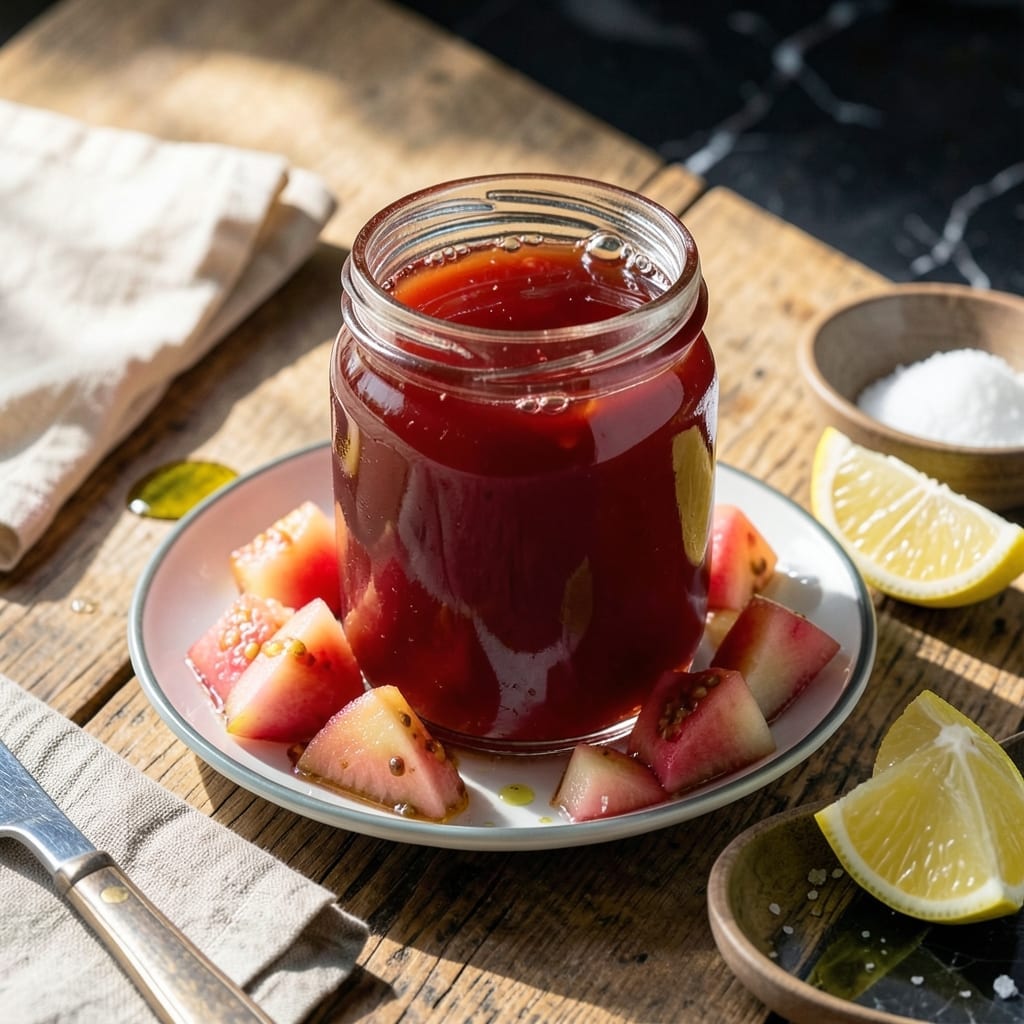
This guava jelly recipe transforms fresh fruit into a bright, sweet-tart spread that captures the essence of the tropics. The process is straightforward, requiring just a few ingredients and basic kitchen tools.
What makes this version special is the balance between the fruit’s natural acidity and just enough sugar to create the perfect consistency. The result is a glossy, jewel-toned jelly that’s as beautiful as it is delicious.
Spread it on toast, pair it with crackers and cheese, or use it as a glaze for meats. This versatile condiment brings a taste of the islands to any meal.
Vegan-friendly and easy to store, it keeps well for months, so you can enjoy that tropical flavor anytime.
Ingredients for Recipe for Guava Jelly
Six simple ingredients transform into a vibrant, tropical spread you will love.
| Ingredient | Amount | Notes |
|---|---|---|
| Fresh Guava 🍈 | 2 lb | Ripe, peeled and seeded |
| Granulated Sugar 🍚 | 3 cups | Adjust based on sweetness preference |
| Lemon Juice 🍋 | ¼ cup | Freshly squeezed for acidity |
| Water 💧 | ½ cup | For cooking guava |
| Pectin 🧂 | 1 package | Low or no-sugar needed type |
| Butter 🧈 | ½ tsp | Vegan butter to reduce foam |
Guava is everything here—look for ripe but firm fruit at Latin markets or well-stocked supermarkets like Whole Foods. The skin should give slightly when pressed (not mushy). I’ve had luck with frozen guava too (thaw and drain first), but fresh is ideal. For pectin, Ball or Sure-Jell low-sugar versions work best for that perfect set without overpowering sweetness.
No fresh guava? Frozen guava puree works in a pinch—just measure by weight. Swap lemon juice for lime if that’s what you’ve got. The sugar amount can flex: up to 4 cups if you like it sweeter, or 2.5 cups for more tartness. Skip the vegan butter entirely if you don’t have it—the jelly will just have more foam to skim off.
Jars seal and store beautifully for 12-18 months unopened. Once opened, it keeps in the fridge for 3 months. Perfect for gift-giving—just tie a ribbon on the jar (worth the extra minute).
Why You’ll Love This Recipe
- One Pot Wonder: I just dump guava, sugar, and lemon juice in a pot—no fancy steps, and pectin does the heavy lifting.
- Tropical Burst: The fresh guava gives it that bright, sunny sweetness with a hint of tart from the lemon.
- Breakfast Upgrade: Spread it on toast, swirl into yogurt, or gift it in tiny jars—honestly, it’s my new hostess go-to.
- Pantry Hero: Five ingredients, most of which I already have, and it keeps for weeks. I’ll be real: my jam stash is now 80% guava.
Step-by-Step Instructions for Guava Jelly
Here’s the method I’ve perfected for a jelly that’s bright, spreadable, and full of tropical flavor.
Step 1: Prepare and Cook the Guava
Start by peeling and seeding the 2 lb fresh guava. I like to use a serrated peeler for this—it grips the sometimes slippery skin better. Once prepped, chop the fruit into small chunks and place them in a large pot.
Add the 0.5 cup water and bring to a boil over medium-high heat. Reduce to a simmer and cook for 15-20 minutes until the guava is completely soft and mushy. Stir occasionally to prevent sticking. The fruit should break down easily when pressed with a spoon.
Step 2: Strain the Guava Pulp
Once the guava is fully cooked, remove from heat and let it cool slightly for 5 minutes. Pour the mixture into a fine-mesh strainer or cheesecloth-lined colander set over a large bowl. Press the mixture gently with a spoon to extract all the juice—don’t force it through or you’ll end up with cloudy jelly.
You should have about 3-4 cups of clear guava juice. Discard the solids and measure exactly 3 cups of juice for the jelly (if you have more, save it for another batch or drink it—it’s delicious!). This step ensures a smooth, crystal-clear jelly.
Step 3: Combine Ingredients and Cook
In a clean, large pot, combine the 3 cups guava juice, 3 cups granulated sugar, 0.25 cup lemon juice, and 1 package pectin. Stir well to dissolve the pectin completely. The lemon juice adds essential acidity that helps the jelly set and balances the sweetness.
Bring the mixture to a full rolling boil over high heat, stirring constantly. Once boiling, add the 0.5 tsp butter to reduce foam. Continue boiling for 1 minute, stirring vigorously—the mixture will thicken noticeably and look glossy.
Step 4: Test for Doneness and Jar
To check if the jelly is ready, do the spoon test: dip a cold metal spoon into the jelly and lift it out. If the jelly sheets off the spoon in thick, slow drips, it’s done. If it’s still runny, cook for another 30-60 seconds and test again.
Once set, remove from heat and skim off any remaining foam with a spoon. Ladle the hot jelly into sterilized jars, leaving ¼-inch headspace. The jelly will thicken further as it cools. Seal with lids and let cool completely at room temperature before refrigerating or processing for long-term storage.
Pro Tips For Making Recipe For Guava Jelly
- Test for Ripeness: Press the guava gently—it should give slightly like a ripe avocado. I learned this the hard way after using rock-hard fruit and ending up with jelly that tasted more like pectin than guava.
- Strain Thoroughly: After cooking the guava, strain the pulp through a fine-mesh sieve or cheesecloth to remove seeds. Sounds tedious, but it’s the only way to get that smooth, professional texture.
- Boil Vigorous: Once you add the sugar and pectin, bring it to a rolling boil that can’t be stirred down for at least 1 minute. This guarantees the jelly sets properly—no one wants runny guava syrup.
- Add Lemon Last: Stir in the lemon juice at the very end of cooking. Adding it earlier can break down the pectin and leave you with a thinner jelly than you bargained for.
Regional Styles of This Recipe
Caribbean Style
In the islands, guava jelly often includes 1-2 cinnamon sticks or 3-4 cloves simmered with the fruit. This adds warm spice notes that pair beautifully with the tropical fruit. I love this version on warm bread with cream cheese for breakfast. 🌴
Mexican Approach
Mexican cooks often add 1-2 chopped serrano peppers to the guava mixture for a sweet-spicy kick. The heat builds slowly, making it perfect for pairing with queso fresco or as a glaze for grilled meats. Remove seeds for milder heat.
Brazilian Tradition
Brazilian goiabada is thicker and often served with cheese as a dessert. They use more fruit (3 lb guava) and less sugar, cooking it down to a paste-like consistency. It’s commonly paired with minas cheese in a treat called Romeu e Julieta.
Southern US Style
In the American South, some add 1 tbsp grated ginger to the jelly for extra zing. This version works wonderfully as a glaze for ham or pork roast. I’ve found it also makes a fantastic filling for thumbprint cookies.
Filipino Version
Filipino guava jelly sometimes incorporates 1 cup pineapple juice for added complexity. The result is slightly tangier and pairs exceptionally well with pan de sal or pandesal. This variation has a brighter, more layered tropical flavor. ✨
Nutrition Facts
Frequently Asked Questions
Can I use frozen guava instead of fresh?
Thaw frozen guava and drain excess liquid before using. Measure by weight to match the 2 lb requirement. The texture and flavor will be just as good.
Why did my jelly not set properly?
This usually happens if the mixture didn’t reach a full rolling boil for the full 1 minute. Also ensure you used the correct amount of pectin and acidity from the lemon juice. Test with the spoon method before jarring.
How long does homemade guava jelly last?
Unopened jars keep for 12-18 months in a cool, dark place. Once opened, store in the fridge and use within 3 months for best flavor and texture.

- Pav Bhaji Recipe Food Lab: Mumbai Street Food Magic at Home - October 6, 2026
- Peach Jelly Recipe Without Pectin: Naturally Set Sweet Spread - October 6, 2026
- Pasta Salad Recipe With Zesty Italian Dressing: Bright Herb-Kissed Medley for Picnics - October 6, 2026