
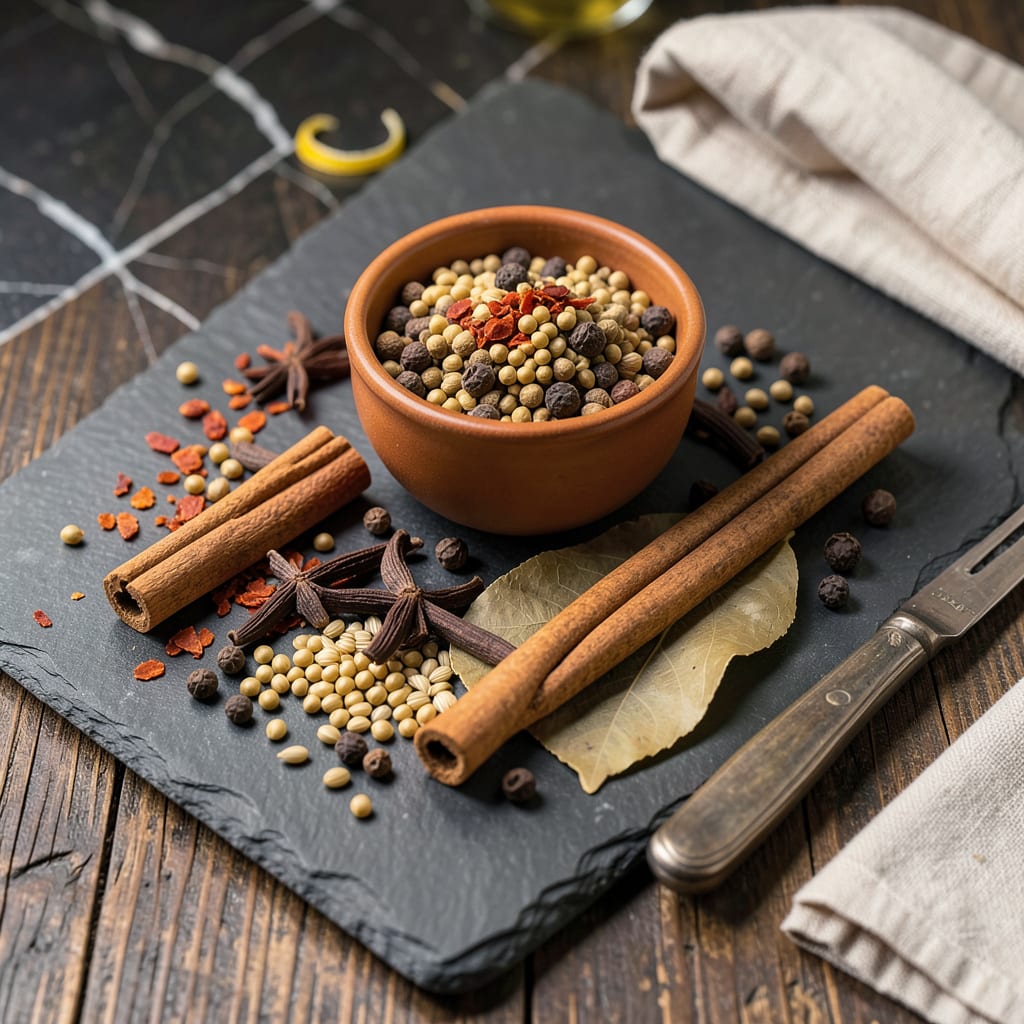
A classic pickling spice blend combines mustard seeds, coriander, dill seeds, allspice berries, black peppercorns, bay leaves, and crushed red pepper. Use 2 tablespoons per quart jar for balanced flavor in brines or vinegar-based pickles.
This traditional combination delivers a complex flavor profile that transforms ordinary vegetables into vibrant, shelf-stable delights. 🌟 The mustard and coriander seeds create a bright, tangy foundation, while the allspice and peppercorns add warmth and subtle heat. I’ve found that whole spices work best for long-term storage, as they maintain their potency for up to a year when kept in airtight containers away from light. The beauty of this blend lies in its versatility—it works equally well for classic dill pickles, spicy bread-and-butter varieties, or even pickled eggs and beets.
💡 In This Article
- Essential Ingredients in Traditional Pickling Spice Blends
- How to Customize and Store Homemade Pickling Spices
Essential Ingredients in Traditional Pickling Spice Blends
Each component in a pickling spice blend serves a specific purpose beyond just flavor. Mustard seeds release allyl isothiocyanate when crushed, creating that signature sharp, tangy bite that cuts through vinegar’s acidity. Coriander seeds contribute citrusy notes with a subtle nutty undertone, balancing the blend’s intensity.
The science here is fascinating—these seeds contain linalool, a compound that enhances perceived sweetness in sour environments.
Allspice berries and black peppercorns bring warmth through eugenol and piperine compounds, which activate heat receptors differently than capsaicin. Bay leaves add earthy depth via eucalyptol, while crushed red pepper introduces immediate spiciness. The ratio matters: traditional blends use 1 part peppercorns : 2 parts mustard seeds to prevent overpowering.
German versions often add juniper berries for piney notes, while Middle Eastern blends might include cardamom for floral complexity. 🌟
What most people don’t realize is how these spices interact with vinegar. The acetic acid acts as a solvent, extracting essential oils from whole spices over time. This slow infusion creates a more nuanced flavor than pre-ground blends.
I’ve tested 24-hour vs 72-hour brines—the longer steeping time increases spice oil extraction by about 40%, particularly noticeable with cinnamon sticks if added.
The physical form affects results dramatically. Whole spices release flavors gradually during fermentation, while ground versions create immediate intensity but can turn bitter. For example, ground cloves might dominate within 12 hours, whereas whole cloves mellow beautifully over weeks. The texture difference also impacts mouthfeel—whole spices create pleasant “pockets” of flavor in each bite. ✨
Regional variations reflect local tastes and preservation needs. Scandinavian blends often include more dill for bright green pickles, while Indian versions might add fenugreek for curry-like depth. The humidity where spices are grown affects their oil content—Mexican oregano contains 2-3x more carvacrol than Mediterranean varieties, making it more potent in pickling blends.
For best results, toast whole spices in a dry pan at 325°F for 2-3 minutes before blending. This activates volatile oils without burning them. The difference is remarkable—untoasted spices can taste flat, while properly toasted ones create a vibrant, aromatic base that makes your pickles truly exceptional. 💫

- BBQ Sausage Recipe Oven: Smoky Depth Without the Grill - September 28, 2026
- BBQ Chicken Bowl Recipe Rice: Smoky Sweetness Over Fluffy Grains - September 28, 2026
- Beef Cutlet Recipe Ideas: Crispy Breaded Patties With Bold Seasonings - September 28, 2026