
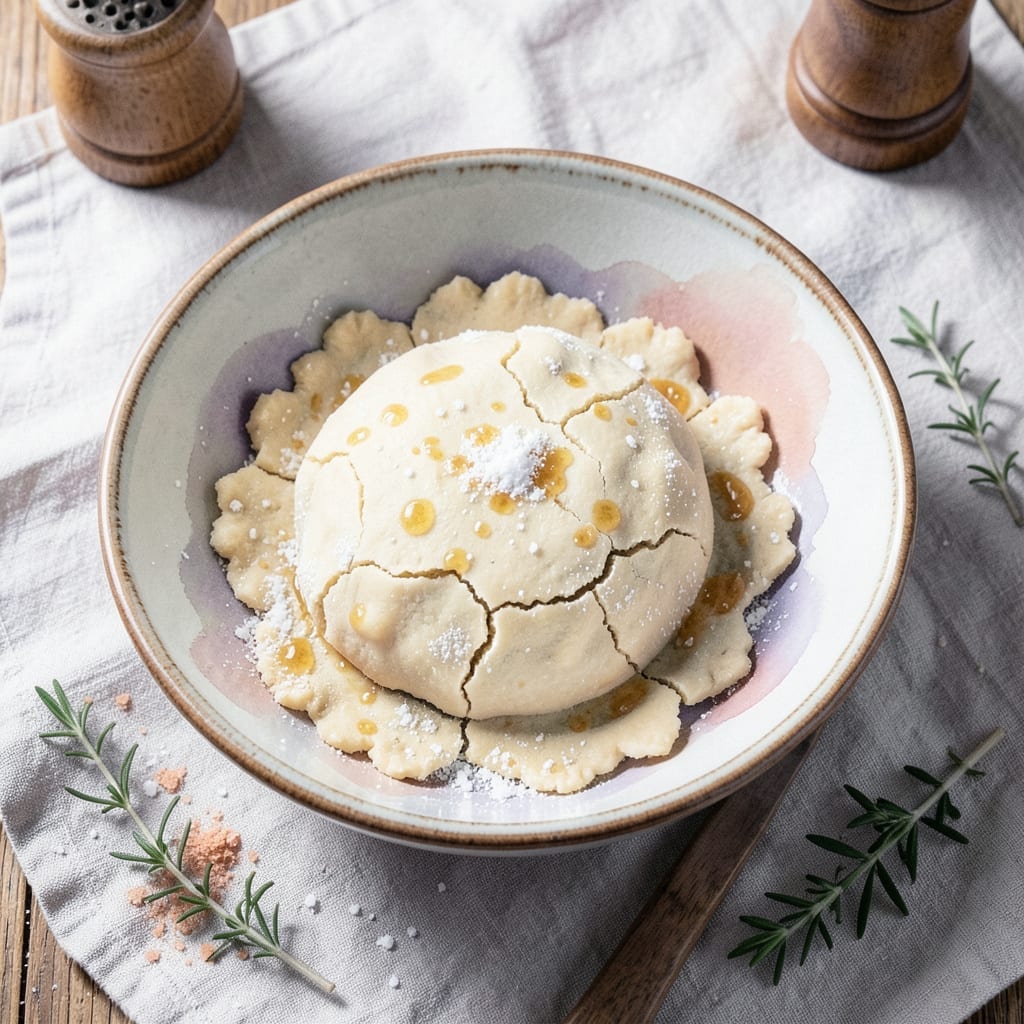
My grandmother swore by lard for pie crust, and after years of testing, I understand why. This recipe delivers flaky, tender layers that butter simply can’t match, with a neutral flavor that lets your filling shine through.
With just a few simple ingredients and the right technique, you’ll achieve a golden, crisp crust that holds its shape beautifully. The key is keeping everything cold and handling the dough as little as possible.
Ingredients for Recipe for Pie Crust Made with Lard
Six simple ingredients for the flakiest crust you’ve ever made. No butter required.
| Ingredient | Amount | Notes |
|---|---|---|
| All-Purpose Flour 🌾 | 2 ½ cups | Plus extra for dusting |
| Lard 🧈 | ¾ cup | Cold, leaf lard preferred |
| Ice Water 💧 | ¼ cup | Plus 1 tbsp as needed |
| Salt 🧂 | 1 tsp | Fine grain preferred |
| Granulated Sugar 🍚 | 1 tbsp | Optional, for sweet crusts |
| White Vinegar 🍋 | 1 tbsp | Or lemon juice |
The lard is non-negotiable here—leaf lard (from around the kidneys, not the belly) gives you the cleanest flavor and best texture. Tenderflake is the brand I grab at Walmart or Kroger when I can’t get to a butcher. If you’re buying in bulk, look for pure lard with no additives. The flour? Just standard all-purpose—no need for anything fancy (I use King Arthur).
No lard on hand? Shortening like Crisco works in a pinch, but the flavor won’t be as neutral. Skip the butter—it’s not a 1:1 swap here and will change the texture. The vinegar (or lemon juice) might seem odd, but it tenderizes the dough. If you’re making a sweet pie, bump the sugar to 2 tablespoons. For savory, leave it out entirely.
This dough keeps in the fridge for 3 days or freezes beautifully for 3 months. Wrap it tight in plastic (double-layer it) to prevent freezer burn. Thaw overnight in the fridge before rolling. Honestly, it’s better to freeze the dough than the crust—baked shells get soggy.
Why You’ll Love This Recipe
- Five Ingredients Only: I just dump flour, lard, ice water, salt, and a pinch of sugar—no hunting for weird stuff at the store.
- Flaky in Minutes: That lard makes layers so tender they shatter, and the hint of sugar rounds it out.
- Freezer Friend: I roll out a double batch, bake one pie, and stash the rest for last-minute desserts.
- Pennywise Crust: Lard costs less than butter, and one batch stretches to two pies. Honestly, my wallet notices.
Step-by-Step Instructions for Pie Crust Made With Lard
Here’s how to get that perfect flaky texture that makes lard crust legendary.
Step 1: Mix Dry Ingredients
In a large bowl, whisk together the 2.5 cups All-Purpose Flour, 1 tsp Salt, and 1 tbsp Granulated Sugar until evenly combined. I like to do this first so the salt and sugar distribute perfectly throughout the flour.
This step ensures every bite of your crust has consistent flavor. The sugar adds a subtle sweetness that pairs well with both sweet and savory fillings, while the salt enhances all the flavors in your pie.
Step 2: Cut in Cold Lard
Add the 0.75 cup Lard (make sure it’s cold) to the flour mixture. Using a pastry cutter or two forks, work the lard into the flour until the mixture resembles coarse crumbs with some pea-sized pieces of lard still visible.
This is the key to flakiness—those little lard pieces create pockets of fat that melt during baking, creating layers. Work quickly so the lard stays cold. If your kitchen is warm, you can even chill the bowl for 10 minutes before continuing.
Step 3: Add Liquid and Form Dough
In a small bowl, combine the 0.25 cup Ice Water and 1 tbsp White Vinegar. The vinegar tenderizes the gluten, making for a more delicate crust. Make a well in the flour mixture and pour in the liquid all at once.
Gently mix with a fork until the dough just comes together. It’ll look shaggy—that’s perfect. Overworking the dough develops gluten, which makes crust tough. If it’s too dry, add up to 1 tbsp more ice water, but don’t add too much.
Step 4: Chill and Rest the Dough
Turn the dough out onto a lightly floured surface and gently shape it into a disk. Wrap it tightly in plastic wrap and refrigerate for at least 1 hour. This resting period lets the gluten relax and the lard firm up again.
I always make my dough the night before if possible. The longer rest improves the texture and makes the dough easier to roll out. When you’re ready to use it, let it sit at room temperature for 10-15 minutes to soften slightly before rolling.
Step 5: Roll and Fit the Crust
On a well-floured surface, roll the dough to about ⅛-inch thickness. For a standard 9-inch pie, you’ll want a 12-inch circle. Roll from the center outward, rotating the dough a quarter turn after each roll to maintain an even thickness.
Transfer the dough to your pie plate by rolling it around your rolling pin, then unrolling it into the plate. Press it gently into the bottom and sides, trim the edges to leave a ½-inch overhang, then crimp as desired. Dock the bottom with a fork to prevent air bubbles, then chill for 30 minutes before baking.
Pro Tips For Making Recipe For Pie Crust Made With Lard
- Chill the Lard: Freeze your lard for 15-20 minutes before cutting it into the flour—this keeps it firm and creates those perfect flaky layers. I learned this the hard way after ending up with a tough crust too many times.
- Use Ice-Cold Water: Fill a glass with ice cubes and water, then measure from that for the liquid. The colder the water, the less it’ll toughen the gluten in the flour.
- Don’t Overwork It: Mix just until the dough comes together, even if it looks a little shaggy. After burning three batches to crispy sadness, I finally figured out overworking = tough crust.
- Rest Before Rolling: Let the dough rest in the fridge for at least 30 minutes before rolling—this relaxes the gluten and makes it easier to handle. My grandmother swore by this, and she was right.
Troubleshooting This Recipe
Dough Too Crumbly
If your dough falls apart when rolling, it likely needs more liquid. Add ice water 1 tsp at a time until it just holds together. Remember, lard-based dough is naturally drier than butter crusts. Don’t overmoisten—too much water makes crust tough. 💧
Overworked Dough
Seeing streaks of lard or butter-like layers? You’ve overmixed. Stop immediately and chill the dough for 30 minutes to let the gluten relax. Next time, use a lighter touch when combining ingredients.
Shrinking Crust
If your crust pulls away from the pie plate during baking, it wasn’t rested enough. After rolling, let it chill in the pan for 30 minutes before blind baking. This prevents gluten from contracting in the oven.
Soggy Bottom
Blind bake your crust for 10-12 minutes at 375°F before adding wet fillings like pumpkin or custard. For fruit pies, sprinkle 1 tbsp breadcrumbs on the bottom to absorb excess juices.
Tough Texture
This usually means overworked dough or too much water. Use a pastry cutter for mixing and stop as soon as the dough comes together. The vinegar in the recipe helps tenderize, but it can’t fix overhandling.
If your crust still turns out tough, try reducing the water by 1-2 tsp next time.
Nutrition Facts
Frequently Asked Questions
Why use lard instead of butter for pie crust?
Lard has a higher melting point than butter, creating flakier layers. It also has less water content, resulting in a more tender crust that holds its shape better during baking.
Can I substitute shortening for lard?
Yes, use the same amount. However, lard offers superior flavor and texture. Shortening may produce a slightly less flaky result but still works in a pinch.
How long should I chill the dough before rolling?
Refrigerate for at least 1 hour, but overnight is ideal. This allows the lard to firm up and the gluten to relax, making the dough easier to handle.
What if my crust shrinks during baking?
Chill the rolled dough in the pie plate for 30 minutes before baking. This prevents gluten from contracting and helps maintain the crust’s shape.

- BBQ Sausage Recipe Oven: Smoky Depth Without the Grill - September 28, 2026
- BBQ Chicken Bowl Recipe Rice: Smoky Sweetness Over Fluffy Grains - September 28, 2026
- Beef Cutlet Recipe Ideas: Crispy Breaded Patties With Bold Seasonings - September 28, 2026