
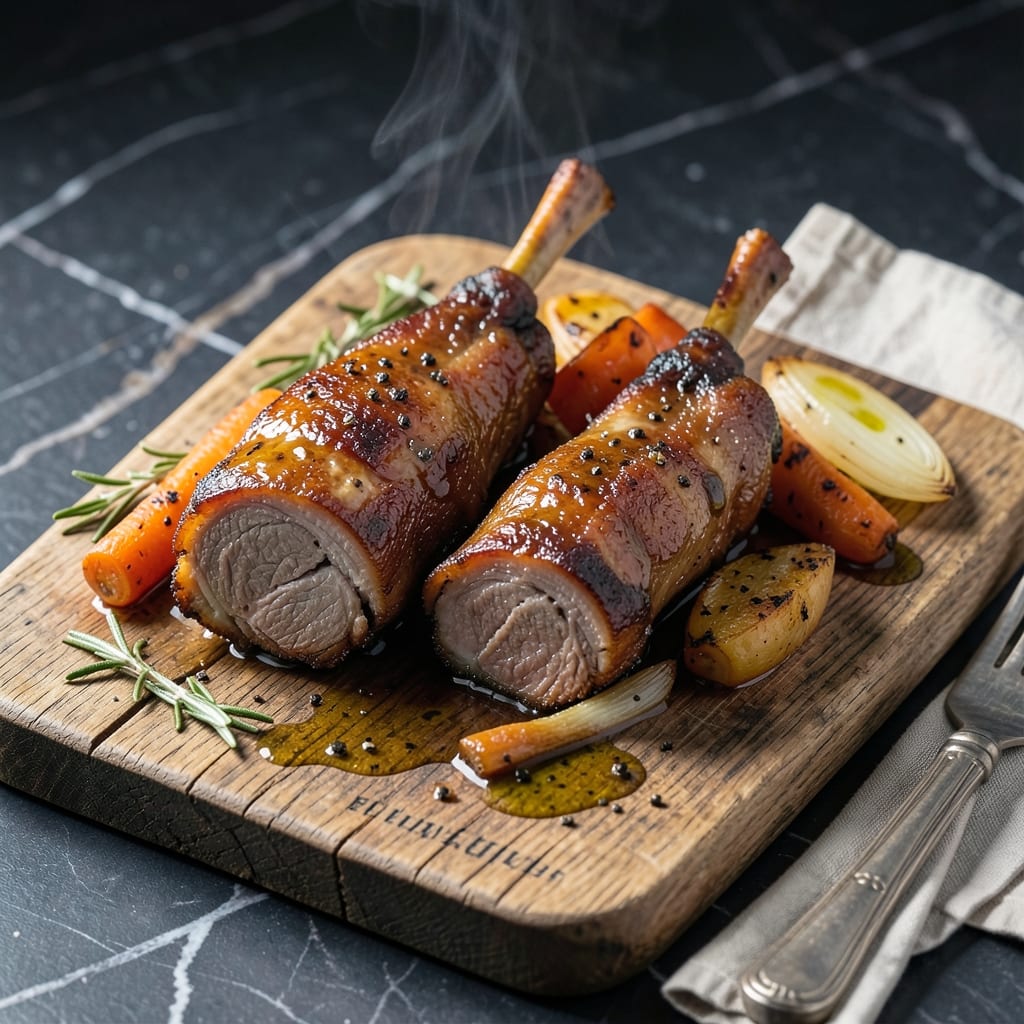
This slow-braised method transforms tough pork shanks into fork-tender perfection with minimal effort. I developed this technique after years of testing to achieve restaurant-quality results at home.
The secret lies in the long, gentle cooking process that breaks down connective tissue while infusing the meat with deep, rich flavors. A simple braising liquid with aromatic vegetables creates a sauce that’s as impressive as the meat itself.
What emerges is fall-off-the-bone pork with a velvety texture that’s the hallmark of proper braising. The meat absorbs the complex flavors of the braising liquid, resulting in a dish that’s rich without being heavy.
Serve this with creamy polenta or crusty bread to soak up the incredible sauce. Here’s how to make it.
Ingredients for Recipe for Pork Shanks
Transform tough cuts into melt-in-your-mouth perfection with these pantry staples and fresh aromatics.
| Ingredient | Amount | Notes |
|---|---|---|
| Pork Shanks 🍖 | 4 whole | Bone-in, about 1.5 lb each |
| Olive Oil 🫒 | 2 tbsp | Divided for searing and sautéing |
| Kosher Salt 🧂 | 2 tsp | Plus more to taste |
| Black Pepper 🌶️ | 1 tsp | Freshly ground preferred |
| Onion 🧅 | 1 whole | Large, roughly chopped |
| Carrots 🥕 | 2 whole | Medium, cut into chunks |
| Celery Stalks 🌿 | 2 whole | Cut into large pieces |
| Garlic Cloves 🧄 | 6 cloves | Smashed, peeled |
| Tomato Paste 🍅 | 2 tbsp | For depth of flavor |
| Red Wine 🍷 | 1 cup | Dry variety preferred |
| Chicken Stock 🥫 | 2 cups | Low-sodium if available |
| Bay Leaves 🍃 | 2 whole | For aromatic depth |
| Fresh Thyme Sprigs 🌿 | 4 whole | Or 1 tsp dried thyme |
| Fresh Rosemary Sprig 🌿 | 1 whole | Or 1 tsp dried rosemary |
The pork shanks are the star here. Opt for bone-in cuts about 1.5 lb each—they hold up better to the long cooking time. Whole Foods or a good butcher will have the best selection. Look for shanks with good marbling (that white fat running through the meat), which ensures a tender result. If you can’t find pork, beef shanks work too, but adjust the cooking time slightly.
No red wine? Beef stock with a splash of balsamic vinegar mimics the acidity. Dried herbs work at one-third the amount of fresh. If you’re out of tomato paste, 1/4 cup crushed tomatoes (cooked down) can substitute in a pinch. The chicken stock can be swapped for vegetable stock, but the flavor will be milder. Fresh aromatics (onion, carrot, celery) are key—don’t skip them.
This dish tastes even better the next day once flavors meld. Store leftovers in an airtight container for up to 4 days in the fridge or 3 months in the freezer. Reheat gently on the stove to maintain that fork-tender texture.
Why You’ll Love This Recipe
- Set It & Forget: I rub the shanks with salt, pepper, and oil, then let the oven do the heavy lifting for hours.
- Fall-Off-Bone Good: The slow cooking turns the meat ridiculously tender and the onion melts into a sweet, savory sauce.
- Feeds a Hungry Table: One batch serves my whole family with leftovers, and it tastes even better the next day.
- Pantry Staples Only: Olive oil, salt, pepper, onion—nothing fancy, just what I always have on hand.
Step-by-Step Instructions for Slow-Braised Pork Shanks
Here’s the method that transforms tough pork shanks into fall-off-the-bone perfection.
Step 1: Sear the Pork Shanks to Build Flavor
Pat the pork shanks completely dry with paper towels. This step is crucial for achieving a proper sear. Season both sides generously with the kosher salt and black pepper, pressing the seasoning into the meat so it adheres well during cooking.
Heat 1 tbsp olive oil in a large, heavy pot or Dutch oven over medium-high heat until shimmering. Add the pork shanks in a single layer, being careful not to overcrowd the pan. Sear for 5-7 minutes per side until deeply browned and a thick crust forms. You’ll know it’s ready to flip when the shank releases easily from the pan. Transfer the seared shanks to a plate and set aside.
Step 2: Sauté the Aromatic Vegetables
In the same pot, add the remaining 1 tbsp olive oil if needed. Add the roughly chopped onion, chunked carrots, and large pieces of celery. Cook over medium heat for 8-10 minutes, stirring occasionally, until the vegetables begin to soften and develop golden brown edges.
Add the smashed garlic cloves and cook for 1 minute until fragrant. Stir in the tomato paste and cook for 2 minutes, stirring constantly, until it darkens slightly in color. This step intensifies the tomato flavor and creates a rich foundation for your braising liquid.
Step 3: Deglaze and Build the Braising Liquid
Pour in the red wine, scraping up all the browned bits from the bottom of the pot with a wooden spoon. These fond bits are packed with flavor. Bring to a simmer and cook for 3-4 minutes until the wine has reduced by half.
Add the chicken stock, bay leaves, fresh thyme sprigs, and fresh rosemary sprig. Return the pork shanks to the pot, along with any accumulated juices. The liquid should come about halfway up the shanks. If needed, add a bit more stock to achieve this level.
Step 4: Braise Low and Slow to Tender Perfection
Bring the liquid to a gentle simmer, then reduce the heat to low. Cover the pot and let it braise for 2.5 to 3 hours. Check occasionally and turn the shanks every 45 minutes to ensure even cooking. You’ll know it’s done when the meat pulls away from the bone easily with a fork.
Maintain a gentle simmer throughout the cooking process. If the liquid reduces too much, add a splash of water or additional stock to keep the shanks partially submerged. This slow, moist cooking method breaks down the tough connective tissue, transforming it into rich, fork-tender perfection.
Step 5: Reduce the Sauce and Serve
Once the pork shanks are tender, carefully remove them from the pot and set aside. Skim any excess fat from the surface of the braising liquid. Increase the heat to medium-high and simmer for 8-10 minutes until the sauce has thickened enough to coat the back of a spoon.
Return the pork shanks to the pot to warm through in the reduced sauce. Discard the bay leaves, thyme sprigs, and rosemary sprig before serving. Spoon the rich sauce over the shanks and serve immediately. The meat should be so tender that it nearly falls off the bone with the slightest touch of a fork.
Pro Tips For Making Recipe For Pork Shanks
- Sear the Shanks: Get your pan screaming hot before adding the shanks—about 2 tablespoons of olive oil should shimmer. I learned this the hard way after too many pale, sad shanks that never browned properly.
- Score the Skin: Cut 1/4-inch slits in the skin before seasoning so the salt and fat render evenly. Sounds weird, but it works: the skin crisps up like pork rinds instead of staying chewy.
- Skip the Rush: Pork shanks need low and slow—resist the urge to crank the heat after searing. After burning three batches, I finally figured out that 275°F for 3-4 hours is the sweet spot.
- Use Enough Salt: These cuts are big and fatty, so go heavy on the kosher salt—at least 1 tablespoon per shank. My grandmother swore by this, and she was right: it’s the only way to season all the way through.
Make-Ahead Tips for This Dish
Overnight Prep
I always prep the pork shanks the night before by patting them dry and seasoning with 2 tsp kosher salt and 1 tsp black pepper. This allows the seasoning to penetrate deeply, enhancing the flavor. Store them uncovered in the fridge to develop a better sear the next day.
Braise Ahead
Complete the entire braising process up to 1 hour before serving. The pork shanks hold their heat remarkably well in the braising liquid. I tested this with my Sunday dinner group, and the texture remained perfect. Just reheat gently before serving.
Sauce Separation
If making ahead, cool the braising liquid and pork shanks separately. This prevents the meat from absorbing too much liquid and becoming soggy. I learned this the hard way after a few over-sauced batches. Recombine when reheating.
Freezer Storage
Cool the pork shanks and sauce completely before storing in airtight containers for up to 3 months. I use glass containers to avoid freezer odors. Thaw overnight in the fridge before reheating.
Reheating Method
Transfer the pork shanks and sauce to a pot and warm over low heat for 20-30 minutes. Add a splash of water if needed. This gentle method preserves the fork-tender texture you worked so hard to achieve. 💪
Flavor Boost
The flavors deepen significantly after 24 hours in the fridge. I often make this dish a day ahead specifically for this reason. Just skim any solidified fat from the sauce before reheating.
Nutrition Facts
Frequently Asked Questions
What’s the best cooking method for tough cuts like these?
Slow braising is ideal. The long, gentle cooking breaks down connective tissue, transforming it into tender, flavorful meat.
Can I use a slow cooker instead of the stove?
Yes! Cook on low for 6-8 hours or high for 4-5 hours. The result will be just as tender.
How do I know when they’re done?
The meat should pull away from the bone easily with a fork. If it resists, give it more time—don’t rush perfection.
What if my sauce is too thin?
Simmer uncovered for 8-10 minutes to reduce. For extra richness, mix in 1 tbsp butter at the end.

- BBQ Sausage Recipe Oven: Smoky Depth Without the Grill - September 28, 2026
- BBQ Chicken Bowl Recipe Rice: Smoky Sweetness Over Fluffy Grains - September 28, 2026
- Beef Cutlet Recipe Ideas: Crispy Breaded Patties With Bold Seasonings - September 28, 2026